noun / verb
time
TYME/taɪm/
The progression or extent within which events occur.
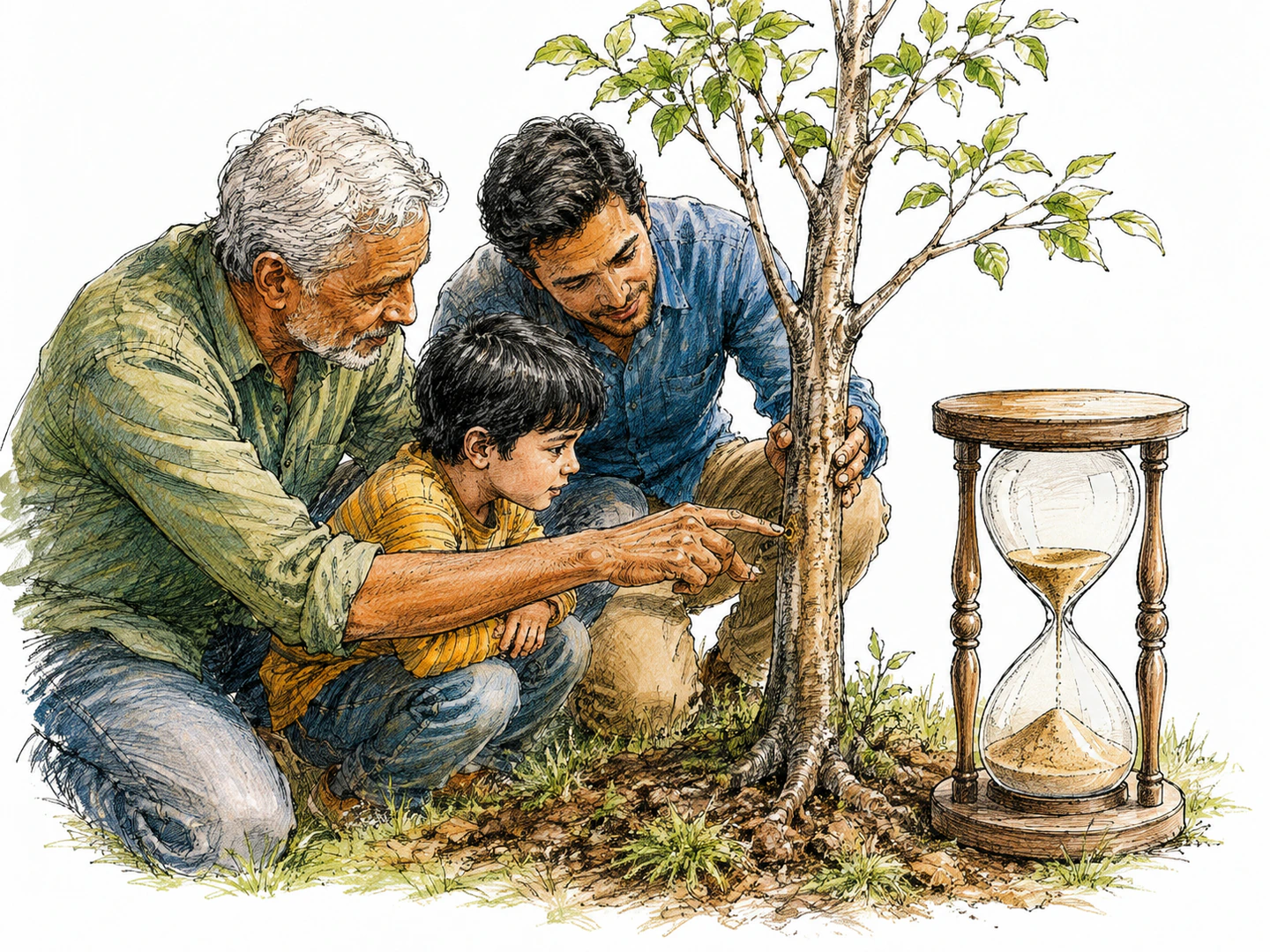
The different generations and growing tree make the passage of time apparent.
Etymology
Old English tīma could name a limited stretch of duration. The later abstract sense extended this to indefinite, continuous duration—the framework in which events pass from past through present to future.
In context
Language changes over time, and it's a powerful force.
We can do a lot in a short period of time.
More examples
- Over time, the paint fades.
- Do you have time for a walk?
- The meeting starts at the same time each week.
- The coach times each runner's lap.
Forms
time · times · timed · timing
timer noun — A device that measures or signals elapsed time.