noun
tyranny
TEER-uh-nee/ˈtɪrəni/
Cruel or oppressive control over people or their lives.
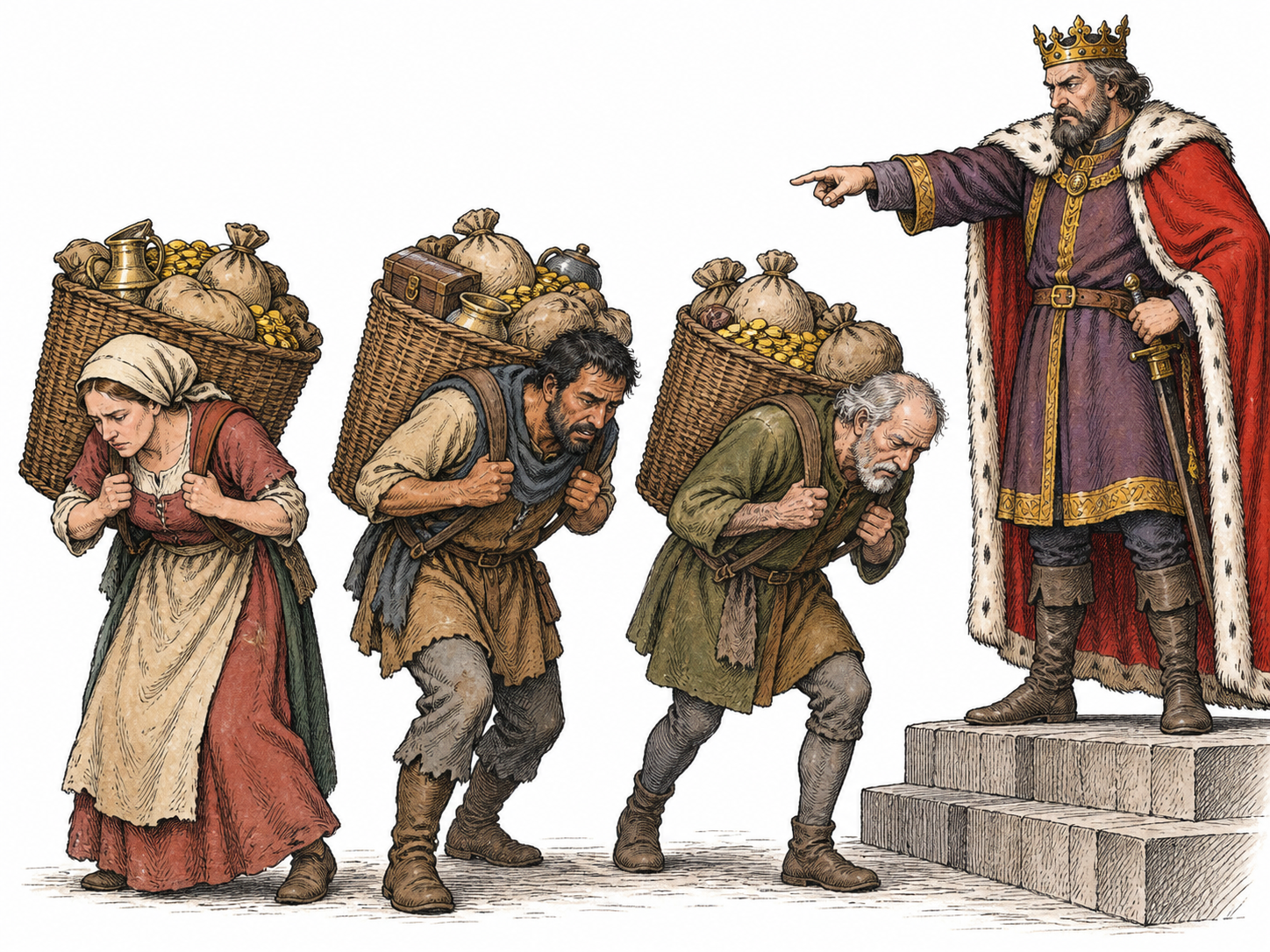
The ruler's tyranny burdens weary citizens with oversized tax baskets.
Etymology
Greek tyrannia meant rule by an absolute ruler. As the ruler’s title became condemnatory, the name for that rule likewise came to emphasize cruel or unjust use of power.
In context
royalty degenerates into tyranny but this last word is equivocal and requires explanation in the vulgar sense a tyrant is a king who governs with violence and without regard to Justice and the law
More examples
- The workers unite against the manager's tyranny.
- They flee a country where tyranny leaves no room for dissent.
- She longs to escape the tyranny of constant deadlines.
Forms
tyranny · tyrannies
tyrannical adjective — Cruelly oppressive in exercising power over others.
tyrannize verb — To rule or control others oppressively.
Similar words
- oppression
- Emphasizes unjust treatment and burdens imposed on people.
- despotism
- More specifically describes government by a ruler with unchecked power.