adjective
underhand
un-der-HAND/ˌʌndərˈhænd/
Done secretly or dishonestly.
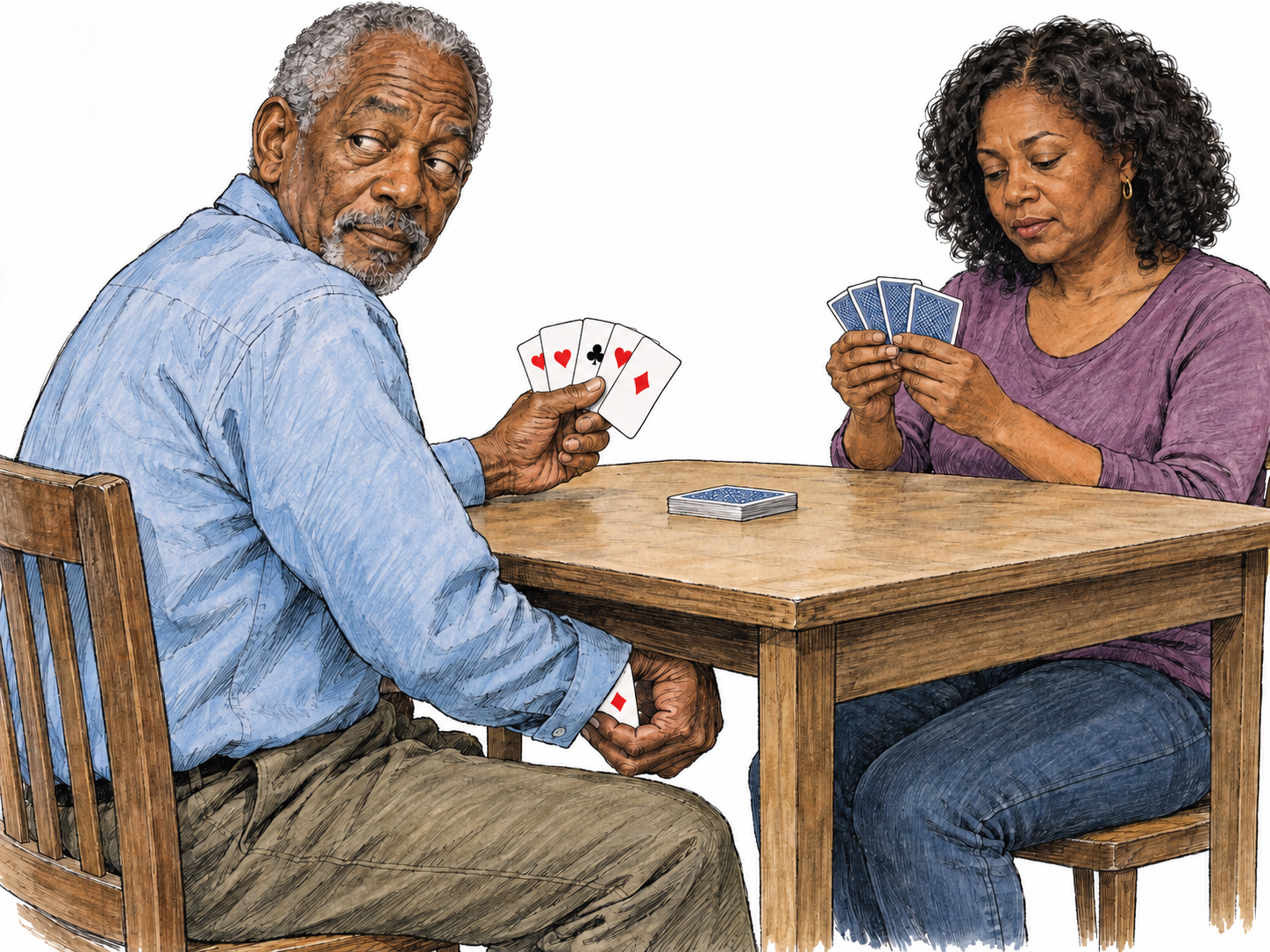
The card player uses an underhand trick, hiding an extra card in his sleeve.
Etymology
Under hand originally meant being in someone's control or power. The later secretive sense may picture a hand turned over to conceal what it holds, an image fitting actions hidden from scrutiny.
In context
It was one thing to watch Miss Norton by legitimate methods, and quite another to try underhand ways. She wondered whether the service of her country really demanded such a sacrifice of honor.
More examples
- She objected to the underhand arrangement made without the team’s knowledge.
- He discovered an underhand attempt to alter the results.
- The detective exposed the underhand deal.
Forms
underhand · more underhand · most underhand
underhanded adjective — dishonest or unfair
Similar words
- dishonest
- Dishonest broadly involves deception; underhand stresses concealed, unfair methods.
- sneaky
- Sneaky emphasizes avoiding notice; underhand also implies unfairness.