adjective
unimpressive
uhn-im-PRES-iv/ˌʌnɪmˈpresɪv/
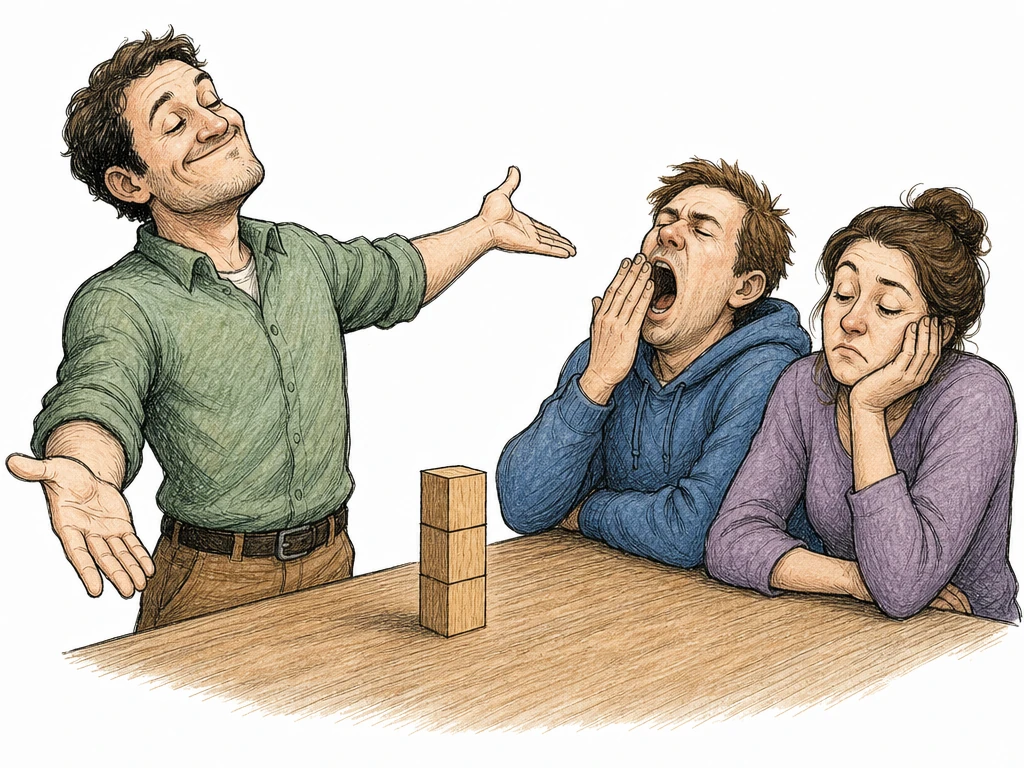
Not causing admiration, interest, or respect.
The tiny block tower leaves the onlookers finding the display unimpressive.
Etymology
Here, impress means making an impression on the mind or senses that excites attention or feeling. With un-, the adjective describes something that fails to stir admiration, interest, or respect.
In context
Because if you're not impressive by default, you're unimpressive. You suck. You're mid.
More examples
- An unimpressive entrance concealed a beautiful interior.
- The report offered unimpressive results.
- His first attempt looked unimpressive beside the others.
Forms
unimpressive · more unimpressive · most unimpressive
unimpressively adverb — without causing admiration