noun
uremia
yu-REE-mee-uh/jɝˈimiʌ/
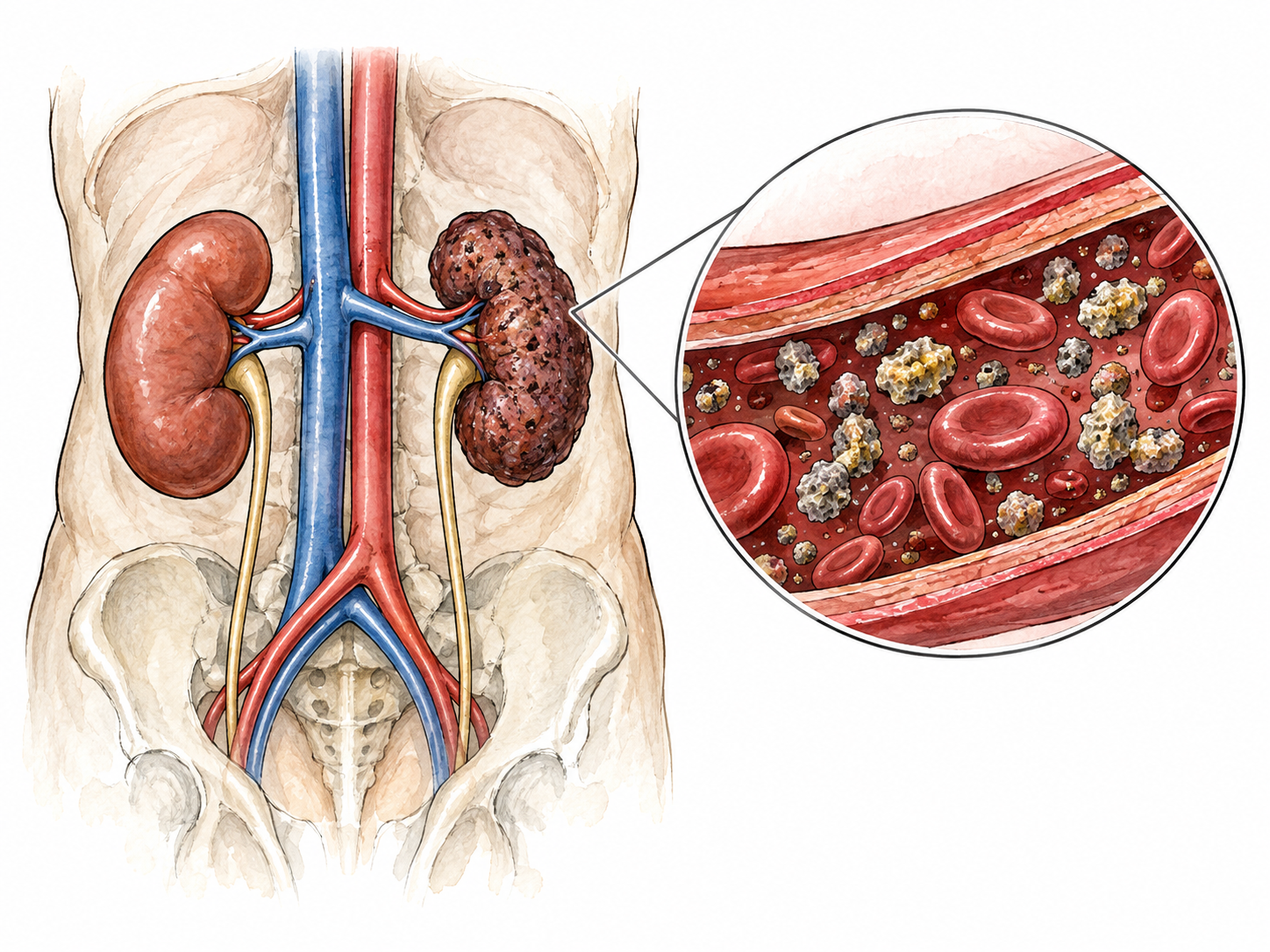
Toxic buildup of waste products in the blood due to kidney failure.
Uremia develops when failing kidneys leave toxic waste in the blood.
Etymology
The “urine” and “blood condition” pieces refer to wastes normally eliminated in urine remaining in the blood. When the kidneys fail, these retained wastes can build up to toxic levels.
In context
Metabolic causes include diabetic ketoacidosis, uremia from kidney failure, hyponatremia, hypercalcemia, and adrenal insufficiency.
More examples
- Severe uremia can cause nausea, fatigue, and confusion.
- Dialysis removes waste products from the blood to treat uremia.
- Her doctor watches for signs of uremia as her kidney function declines.
Forms
uremic adjective — Caused by or associated with uremia.
Similar words
- azotemia
- Elevated nitrogen wastes in blood, without necessarily causing toxic symptoms.