noun
virus
VIE-rus/ˈvaɪrəs/
An infectious agent that reproduces by using living cells.
The flu virus spreads easily when infected people cough or sneeze.
Etymology
Latin virus meant poison or poisonous liquid. Through its use for infectious bodily matter, the word came to name an agent transmitting disease, then the microscopic infectious agents of the modern sense.
In context
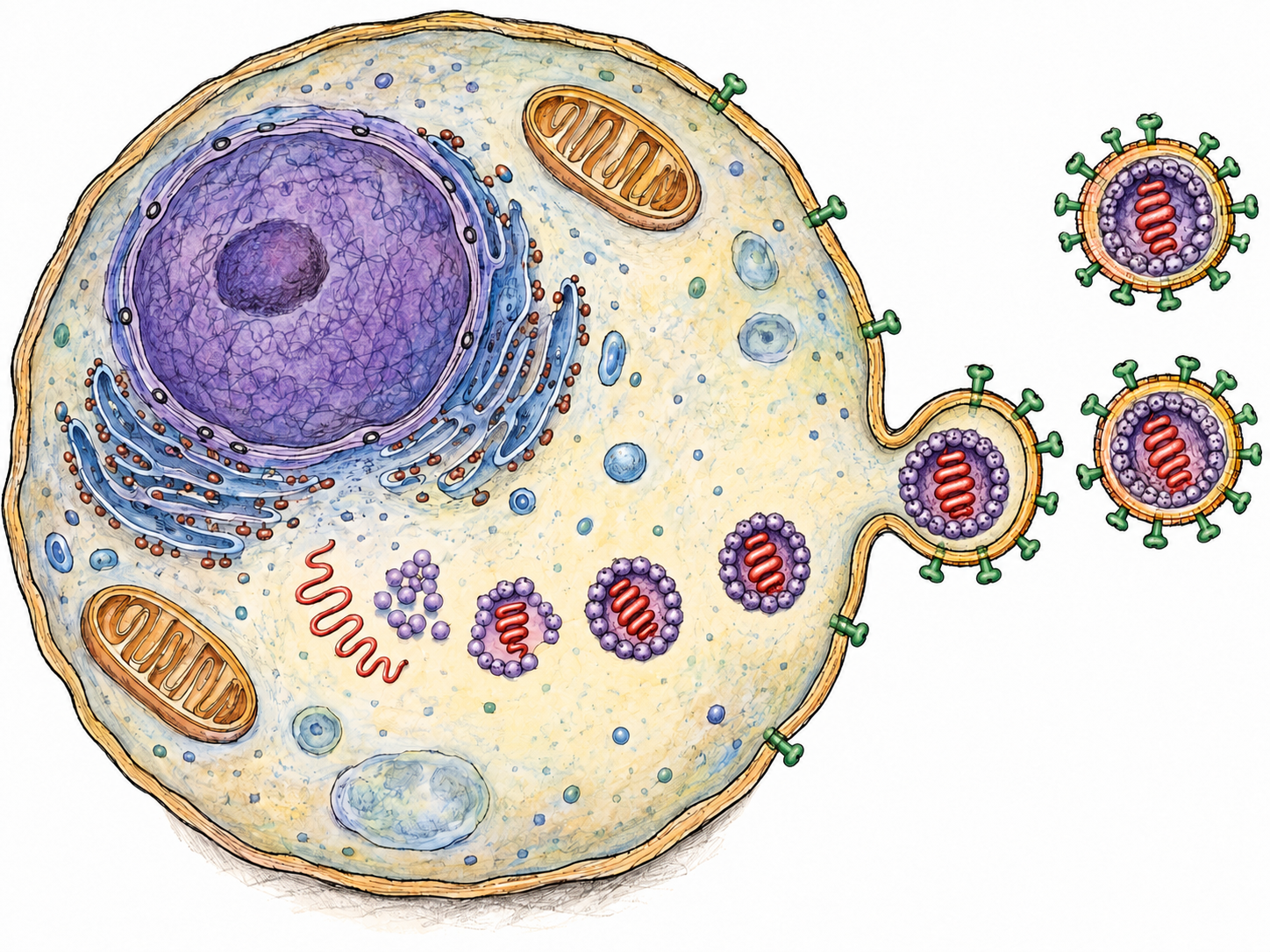
we find cells here with viral particles in them. These guys really do have this virus.
More examples
- Antibiotics do not kill viruses.
- This vaccine helps the body recognize and fight the virus.
- A virus uses living cells to make copies of itself.
Forms
virus · viruses
viral adjective — Relating to or caused by a virus.
virology noun — The scientific study of viruses.
Similar words
- pathogen
- Includes any disease-causing agent, not just a virus.
- germ
- An informal term for infectious agents, including bacteria and viruses.