noun / verb
weight
WAYT/weɪt/
The heaviness of something.
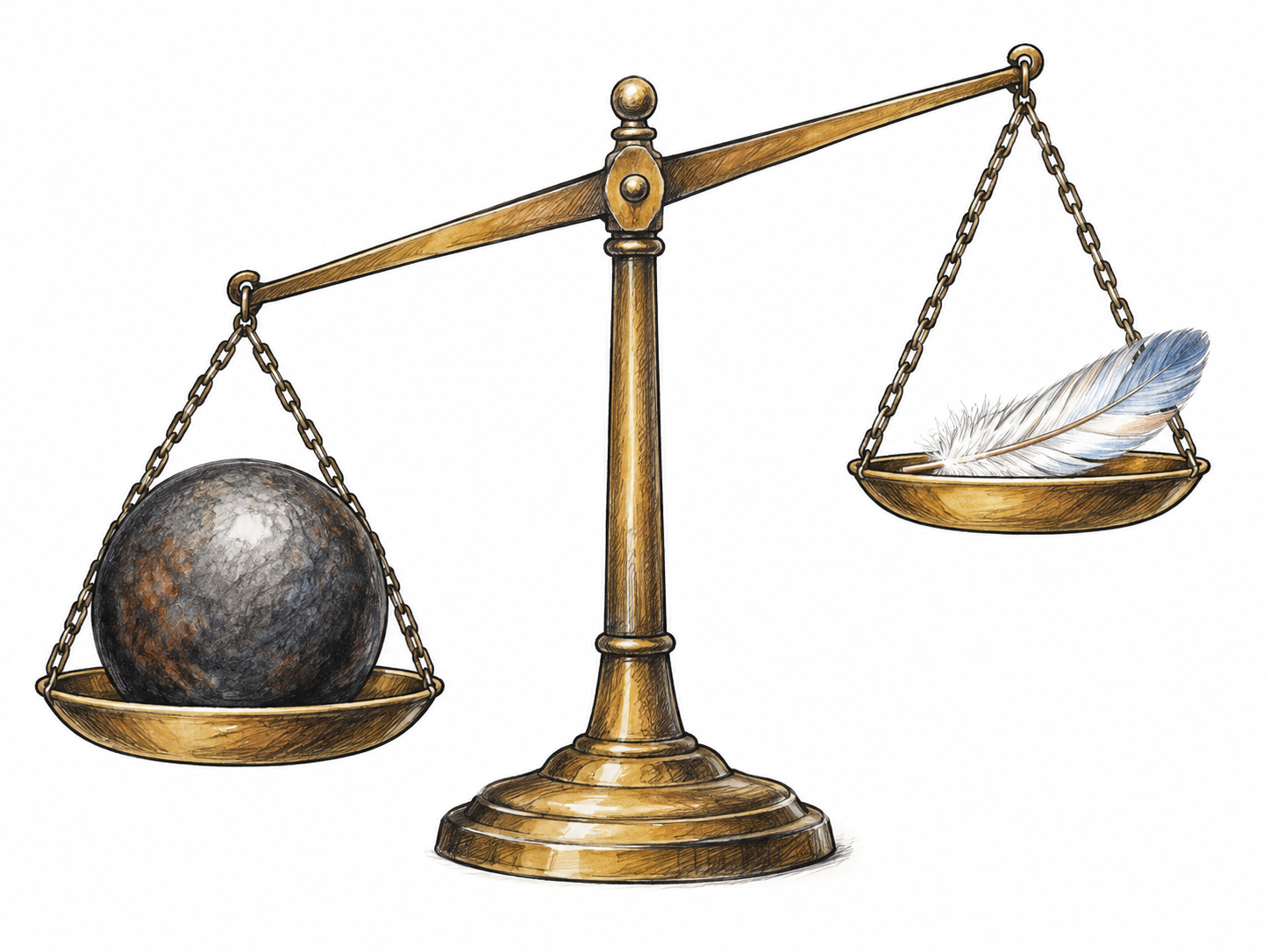
The iron ball's weight pushes its pan lower than the feather's.
Etymology
Old English wiht named both weighing and the downward force of a body, linking the act of measuring heaviness with the property being measured.
In context
the real population right that we can't really see we're not going to measure everybody let's assume that it's the case that in actual fact there's no difference in the weight of men and women in the population
More examples
- The suitcase's weight stays below the airline's limit.
- We weight the tablecloth with stones to keep it in place.
- Her experience gives her opinion extra weight.
- The final exam is weighted more heavily than the quizzes.
Forms
weight · weights · weighted · weighting
weigh verb — To measure how heavy something is.
weightless adjective — Having no weight or seeming to float.
Similar words
- heaviness
- Names the physical quality rather than a measured amount.
- heft
- Often suggests heaviness felt when lifting or holding something.