adjective / noun / adverb
whole
HOHL/hoʊl/
Complete, with no part missing or left out.
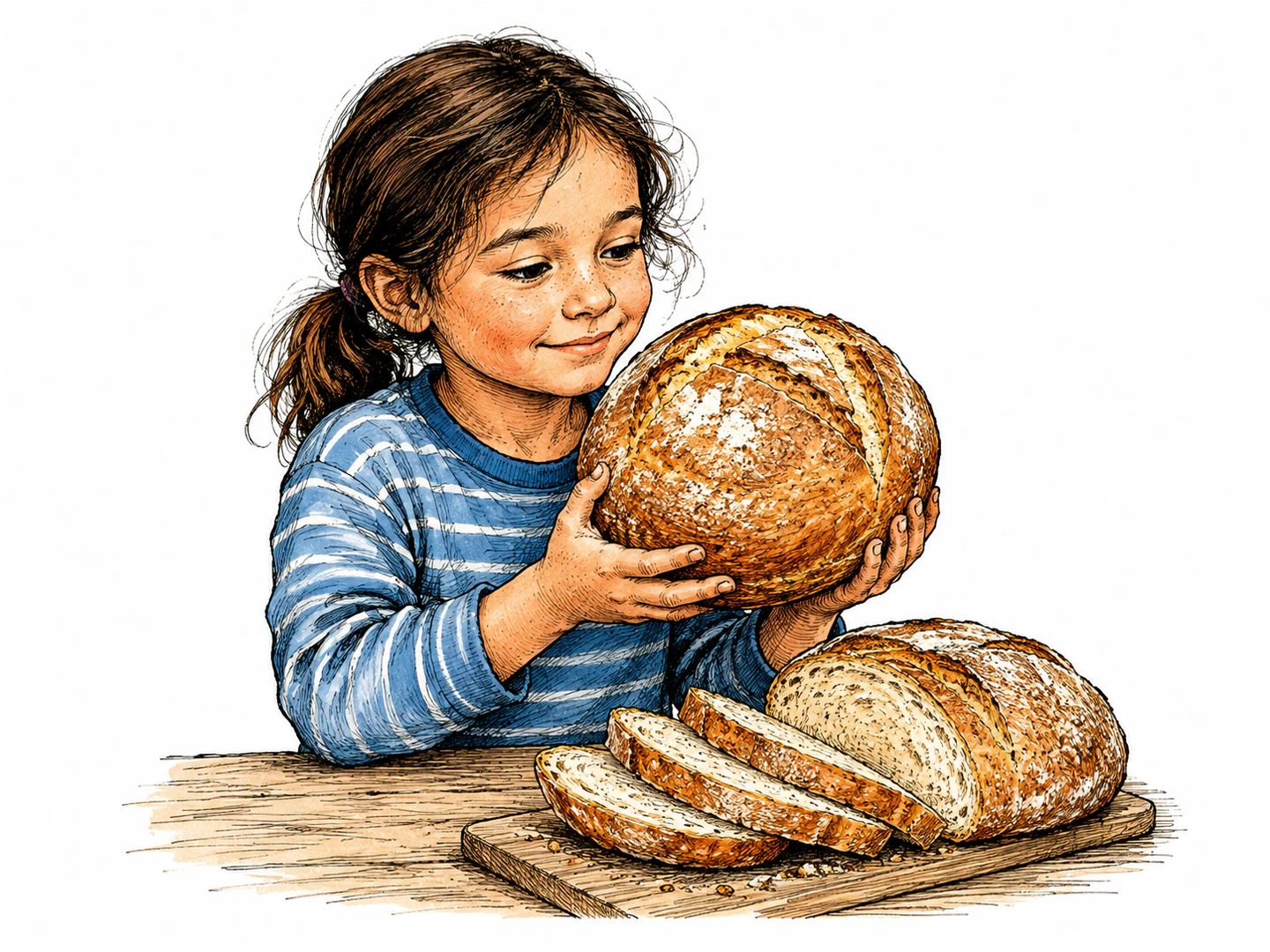
The child holds a whole loaf beside pieces sliced from another.
Etymology
Old English hāl joined completeness with being uninjured or sound. The modern sense preserves that connection: something whole remains intact rather than divided or missing parts.
In context
the whole world was stagnating.
he blocked off his whole day.
More examples
- We need to consider the whole.
- The pot remained whole after the fall.
- He swallowed the grape whole.
Forms
whole · wholes