adjective
quixotic
kwik-SOT-ik/kwɪkˈsɑːtɪk/
Idealistic in an impractical or unrealistic way.
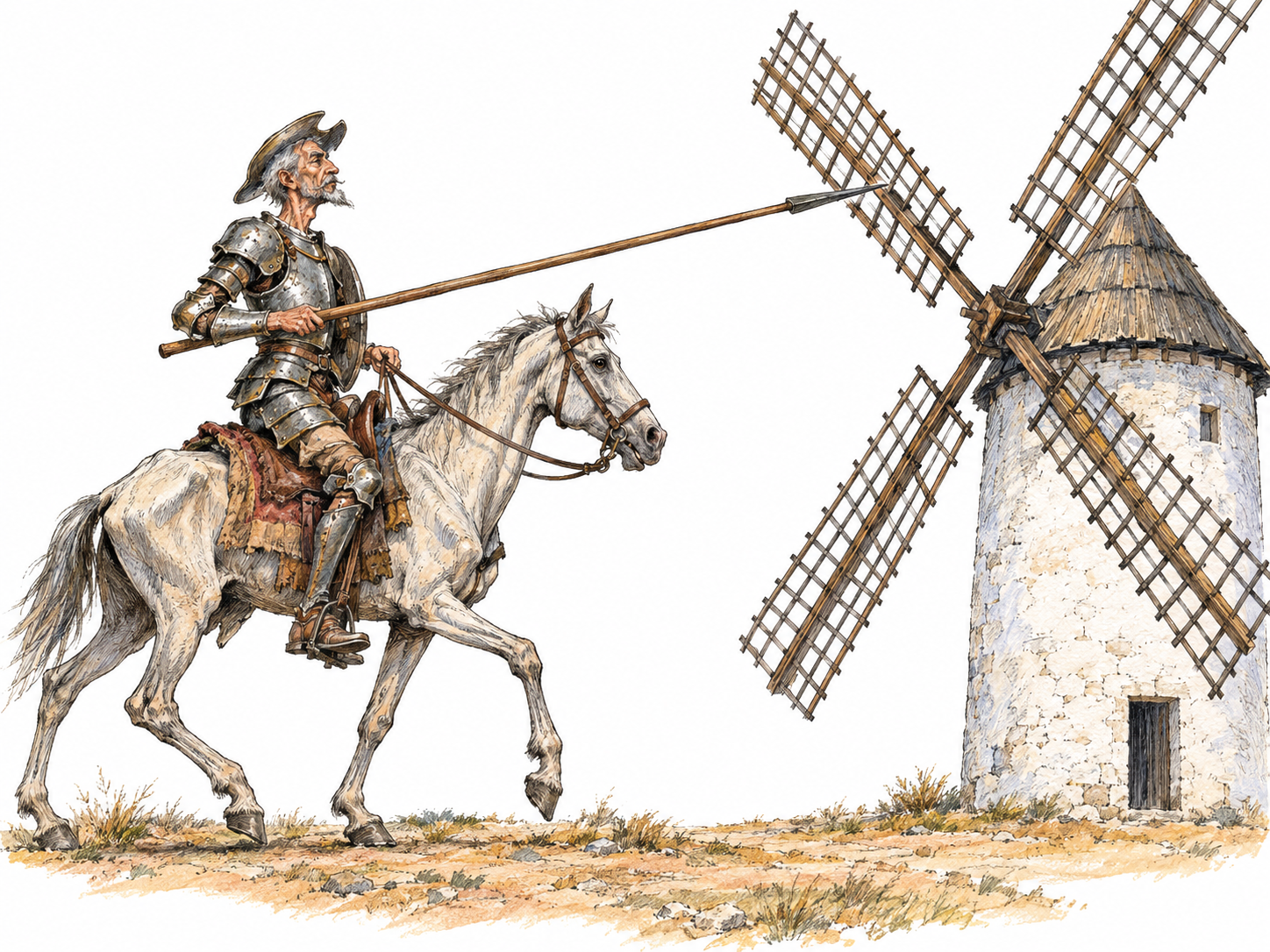
The knight's quixotic charge treats the ordinary windmill as a heroic opponent.
Etymology
Don Quixote became a type of someone pursuing visionary but impossible ideals. Calling a plan or person quixotic transfers the hero’s extravagant chivalry to idealism that is out of touch with practical reality.
In context
You are acting very foolishly, rushing off to London on this quixotic mission. You won't find her. Besides, no woman is worth what you are risking in this wild-goose chase.
More examples
- He makes a quixotic attempt to persuade every neighbor to give up driving.
- The proposal is generous but quixotic, with no budget or staff.
- They dismiss her campaign as quixotic, but she refuses to abandon it.
Forms
quixotic
quixotically adverb — In an idealistic but impractical way.
Similar words
- idealistic
- Emphasizes high principles without necessarily suggesting they are unrealistic.
- impractical
- Describes what cannot work well, without implying noble ideals.
- utopian
- Envisions a perfect society, often without practical means.