noun
gravitation
grav-ih-TAY-shuhn/ˌɡrævɪˈteɪʃn/
The attraction that draws masses toward one another.
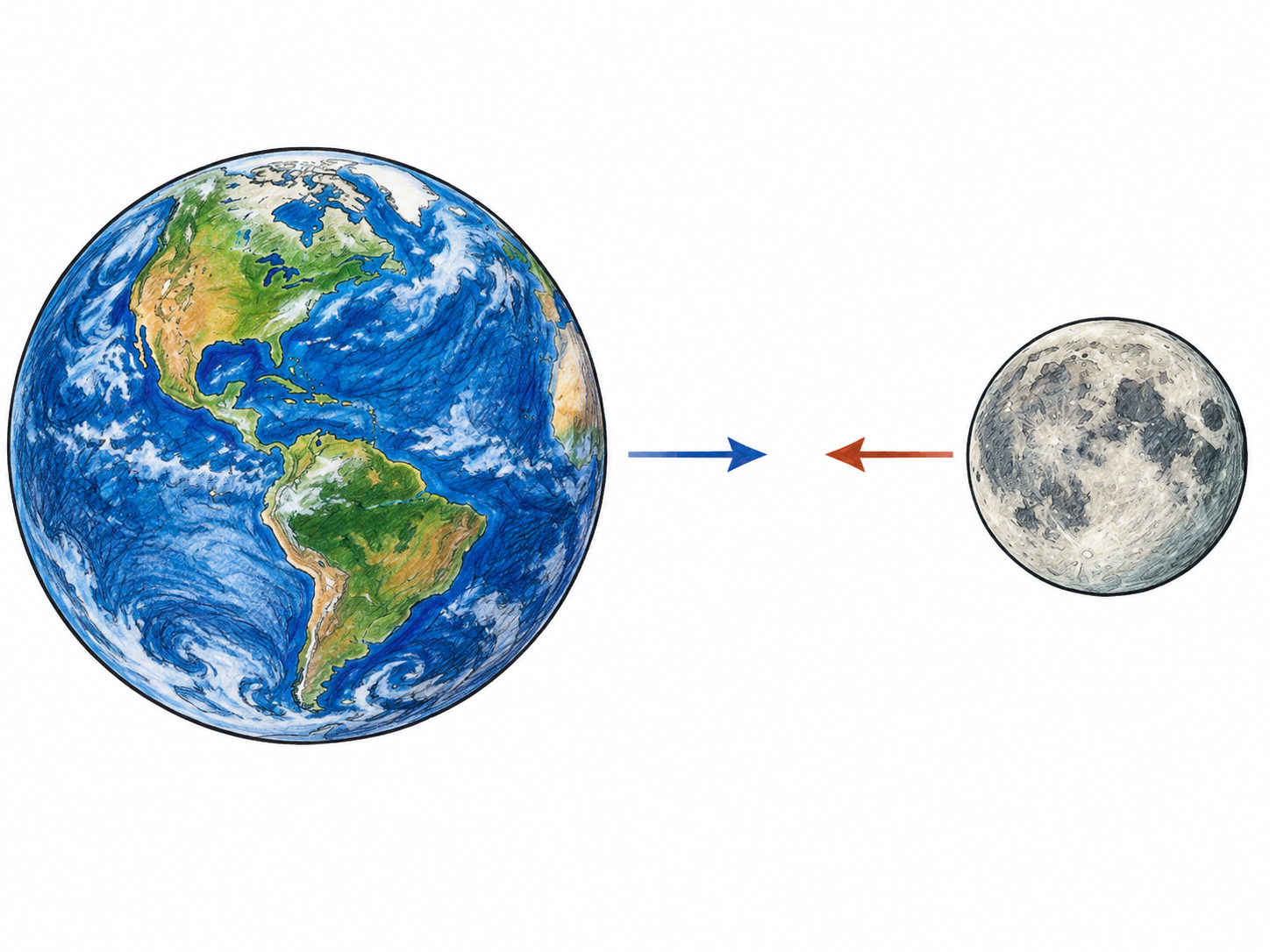
Gravitation keeps the moon in orbit as it circles Earth.
Etymology
The verb behind gravitation described exerting weight or moving downward. The noun named the force that gives objects weight, connecting that familiar downward tendency with attraction between masses.
In context
Newton's law of universal gravitation any two objects in the universe such as the earth and the moon attract each other with a force directly proportional to the product of their masses
More examples
- The strength of gravitation decreases as the distance between objects increases.
- Ocean tides result mainly from the moon's gravitation.
- Scientists calculate how gravitation affects the paths of planets.
Forms
gravitation
gravitational adjective — Relating to attraction between objects with mass.
Similar words
- gravity
- The usual word for gravitation, especially near a planet.
- attraction
- Broader term for pulling forces, including magnetism and gravitation.