noun / verb
descant
DES-kant/ˈdeskænt/
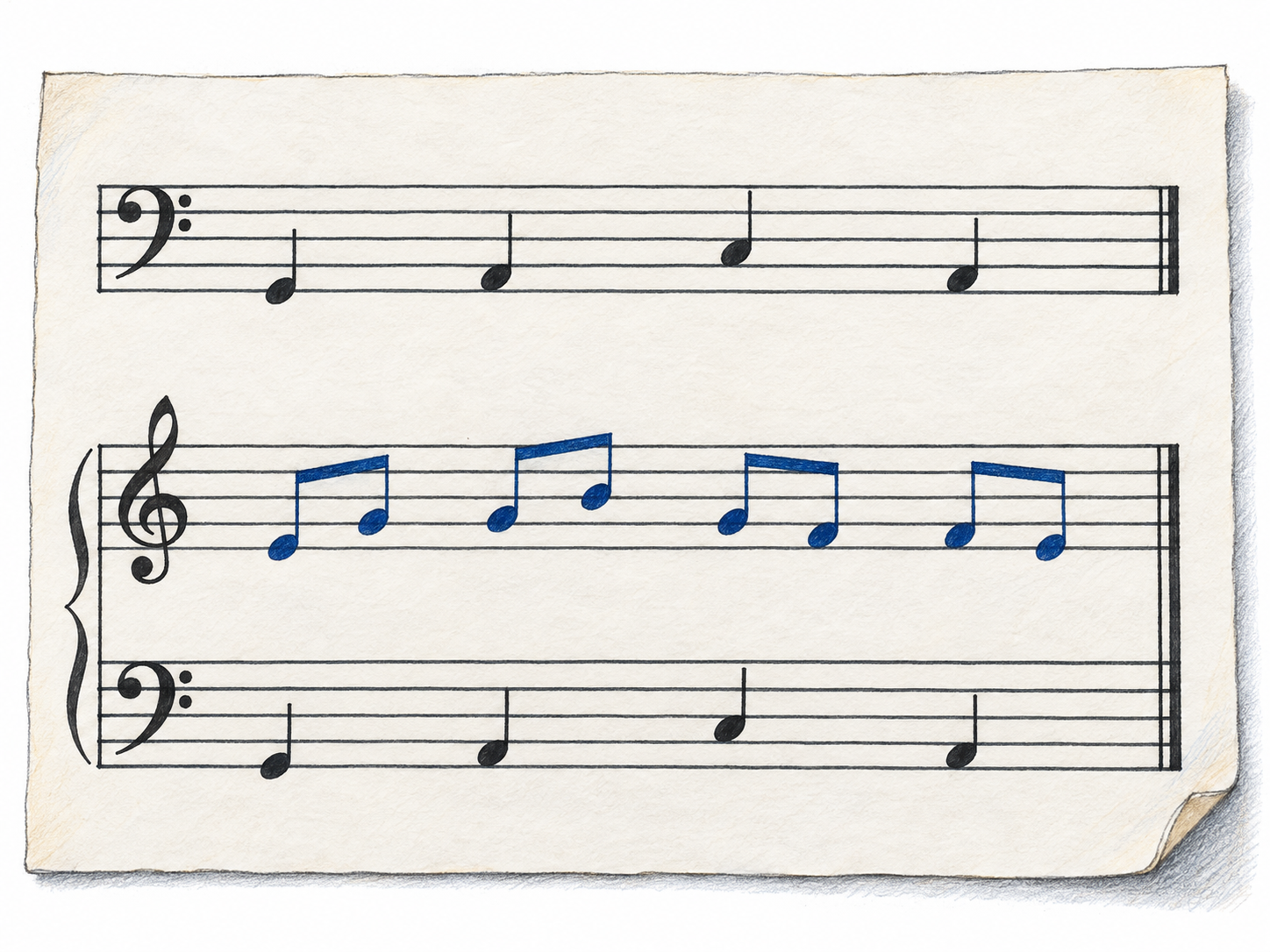
A high melody sung or played above a main tune.
The score adds a high descant above the continuing lower melody.
Etymology
The pieces suggest a song apart from the main melody: originally, a counterpoint added to an existing tune. The word later also named the upper voice, giving the sense of a melody above the main tune.
More examples
- The flute adds a bright descant to the final verse.
- A solo violin descants above the orchestra's main melody.
- Our choir director writes descants for traditional carols.
Forms
descant · descants · descanted · descanting
Similar words
- countermelody
- An accompanying melody that need not be higher in pitch.
- counterpoint
- Independent melodies combined together, not specifically a high accompanying line.