DictionaryRoot: dis-
Latin
dis-
apart, away; reversal or negation
Forms
- dis-
- di- — Shortened in certain Latin compounds.
- dif- — Used before f in Latin.
Origin
Reconstructed Proto-Indo-European *dis, ‘apart,’ associated with the idea of ‘two.’
Note
Separating things supplied a route from physical apartness to undoing an action.
13 / 164
noun / verb
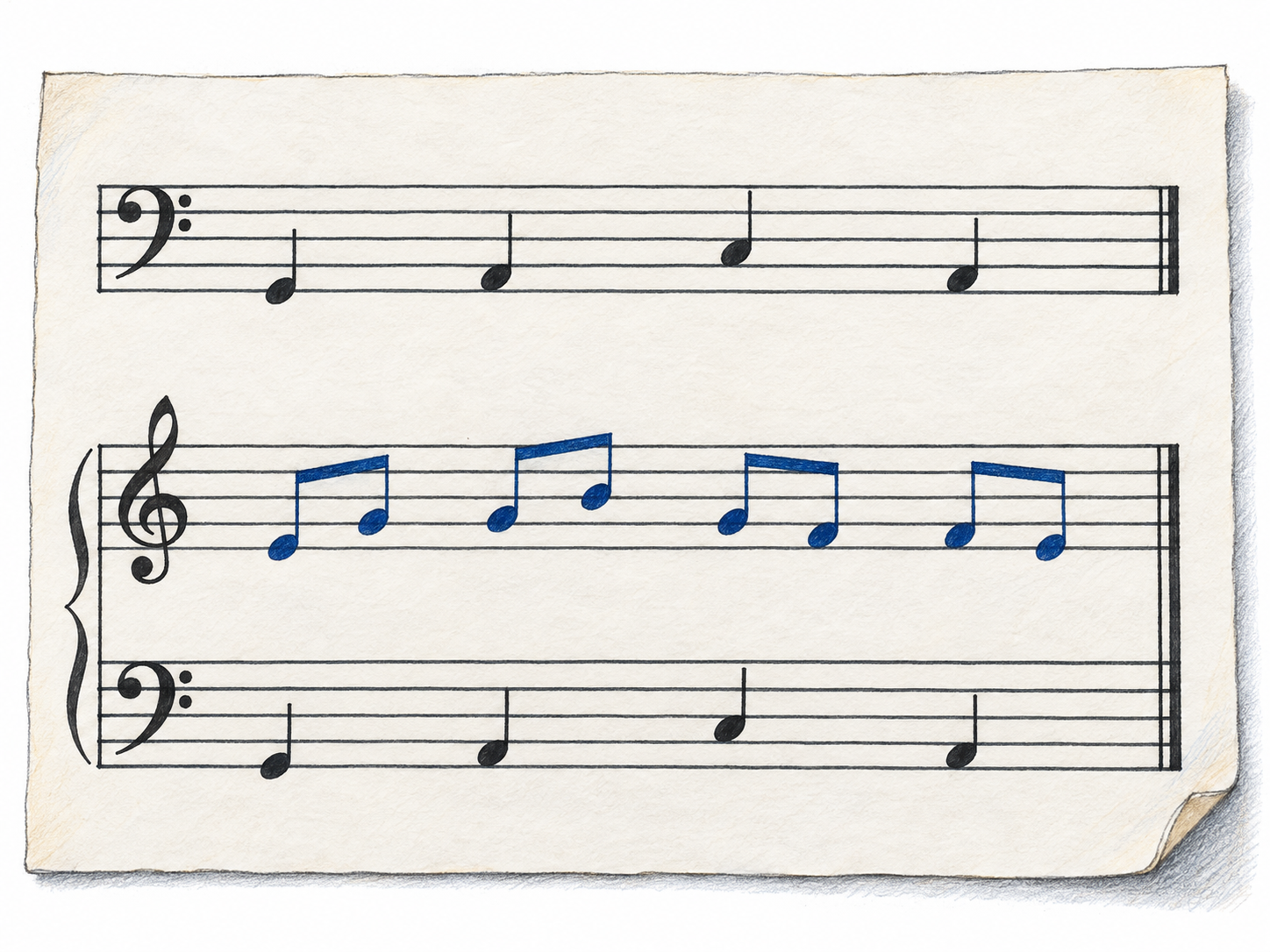
descant
DES-kant/ˈdeskænt/
A high melody sung or played above a main tune.
Etymology
The pieces suggest a song apart from the main melody: originally, a counterpoint added to an existing tune. The word later also named the upper voice, giving the sense of a melody above the main tune.
Related word entries
- deface
- defamation
- defamatory
- defame
- defeat
- defer
- defiance
- defiant
- defy
- deploy
- deployment
- descantExtended commentary
- descantHigh accompanying melody
- differ
- difference
- different
- differentialVarying between cases
- differentialInfinitesimal change
- differentialDiagnostic comparison
- differentialWheel-speed mechanism
- differentiate
- difficulty
- diffident
- diffraction
- diffuse
- diffusion
- digestFood breakdown
- digestSummary
- digestible
- digestion
- digestive
- digress
- digression
- dilapidation
- dilatation
- dilate
- dilatory
- diligence
- diligent
- dimension
- directSupervising
- directWithout a detour
- direction
- directive
- directly
- director
- directory
- disarray
- discern
- discernible
- dischargeSubstance flowing out
- dischargeFulfilling a duty
- discoloration
- discontinuation
- discontinue
- discord
- discordant
- discount
- discourse
- discover
- discreet
- discrepancy
- discrete
- discretionTact and confidentiality
- discretionFreedom to decide
- discuss
- discussion
- disequilibrium
- disfigure
- disgrace
- dishonest
- dishonor
- dishonorable
- disinclination
- disinvite
- dislocate
- dislocation
- dismay
- dismiss
- disobedience
- disobedient
- disobey
- disparate
- disparity
- dispel
- dispensable
- dispensary
- dispensationExemption
- dispensationDistribution
- dispensationDivine order
- dispenseGiving out
- dispenseDoing without
- dispenser
- disperse
- dispersion
- displace
- display
- displease
- displeasure
- disposeGetting rid of
- disposeCreating an inclination
- dispositionArrangement
- dispositionTemperament
- dispositionFinal handling
- dispute
- disrupt
- disruption
- dissect
- dissectionDetailed analysis
- dissectionBlood vessel wall separation
- dissemble
- disseminate
- dissemination
- dissension
- dissent
- dissident
- dissimulate
- dissipate
- dissipation
- dissociate
- dissociation
- dissolute
- dissolution
- dissolve
- dissonance
- dissonant
- dissuade
- distance
- distant
- distemper
- distend
- distention
- distill
- distillation
- distort
- distortion
- distract
- distractionMental distress
- distractionDiverted attention
- distressSevere suffering
- distressArtificial aging
- distribute
- distribution
- distributor
- district
- disturb
- disturbance
- diverge
- divergence
- divergent
- divers
- diverse
- diversification
- diversify
- diversion
- diversity
- divert
- divorce
- divulge
- indigestible
- indigestion
- indiscreet
- indissoluble
- predilection