noun
impression
im-PRESH-uhn/ɪmˈpreʃn/
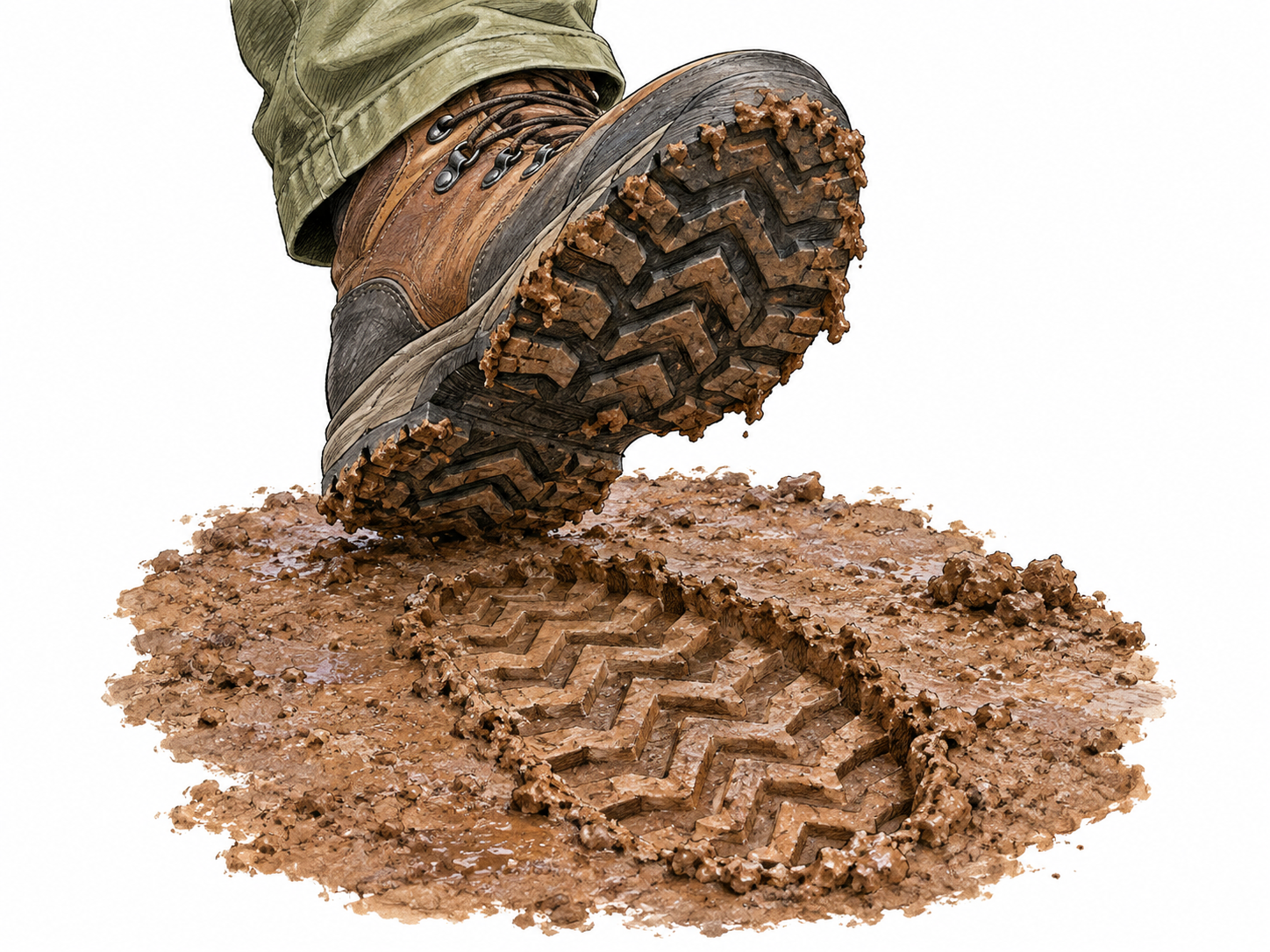
A mark left by contact with a surface.
The boot leaves a deep impression in the soft clay.
Etymology
An impression is figuratively a mark pressed into the mind by something outside it. The physical image of a stamped mark thus connects to an idea, feeling, or effect left by an experience.
In context
When you give the impression that you are constantly in demand, that your time is precious and that you have a full plate, people naturally perceive you as more important
More examples
- The stamp leaves a clear impression in the wax.
- The dentist takes an impression of my teeth.
- Tiny leaf impressions cover the surface of the rock.
Forms
impression · impressions
impress verb — To press a mark into a surface.
Similar words
- imprint
- Emphasizes a recognizable pattern left by pressure or contact.
- indentation
- Specifically a dent or hollow pressed into a surface.