DictionaryRoot: -io
Latin

-io

an action, process, or result

Forms

  • -io
  • -ion- — The longer form used before Latin endings.
  • -ion — The form carried into many English nouns.

Origin

An old Latin noun ending, inherited from earlier Indo-European word formation.

Note

The ending can name both an activity and what that activity produces.

239 / 371
noun / verb

motion

MOH-shun/ˈməʊʃn/

The act or process of moving.

The ball's successive positions trace its motion in a curved arc.
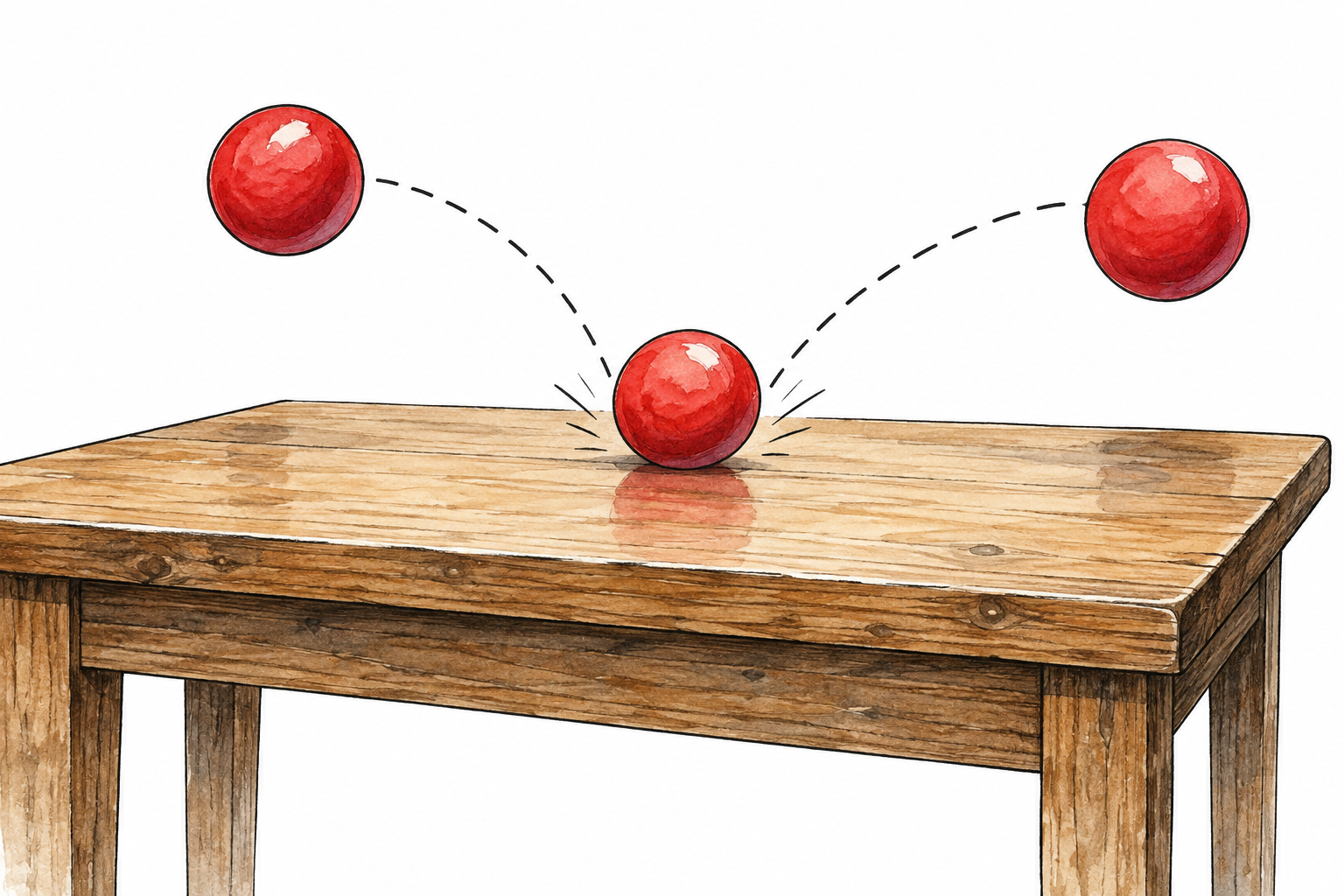
Red ball shown in three successive positions along curved arc, motion trajectory across table.
Etymology

The action-noun ending turns “move” into the process of moving. This sense preserves that concrete meaning: a change of place or position.

In context

Mindscape Masters0:14
motion is an illusion the Paradox goes as follows imagine you want to walk from one point to another
Zeno’s dichotomy paradox.

More examples

  • The wheels stay in motion even after he stops pedaling.
  • She stirs the sauce with slow, circular motions.
  • He motions for us to come closer.

Forms

motion · motions · motioned · motioning

motionless adjective — Not moving or changing position.

Similar words

movement
Movement is more common for everyday changes in position.
gesture
Gesture specifically means a body movement that communicates something.