noun
regression
rih-GRESH-un/rɪˈɡreʃn/
A return to an earlier, worse, or less developed state.
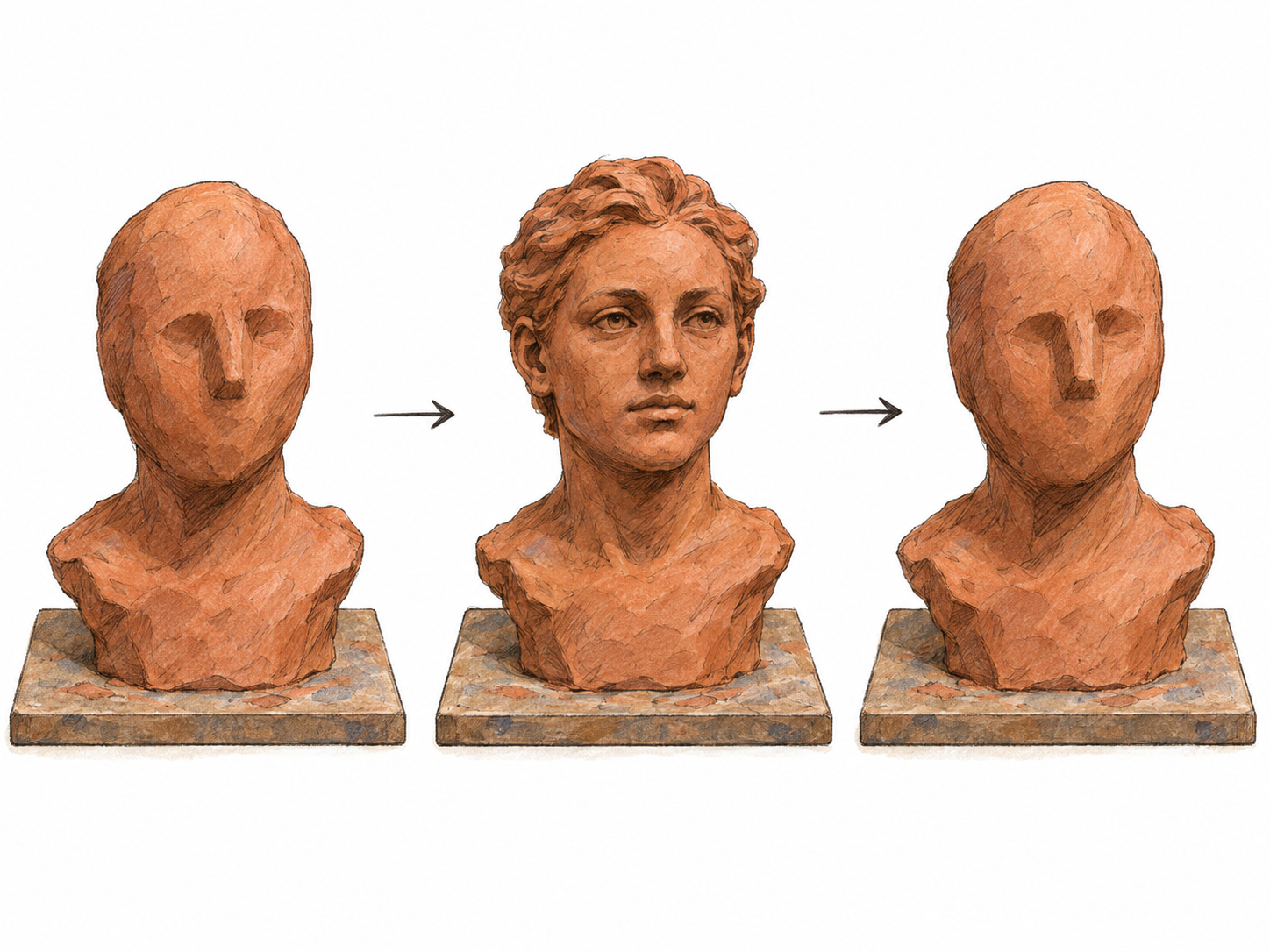
The bust's regression returns its modeled face to the earlier rudimentary shape.
Etymology
Regression names the act of 'stepping back.' Its sense of a return or backward passage extended to returning to a previous condition or relapsing, connecting physical retreat with a loss of development.
In context
Schizotypy is the psychological equivalent of neoteny because it's a regression to a very early childhood state
More examples
- Stress sometimes causes a regression in a child's behavior.
- These repeated mistakes mark a regression in the team's performance.
- The therapist watches for regressions during his recovery.
Forms
regression · regressions
regress verb — Return to an earlier, less developed state.
Similar words
- relapse
- Relapse usually means returning to illness or a harmful habit.
- deterioration
- Deterioration means worsening without necessarily returning to an earlier state.
- reversion
- Reversion emphasizes returning to a previous state, not necessarily worsening.