noun
translation
tranz-LAY-shun/trænzˈleɪʃn/
The expression of meaning in a different language or representation.
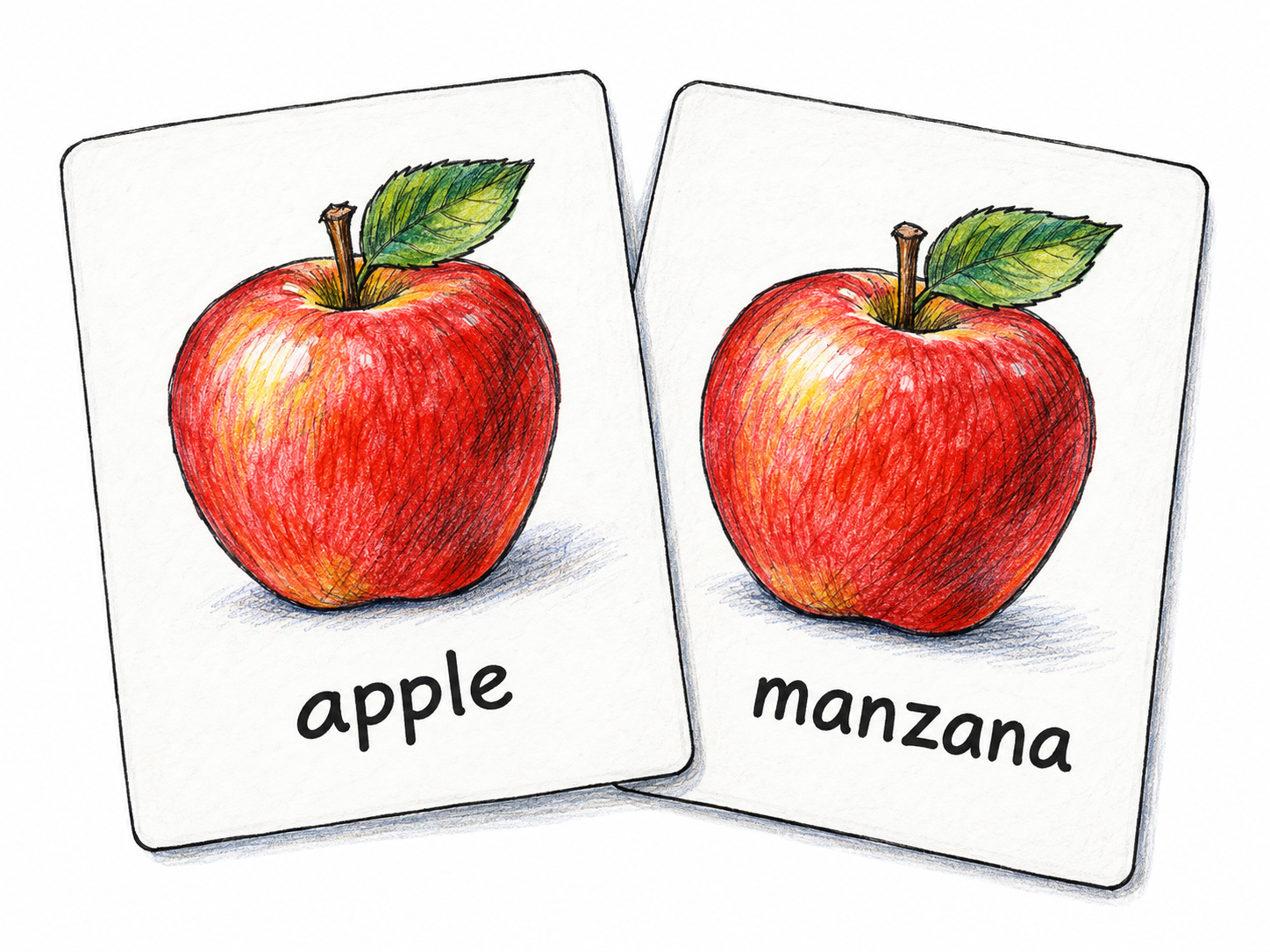
The paired cards show the Spanish translation of apple as manzana.
Etymology
The underlying image is carrying something across: meaning is moved from one language into another. The Latin noun already joined physical transport with the transfer of meaning.
In context
source language and bring it over into a target language you have to make those adjustments an order for it to make sense in the target language so that's what translation is all about
More examples
- Several translations of the novel are available at the library.
- The translation of survey results into charts makes patterns clearer.
- During translation, ribosomes use genetic instructions to build proteins.
Forms
translation · translations
translate verb — Express meaning in another language or form.
translator noun — Someone who renders meaning in another language.
Similar words
- rendering
- Emphasizes a particular version, often with individual stylistic choices.
- interpretation
- Often refers to spoken translation or explaining what something means.
- conversion
- Emphasizes changing form or format rather than conveying meaning.