noun
ape
AYP/eɪp/
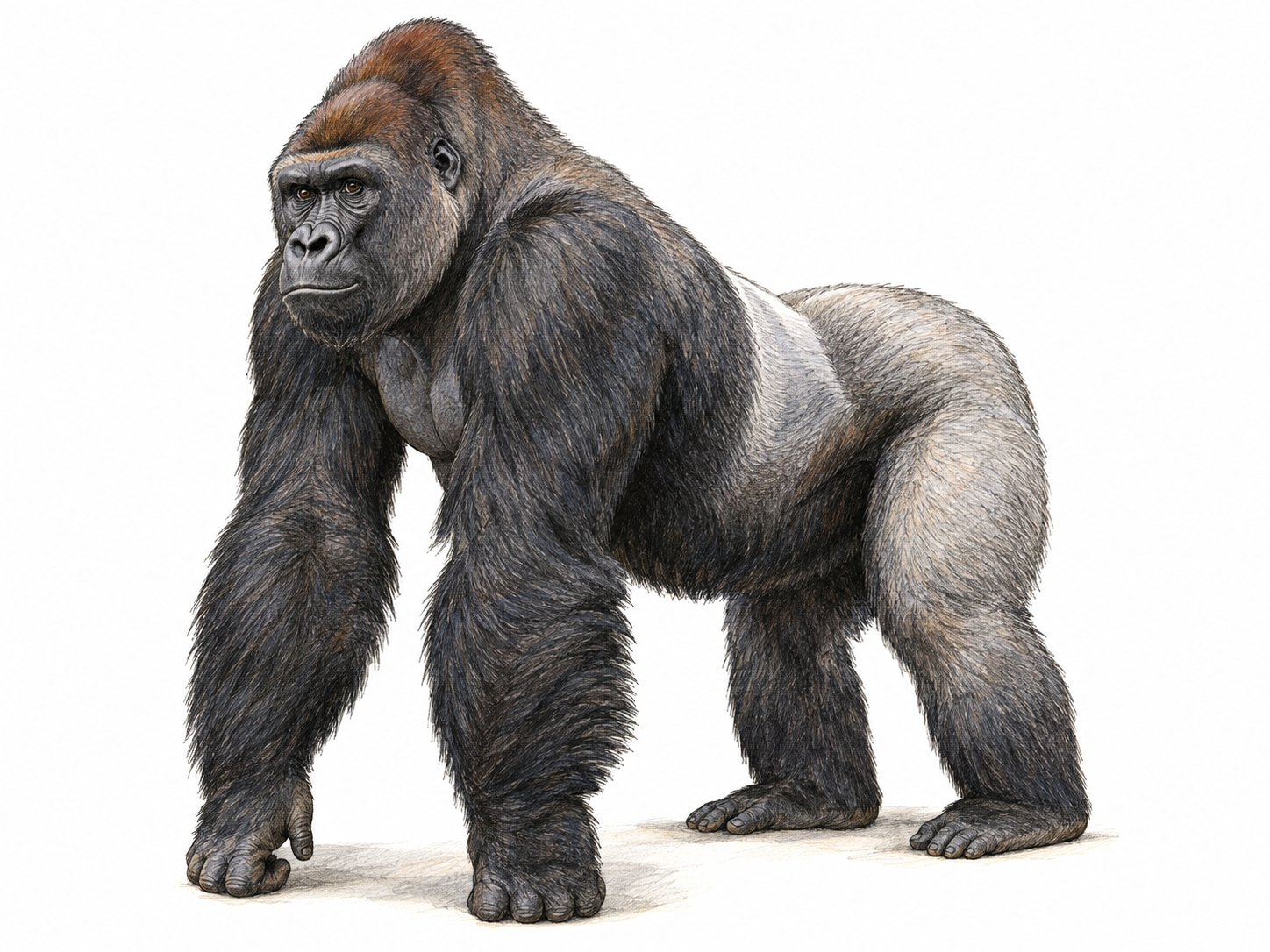
A tailless primate such as a gorilla or chimpanzee.
The gorilla is a large ape with no tail.
Etymology
Old English apa covered both apes and monkeys. The modern zoological sense narrows that older category to tailless, humanlike primates.
In context
Meet the [music] gibbon, often called the lesser ape, a primate built for the sky. Unlike monkeys, gibbons have no tails.
More examples
- Chimpanzees are apes, not monkeys.
- The sanctuary cares for several rescued apes.
- The biologist studies communication among great apes.
Forms
ape · apes