adjective / verb
complete
kum-PLEET/kəmˈpliːt/
Having all required parts with nothing remaining to be done.
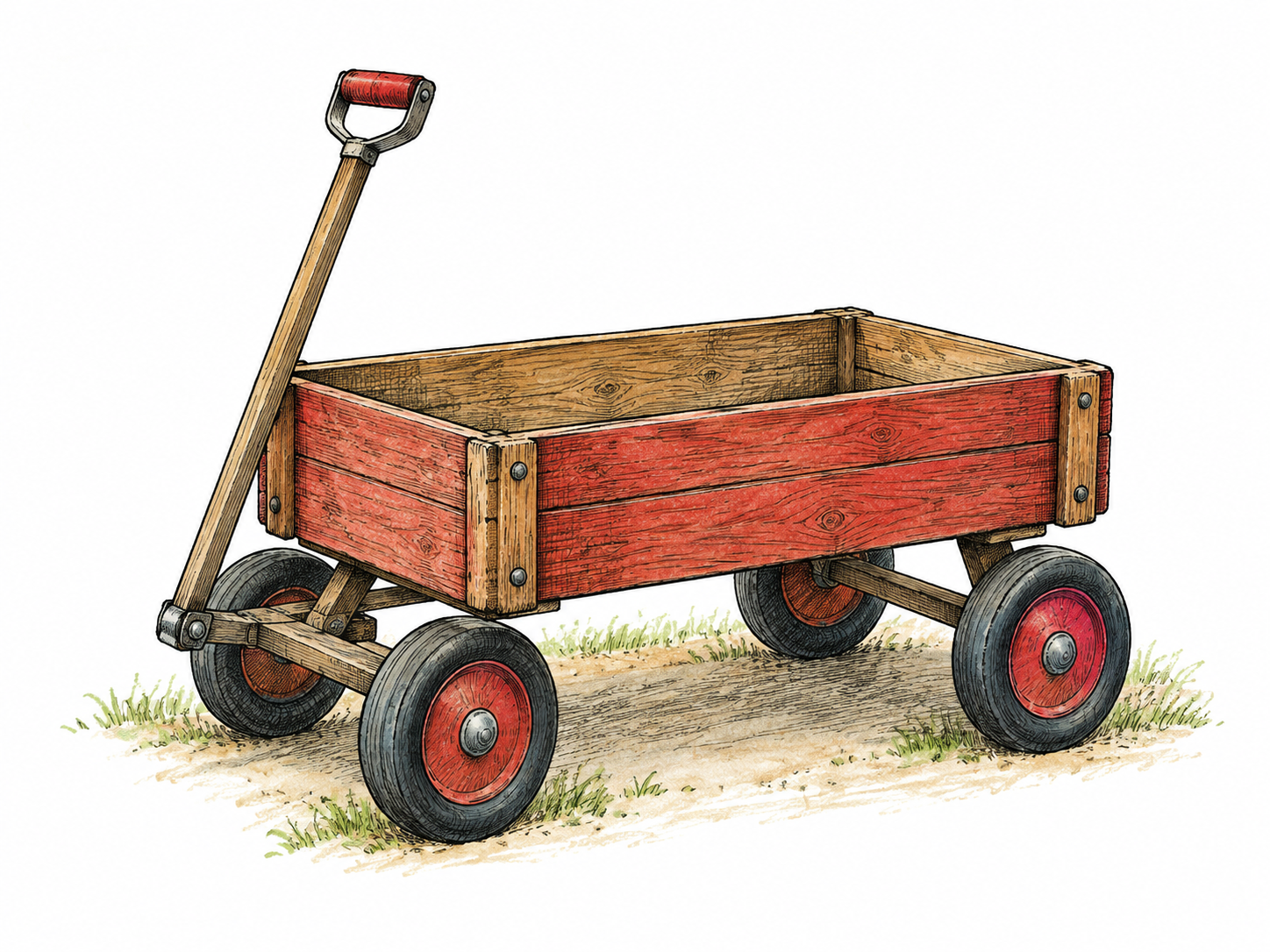
The wooden wagon is complete, with all four wheels and its handle.
Etymology
With com- probably adding emphasis, the original image is being filled up. This extended to having the full required number or finishing a task, hence lacking no necessary part or step.
In context
In the end, all of these elements come together to make a complete obituary that's respectful, informative, and meaningful to share with family and friends.
More examples
- We complete the safety checklist before starting the machine.
- The project is complete and ready for review.
- The repair is a complete success.
Forms
complete · completes · completed · completing · more complete · most complete
completion noun — The act of finishing something fully.
completely adverb — In every way, with nothing lacking.