noun
disaster
dih-ZAS-ter/dɪˈzæstər/
A severely harmful event or failure.
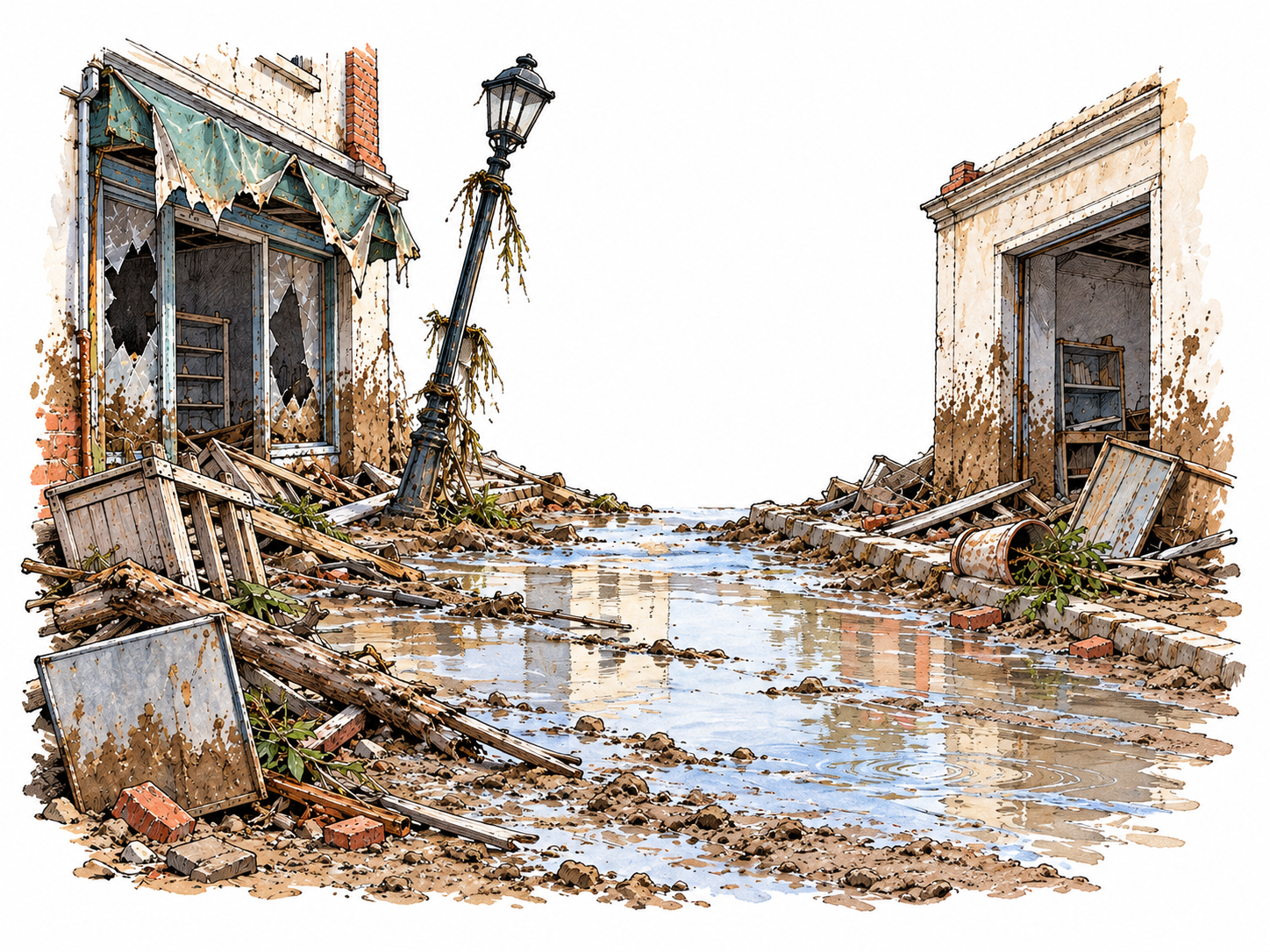
The town faces a disaster as floodwaters sweep through its streets.
Etymology
The “bad star” image is astrological: calamity was blamed on an unfavorable planetary position. Here “star” probably refers to destiny or fortune, connecting the image to a ruinous event.
In context
wreckage, the train had left the tracks with a great force. But how and why? The disaster would unravel the inherent pressure prevalent, but not unique to Japanese railways.
More examples
- Emergency crews train for earthquakes and other natural disasters.
- Losing our biggest customer would be a financial disaster.
- Dinner was a disaster: the chicken burned, and the guests argued.
Forms
disaster · disasters
disastrous adjective — Causing great harm or complete failure.
Similar words
- catastrophe
- Usually emphasizes widespread destruction or an especially devastating failure.
- calamity
- Emphasizes great suffering or distress caused by an event.
- fiasco
- Describes a humiliating failure rather than a destructive event.