verb
disavow
dis-uh-VOW/ˌdɪsəˈvaʊ/
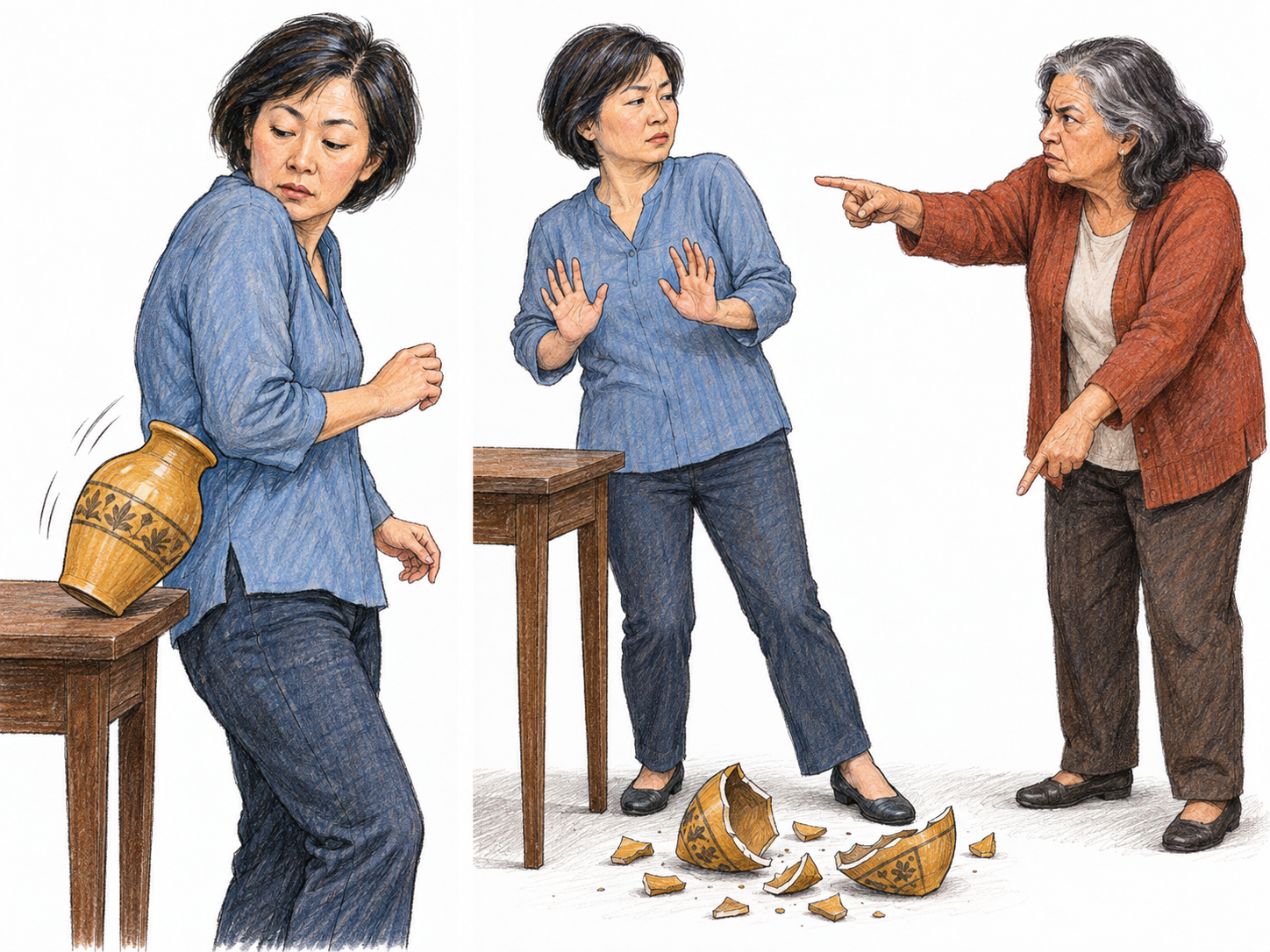
To deny any connection with or responsibility for something.
The woman disavows responsibility for the broken vase despite knocking it over herself.
Etymology
Avowing meant openly acknowledging or standing behind someone or something. Reversing that action gives disavow its sense of denying a connection, whether responsibility, support, or knowledge.
In context
ship abandonment where vessels come into port, the owners disavow their property and often the crew are left high and dry.
More examples
- The senator disavowed any connection with the group.
- Both organizers disavow responsibility for the missing funds.
- The charity issued a statement disavowing the unauthorized fundraiser.
Forms
disavow · disavows · disavowed · disavowing
disavowal noun — A denial of connection with or responsibility.