verb
disown
dis-OHN/dɪsˈoʊn/
To refuse to acknowledge a connection with or responsibility for someone or something.
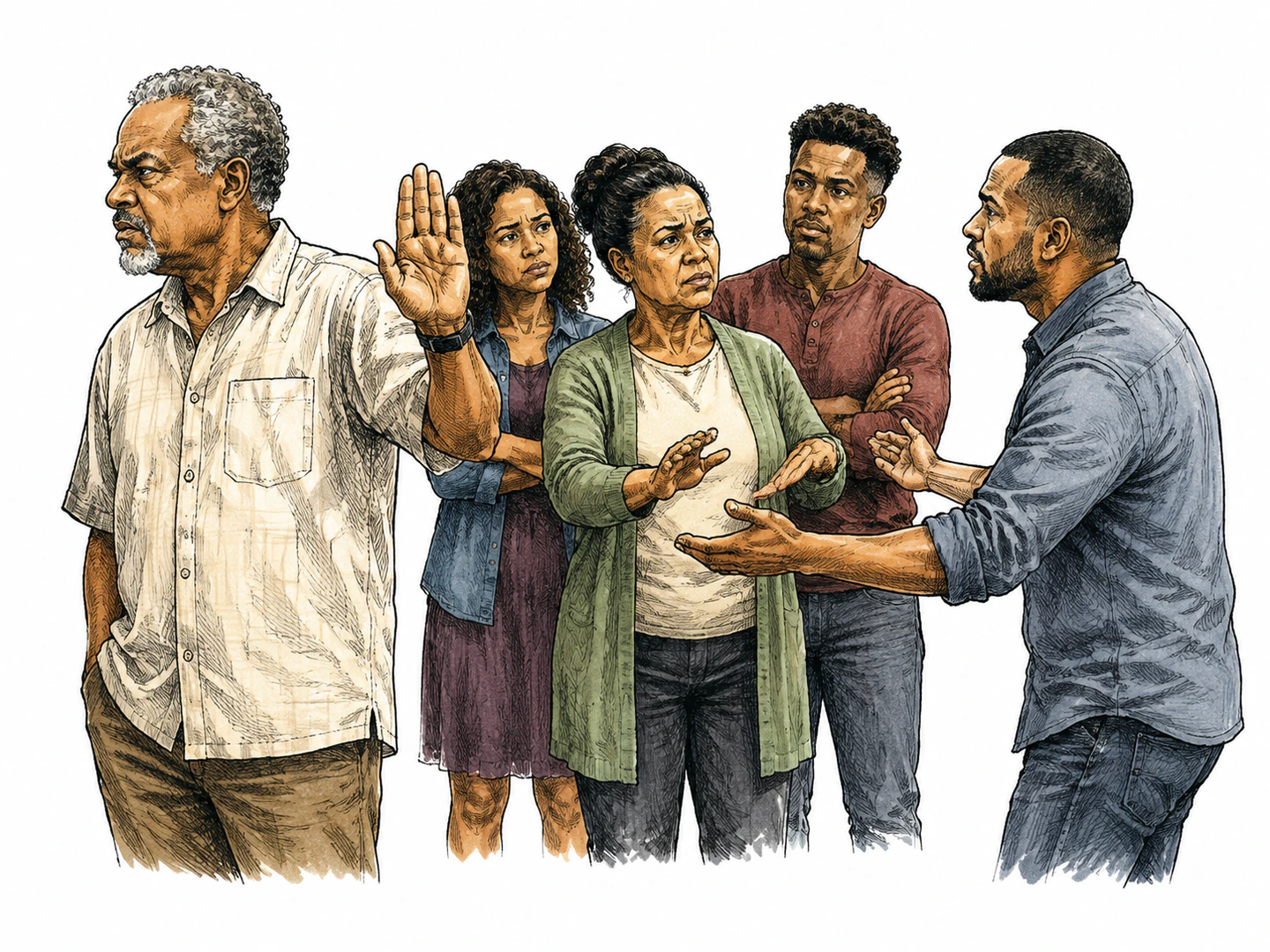
The parent disowns the adult child, turning away from an outstretched hand.
Etymology
Own could mean accepting responsibility or acknowledging something, not just possessing it. Disown reverses that acceptance: people refuse to recognize a person or thing as connected with them.
In context
and you can disown your children but you can claim to have created your own paintings,
his entire church and community are going to disown him.
More examples
- Her family threatens to disown her over the marriage.
- The author later disowned his earliest book.
- She refuses to disown responsibility for the failed project.
Forms
disown · disowns · disowned · disowning