noun
disobedience
dis-uh-BEE-dee-uns/ˌdɪsəˈbiːdiəns/
Failure or refusal to obey rules, orders, or authority.
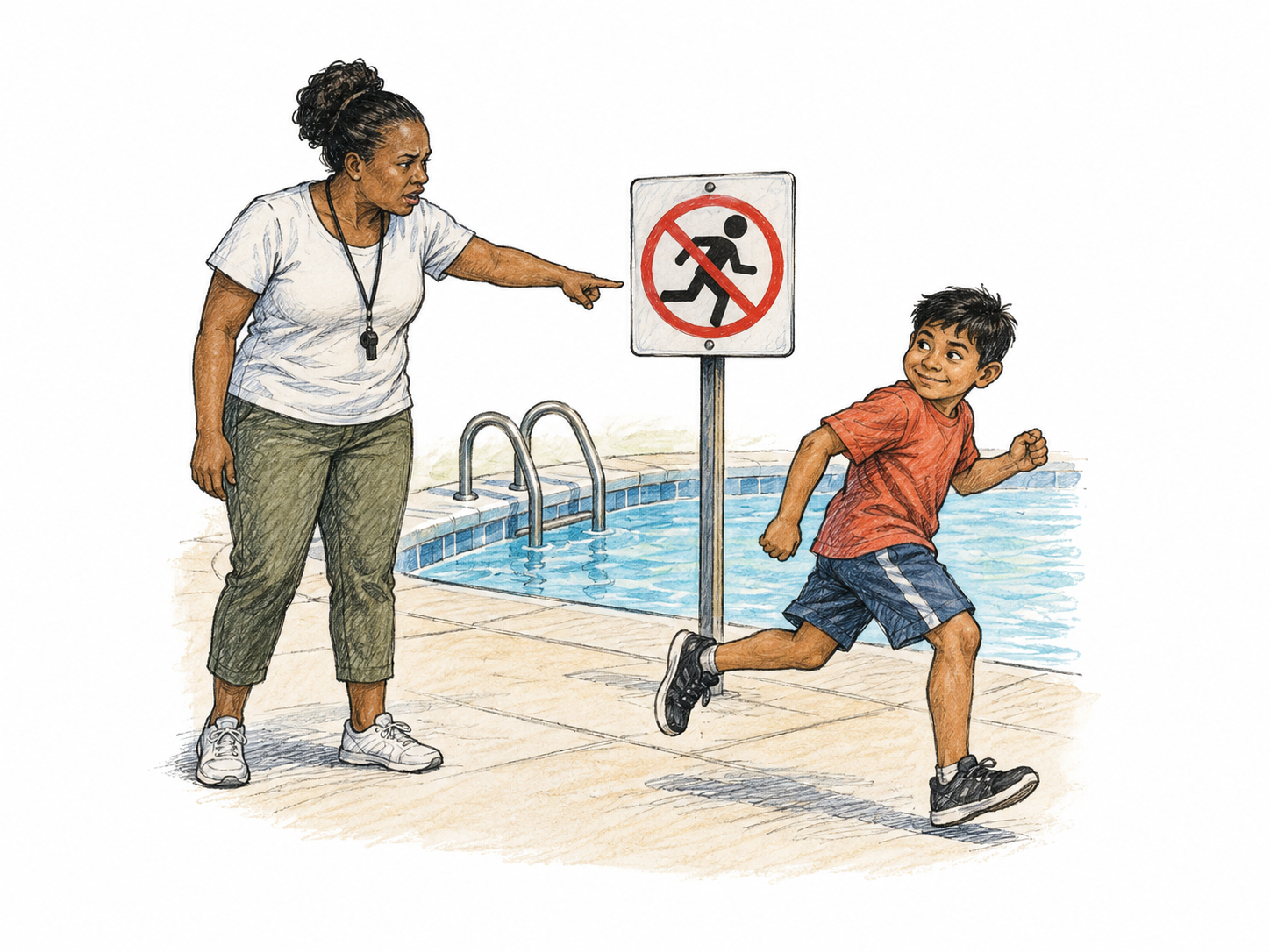
The child's disobedience continues as the adult points to the pool's no-running rule.
Etymology
Dis- negates obedience, whose Latin base comes from a verb meaning both “listen to” and “obey.” The connection is listening as heeding: disobedience is failure or refusal to act on an order, not simply failure to hear it.
In context
He he walked into the seat of power and he flipped over the tables of injustice. It was an act of civil disobedience
More examples
- Ignoring the captain's order is an act of disobedience.
- Peaceful protesters use civil disobedience to challenge unjust laws.
- Her disobedience leads to a week without video games.
Forms
disobey verb — To refuse or fail to obey.
disobedient adjective — Refusing to follow rules or orders.
Similar words
- defiance
- Emphasizes open resistance rather than simply failing to obey.
- insubordination
- Specifically concerns refusing orders from someone of higher rank.
- noncompliance
- Emphasizes failure to meet rules, requirements, or official standards.