verb
disobey
dis-uh-BAY/ˌdɪsəˈbeɪ/
To refuse or fail to follow a rule, order, or authority.
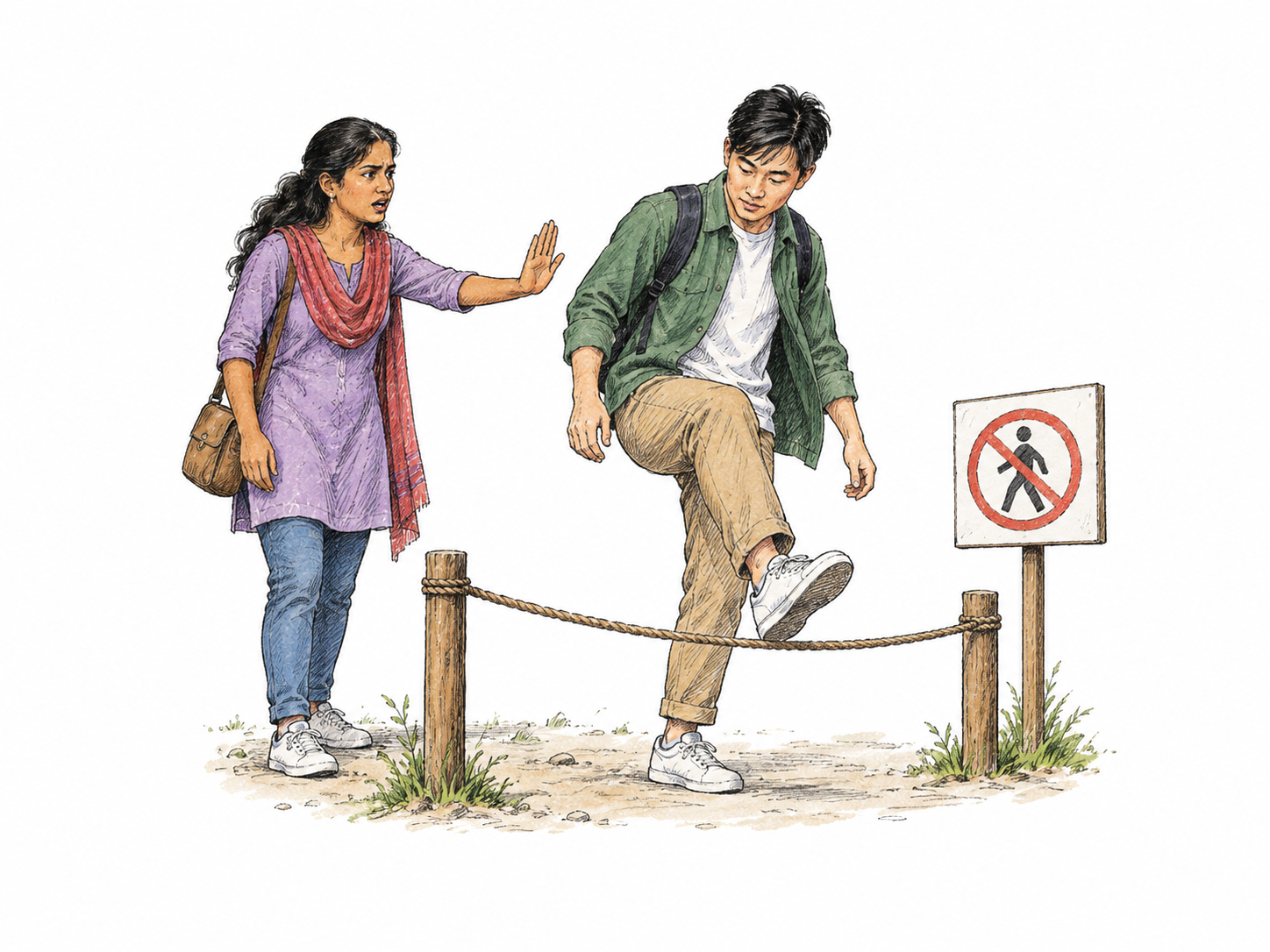
The person disobeys the restriction by stepping over the boundary cord.
Etymology
Obedire connected listening with obeying: paying attention to people became carrying out their commands. The negative prefix reverses that obedience, giving refusal or failure to follow a command.
In context
that in those instances where the laws of the land and that includes the Constitution violate the natural law judges have a duty to disobey
More examples
- Drivers who disobey traffic signals can cause accidents.
- The soldier disobeyed a direct order.
- Our dog often disobeys the command to stay.
Forms
disobey · disobeys · disobeyed · disobeying
disobedience noun — Failure or refusal to obey instructions.
disobedient adjective — Refusing or failing to follow instructions.