noun
electrolyte
i-LEK-truh-lyt/ɪˈlektrəlaɪt/
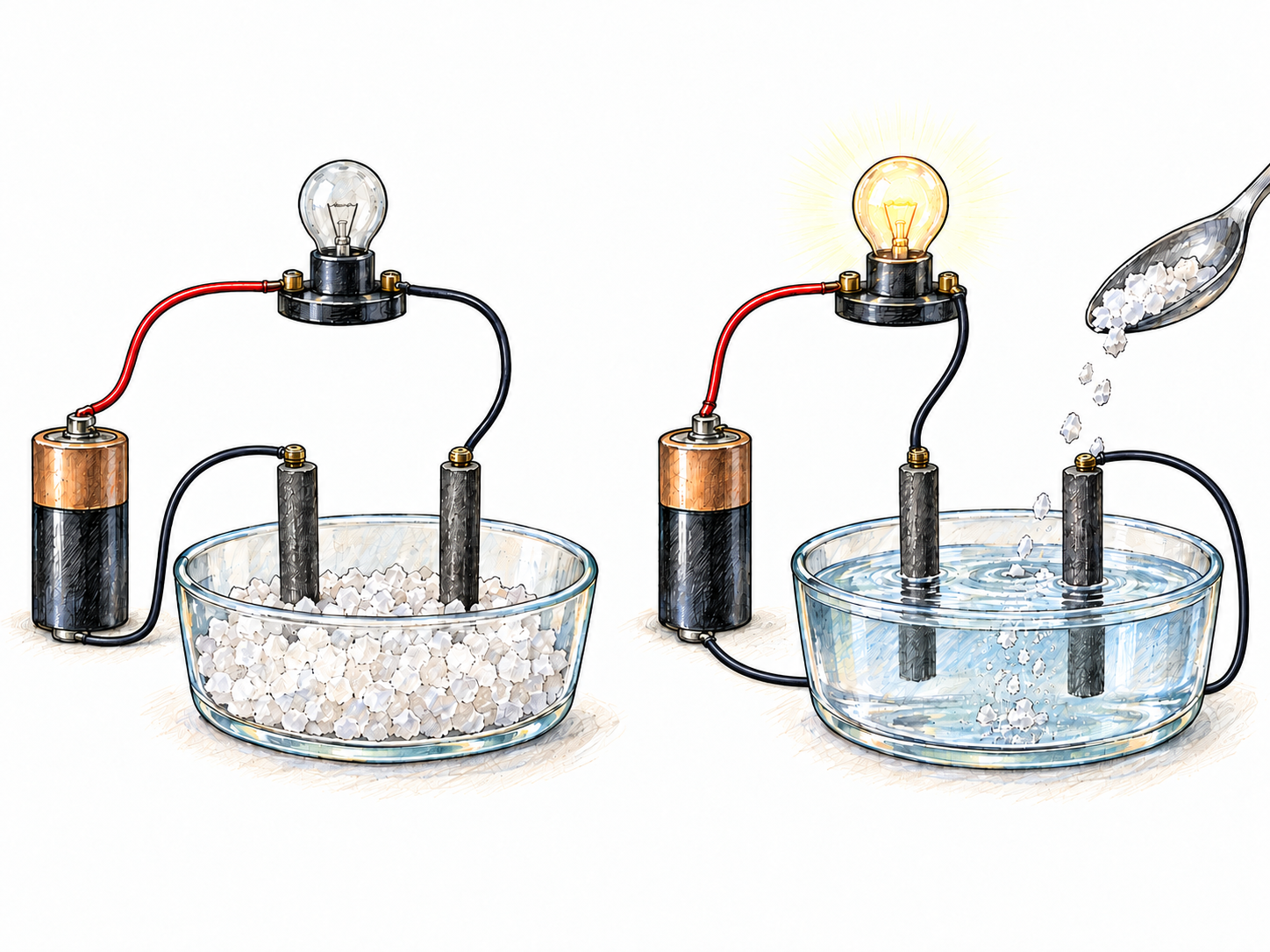
A substance that carries electric charge through mobile ions.
The salt solution acts as an electrolyte and allows the bulb to light.
Etymology
The “loosening” refers to a substance being decomposed by electrolysis. The modern sense emphasizes its ability to carry electric current when dissolved or molten.
In context
an anode that easily gives up electrons. That’s iron. A cathode that easily accepts electrons. That’s oxygen. And lastly, you’ll need an electrolyte solution that shuttles ions between the cathode and anode.
More examples
- Ions moved through the electrolyte.
- The battery contained a liquid electrolyte.
- The experiment compared different electrolytes.
Forms
electrolyte · electrolytes