verb
impeach
im-PEECH/ɪmˈpiːtʃ/
To formally challenge someone's integrity or fitness.
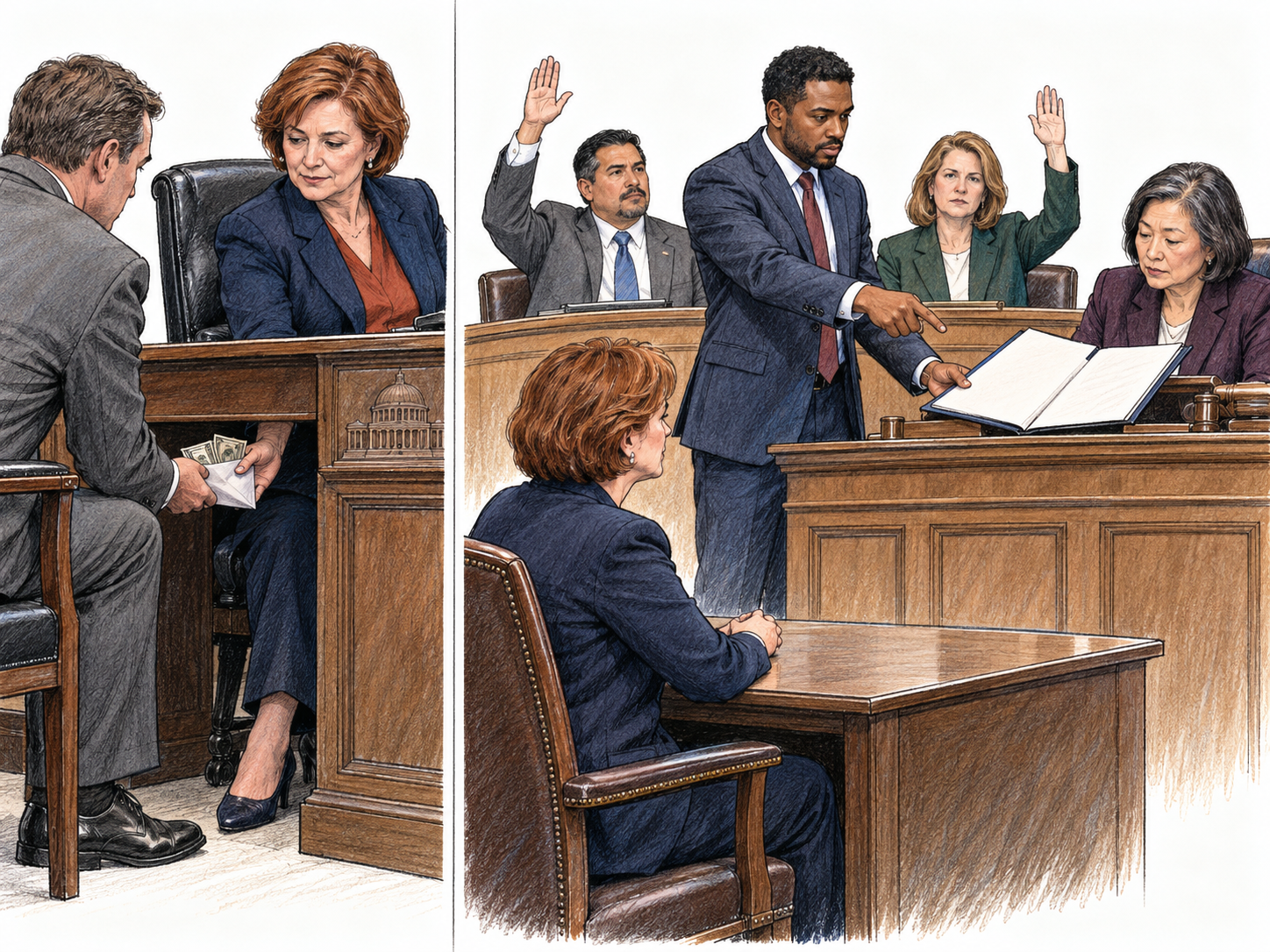
The legislature impeaches the public official for accepting a cash bribe.
Etymology
The pieces evoke putting someone in fetters, behind the earlier meaning “hinder.” The shift to accusation may reflect confusion with Latin impetere, “attack, accuse”; the legal sense later narrowed to formally charging a public official.
In context
they held on to enough seats to impeach him on two counts perjury and obstruction of justice
More examples
- The House can impeach a president without removing the president from office.
- The defense attorney impeaches the witness with an earlier, contradictory statement.
- New evidence may impeach the report's credibility.
Forms
impeach · impeaches · impeached · impeaching
impeachment noun — A formal accusation or challenge to credibility.
impeachable adjective — Subject to formal charges of misconduct.