verb
leave
LEEV/liːv/
To depart while allowing something to remain behind.
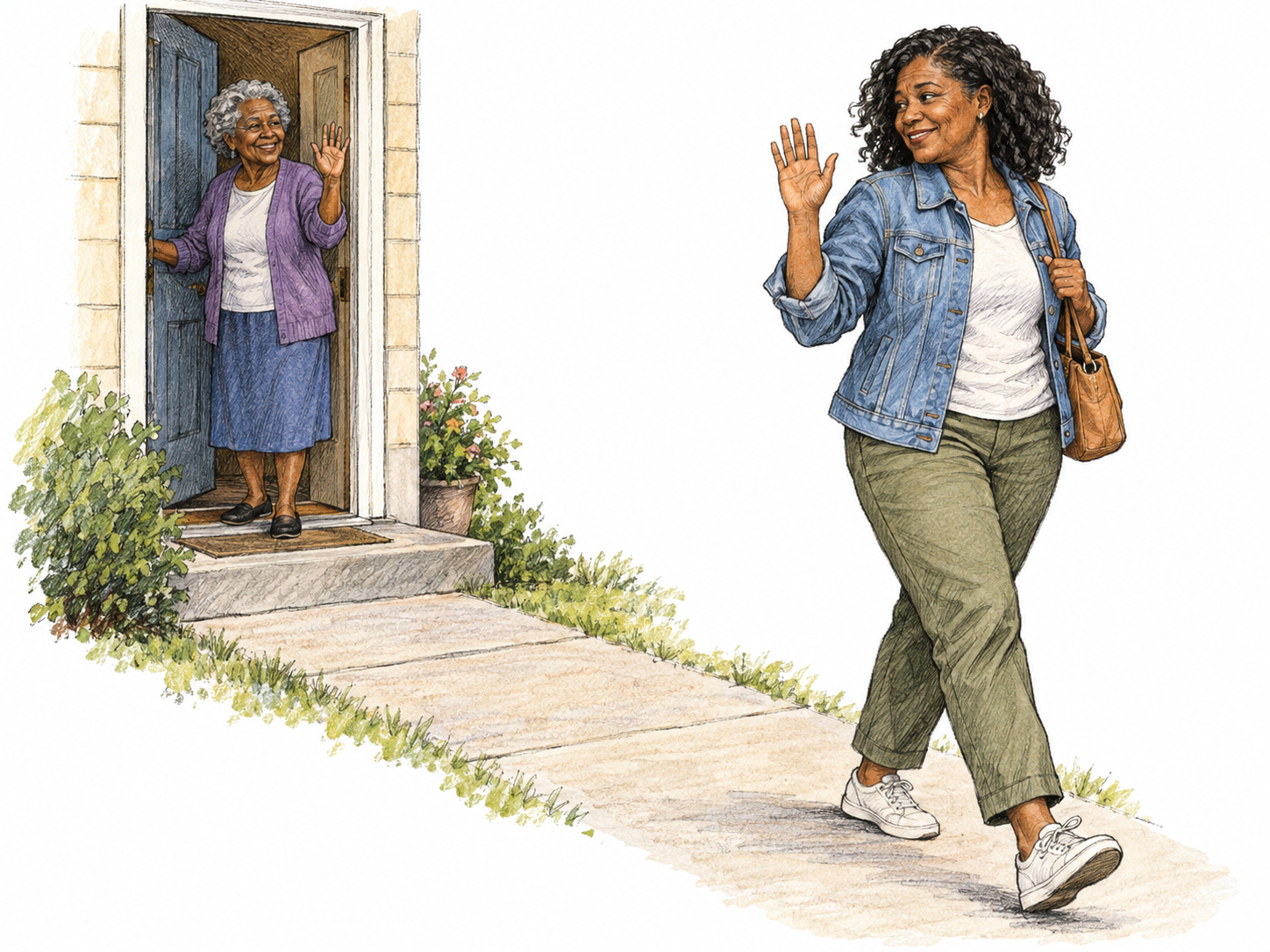
The woman leaves the house, waving to the older woman at the doorway.
Etymology
Old English læfan meant to allow something to remain. The departure sense developed through “leave behind”: going away means that a person or place remains behind you.
In context
the wages low Leave her, Johnny, leave her I guess it's time for us to go And it's time for us to leave her
More examples
- We leave the dog with a neighbor while we travel.
- He left a note on the counter before heading out.
- Her aunt left her the house in her will.
Forms
leave · leaves · left · leaving