noun
palsy
PAWL-zee/ˈpɔːlzi/
Loss of muscle control caused by a nervous disorder.
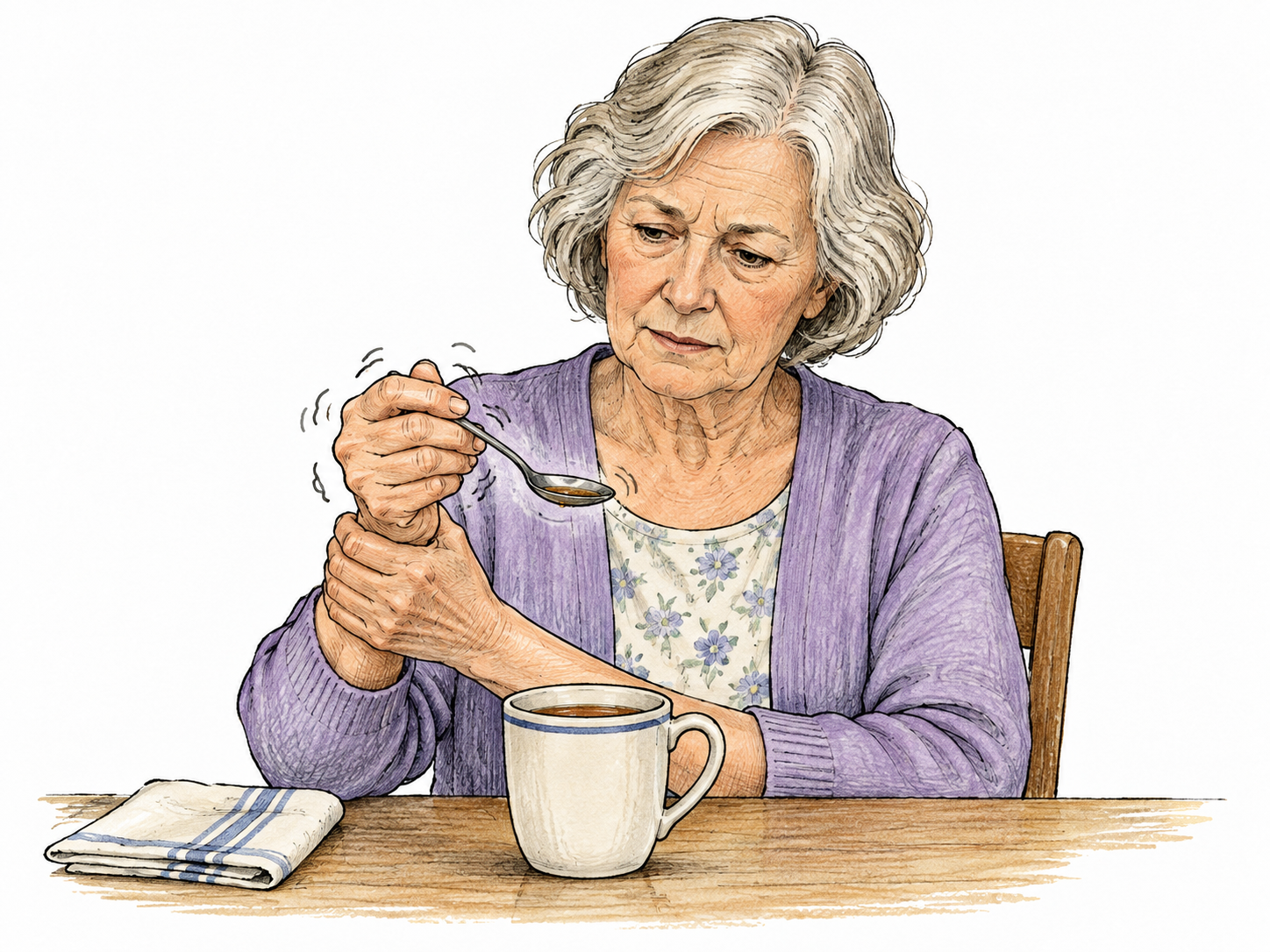
The palsy makes the hand tremble as the person holds a spoon.
Etymology
Greek paralysis literally meant “loosening,” with its related verb meaning “disable” or “enfeeble.” Palsy and paralysis share this ancestor, connecting the name with loss of normal bodily function.
In context
BELL'S PALSY BASICALLY IS A DISORDER THAT AFFECTS THE NERVE THAT MOVES THE FACE.
More examples
- He uses a walker because cerebral palsy affects his balance.
- Bell's palsy weakens the muscles on one side of her face.
- Physical therapy helps him manage the muscle weakness caused by palsy.
Forms
palsy · palsies
palsied adjective — Affected by palsy or involuntary trembling.