noun
paraplegia
pair-uh-PLEE-juh/ˌpærəˈpliːdʒə/
Paralysis affecting the legs and lower body.
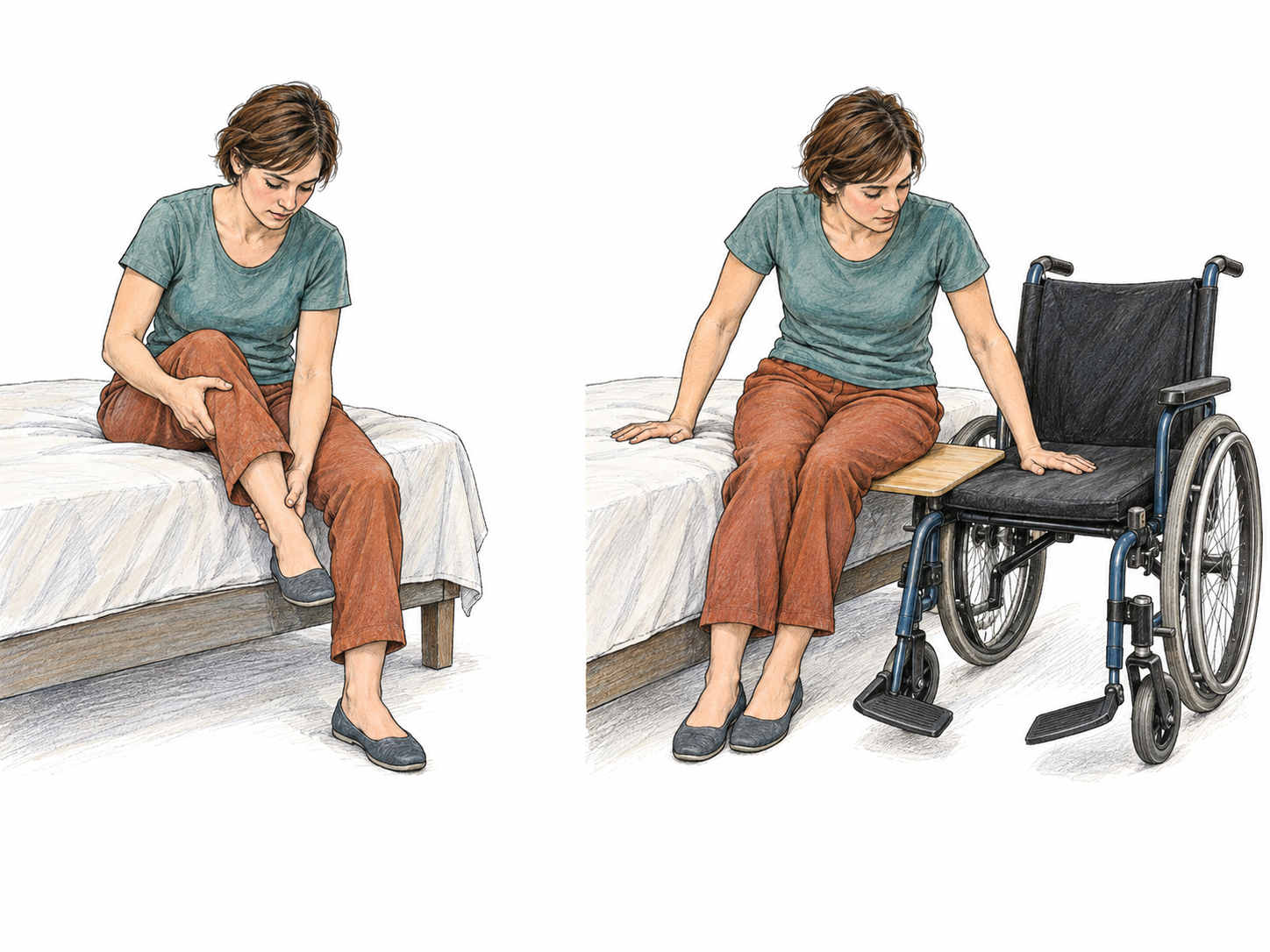
She uses a wheelchair because paraplegia affects both of her legs.
Etymology
The pieces evoke being struck at the side: the Greek term meant paralysis of one side of the body. The English medical sense instead identifies paralysis of the lower body and legs.
In context
a paraplegia from a nerve injury
More examples
- A spinal cord injury can cause paraplegia.
- Physical therapy helps him manage daily activities with paraplegia.
- Her paraplegia does not affect the strength in her arms.
Forms
paraplegic adjective — Affected by paralysis of the lower body.
Similar words
- paralysis
- A broader term for lost movement in any body part.