noun
parasite
PAIR-uh-syte/ˈpærəsaɪt/
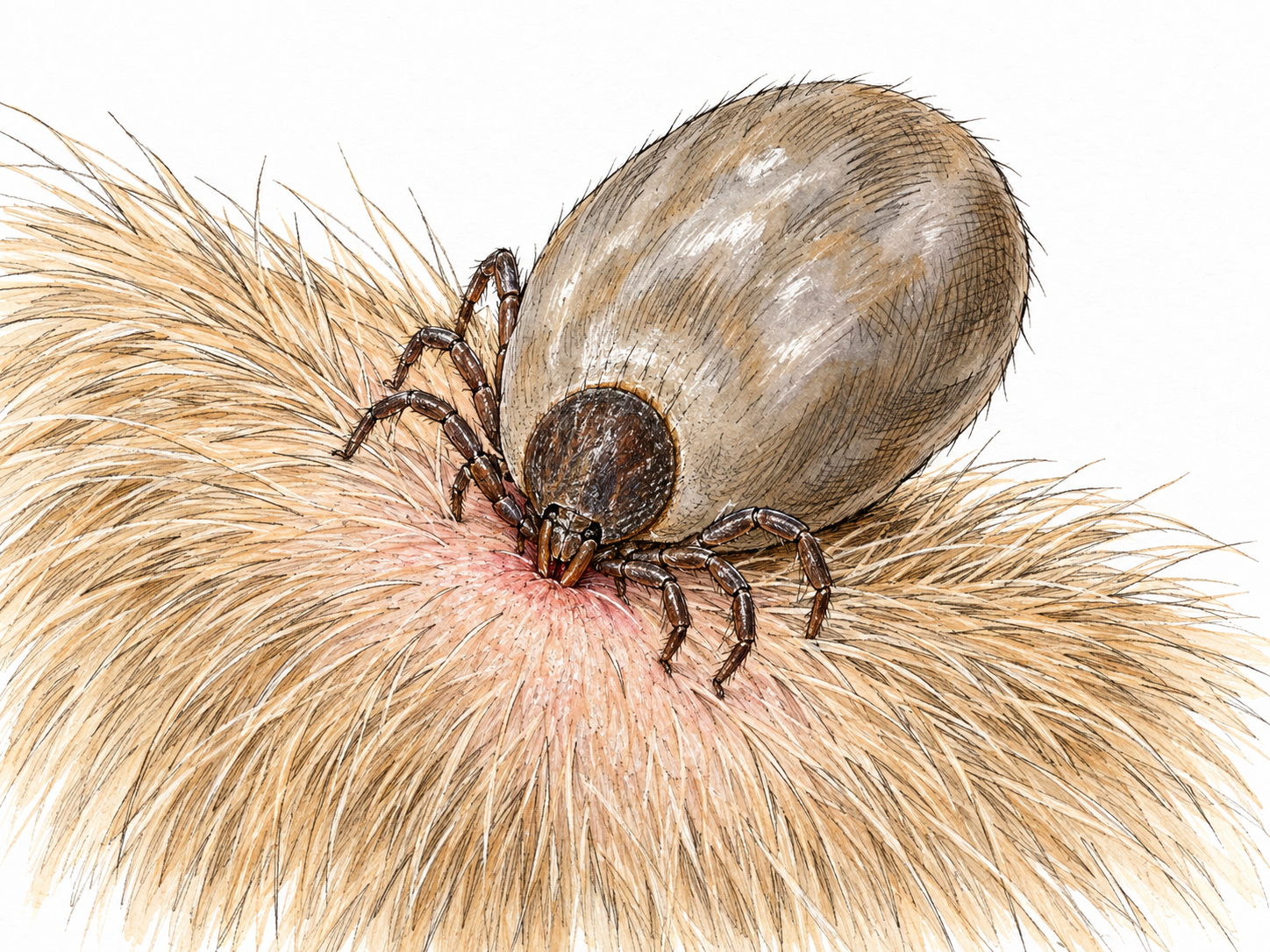
An organism that obtains nourishment from a host at the host's expense.
The parasite feeds on the dog's blood, leaving an irritated patch.
Etymology
“Feeding beside” described a person who ate at another's table and lived at the host's expense. That social image became the biological term for an organism that benefits at its host's expense.
In context
A parasite is an organism that makes its living taking resources from another, called the host. Parasites give nothing back and often harm the host
More examples
- A tapeworm is a parasite that absorbs nutrients inside its host's intestines.
- Fleas are parasites that live on animals and feed on their blood.
- Mosquitoes can transmit the parasites that cause malaria.
Forms
parasite · parasites
parasitic adjective — Living on a host at its expense.
parasitism noun — A relationship in which one organism exploits another.
Similar words
- bloodsucker
- Feeds specifically on blood; other parasites obtain nourishment differently.