adjective
parasitic
par-uh-SIT-ik/ˌpærəˈsɪtɪk/
Obtaining nourishment from a host at its expense.
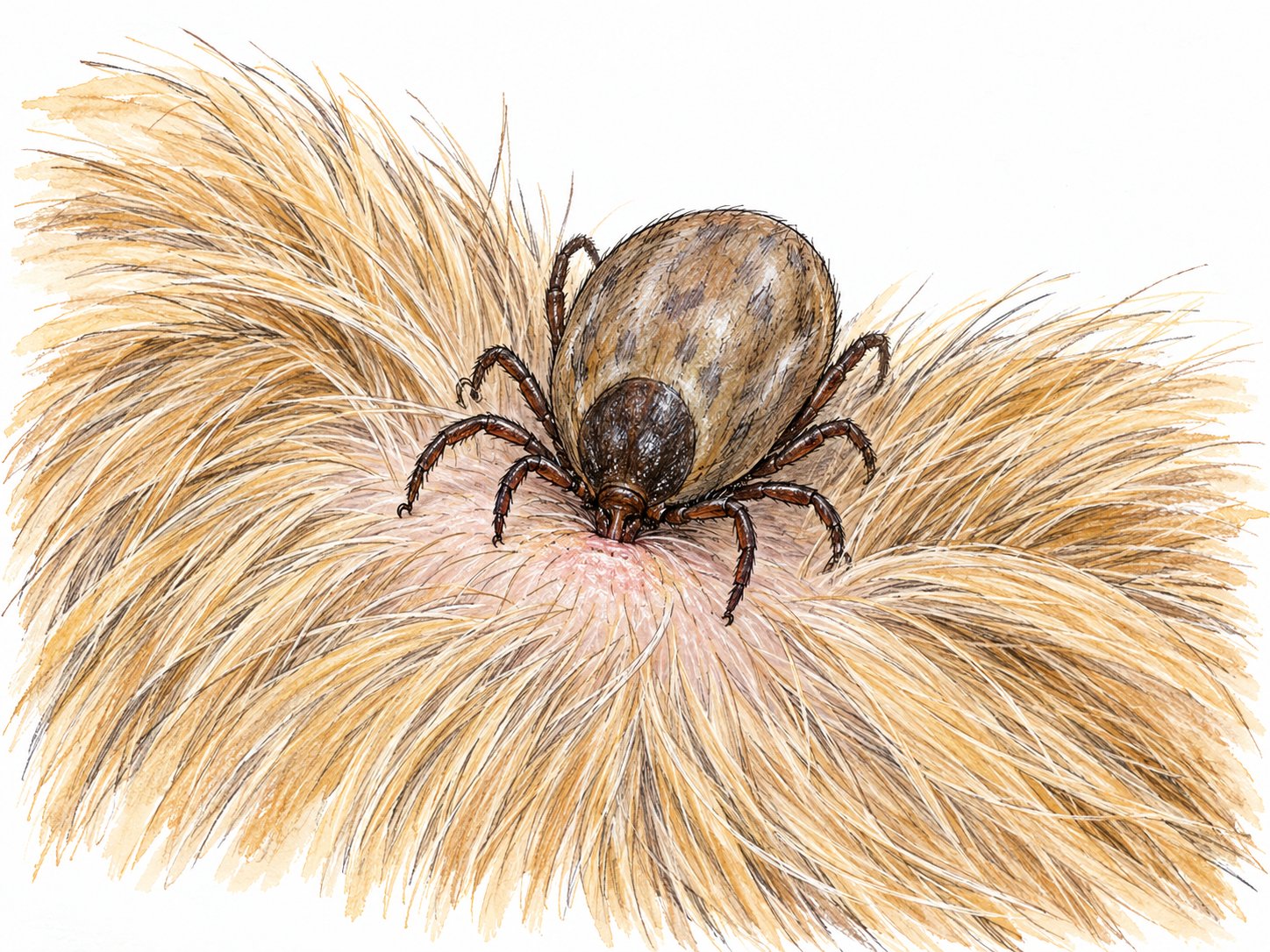
The parasitic tick feeds while attached to the dog's skin.
Etymology
The underlying image of “feeding beside” became a label for someone living at another's expense. The adjective applies that dependence or exploitation to people and, in biology, to organisms living at a host's expense.
In context
a narrow strand of cells infiltrates the body of a grapevine, not unlike the roots of those parasitic barnacles. The corpse flower is stealing nutrients from the vine, using them to grow big and beautiful.
More examples
- Ticks are parasitic animals that feed on their hosts' blood.
- Mistletoe is a parasitic plant that draws water and nutrients from trees.
- A parasitic fungus weakens the wheat plants as it feeds.
Forms
parasite noun — Organism nourished at a host's expense.
parasitism noun — Relationship benefiting one organism at its host's expense.
Similar words
- bloodsucking
- Specifically describes feeding on blood rather than other nutrients.