noun
paresis
puh-REE-suhs/pəˈrisəs/
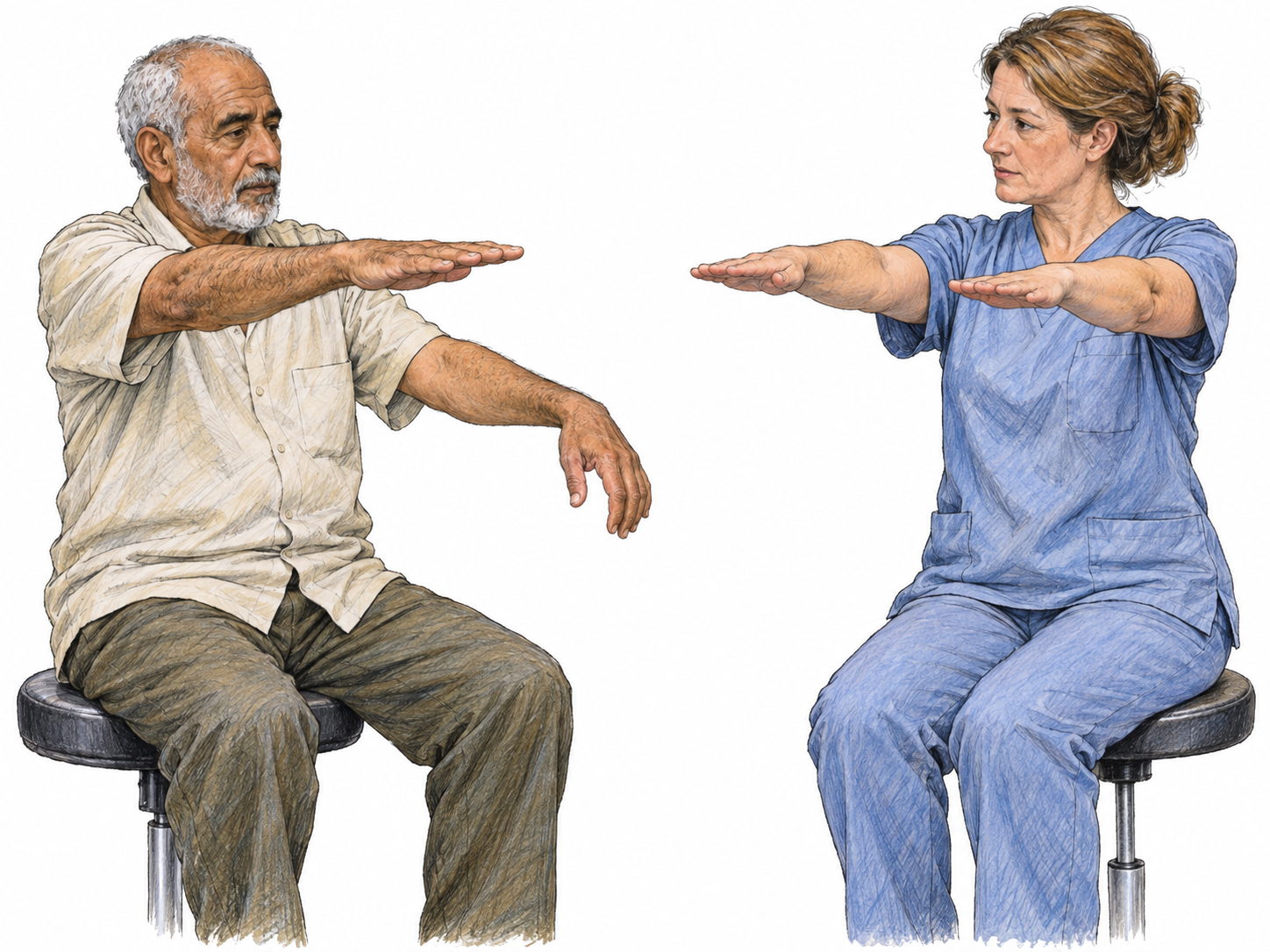
Partial loss of the ability to move muscles.
The patient has paresis in her left arm but can still move it.
Etymology
These pieces combine in a Greek verb meaning 'let go.' Its noun described a slackening of strength, providing the image behind paresis as partial paralysis or muscular weakness.
In context
that results in general paresis which causes loss of sensation and weakness and sometimes even paralysis mostly in the legs
More examples
- Physical therapy helps him manage the paresis in his leg.
- The doctor checks for paresis by testing strength in both arms.
- Mild paresis makes it difficult for her to grip a pencil.
Forms
paresis · pareses
paretic adjective — Affected by partial muscle paralysis.