noun
physiology
fiz-ee-AH-luh-jee/ˌfɪziˈɑːlədʒi/
The ways living organisms and their parts function.
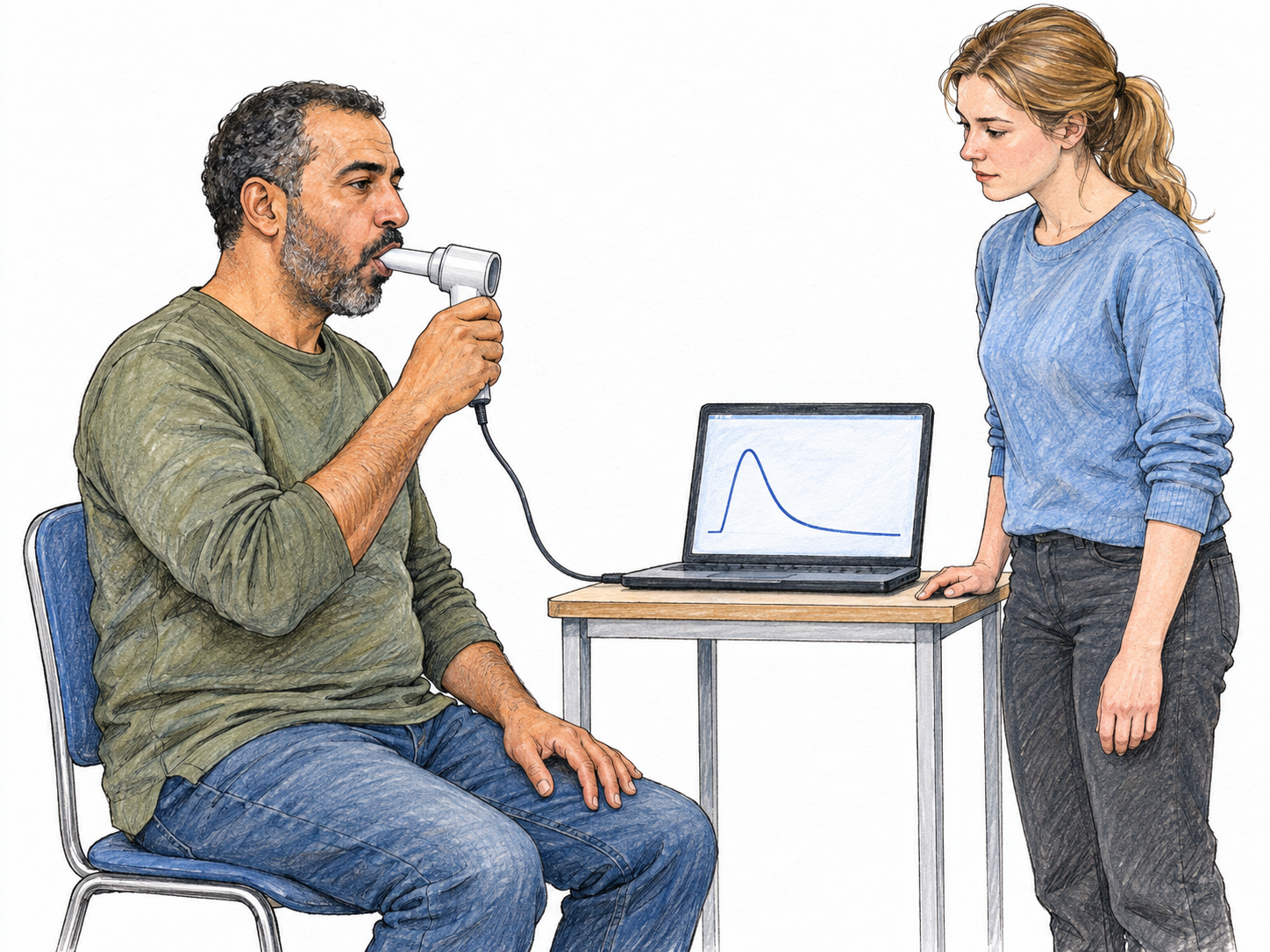
The researcher studies respiratory physiology by measuring the volunteer's exhalation with a spirometer.
Etymology
The pieces originally meant inquiry into nature broadly. That scope narrowed to the normal functioning of living things, giving the modern study of how bodies and their parts work.
In context
that function such as the brain the brain is shaped the way it is it's designed that way because of the functions that it has to perform so anatomy and physiology cannot really be studied separately
More examples
- The physiology of desert plants helps them survive with little water.
- She studies human physiology to understand how the body works.
- A frog's physiology changes as it develops from a tadpole.
Forms
physiology · physiologies
physiological adjective — Relating to how living organisms function.
physiologist noun — A scientist who studies how organisms function.
Similar words
- functioning
- Describes how something operates, whether living or not.
- biology
- Studies living things broadly, not just how they function.