verb
terminate
TER-mih-nayt/ˈtɜːrmɪneɪt/
To bring something to an end.
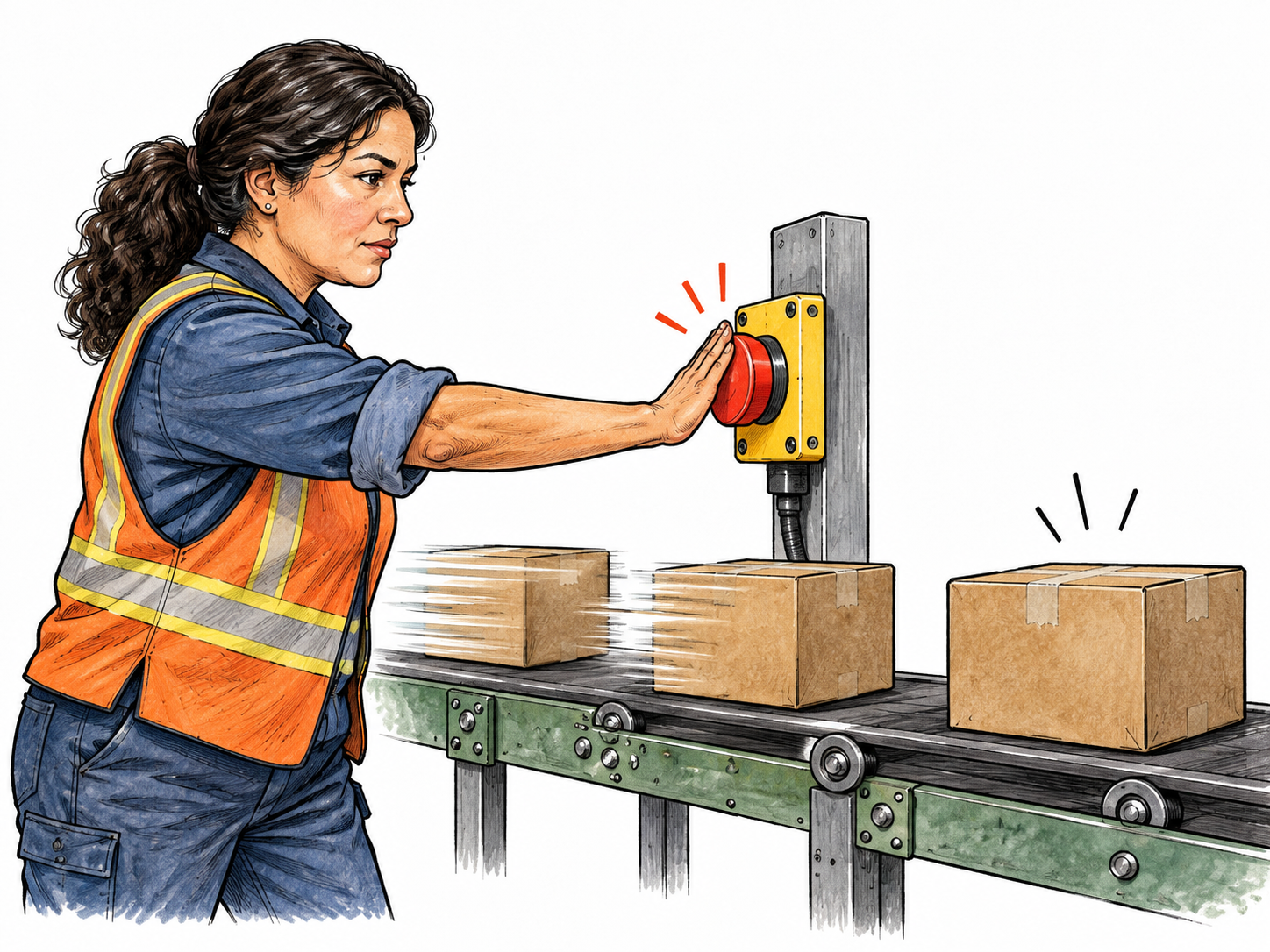
The worker presses the stop switch to terminate the conveyor's operation.
Etymology
From the idea of an end or boundary, Latin formed a verb meaning to mark that boundary. To terminate something applies this idea to an activity or process: bringing it to its endpoint.
In context
he was finally declared brain dead and his family had to make that wrenching decision to terminate his intubation and let him pass.
More examples
- Either party may terminate the contract with thirty days' notice.
- The company terminated his employment after repeated safety violations.
- Closing the browser terminates your session.
- In the spy novel, the agent receives orders to terminate a rival.
Forms
terminate · terminates · terminated · terminating
termination noun — The act of bringing something to an end.