DictionaryRoot: -er
English

-er

a person or thing that does something

Forms

  • -er
  • -r — Used after some bases ending in e.

Origin

Old English -ere, generally traced through Germanic to Latin -arius.

Note

It can name a tool as readily as a person. The comparison ending in taller has a different history.

40 / 113
verb

linger

LING-ger/ˈlɪŋɡər/

To stay or continue longer than expected.

A customer lingers over an empty cup while a worker stacks nearby chairs.
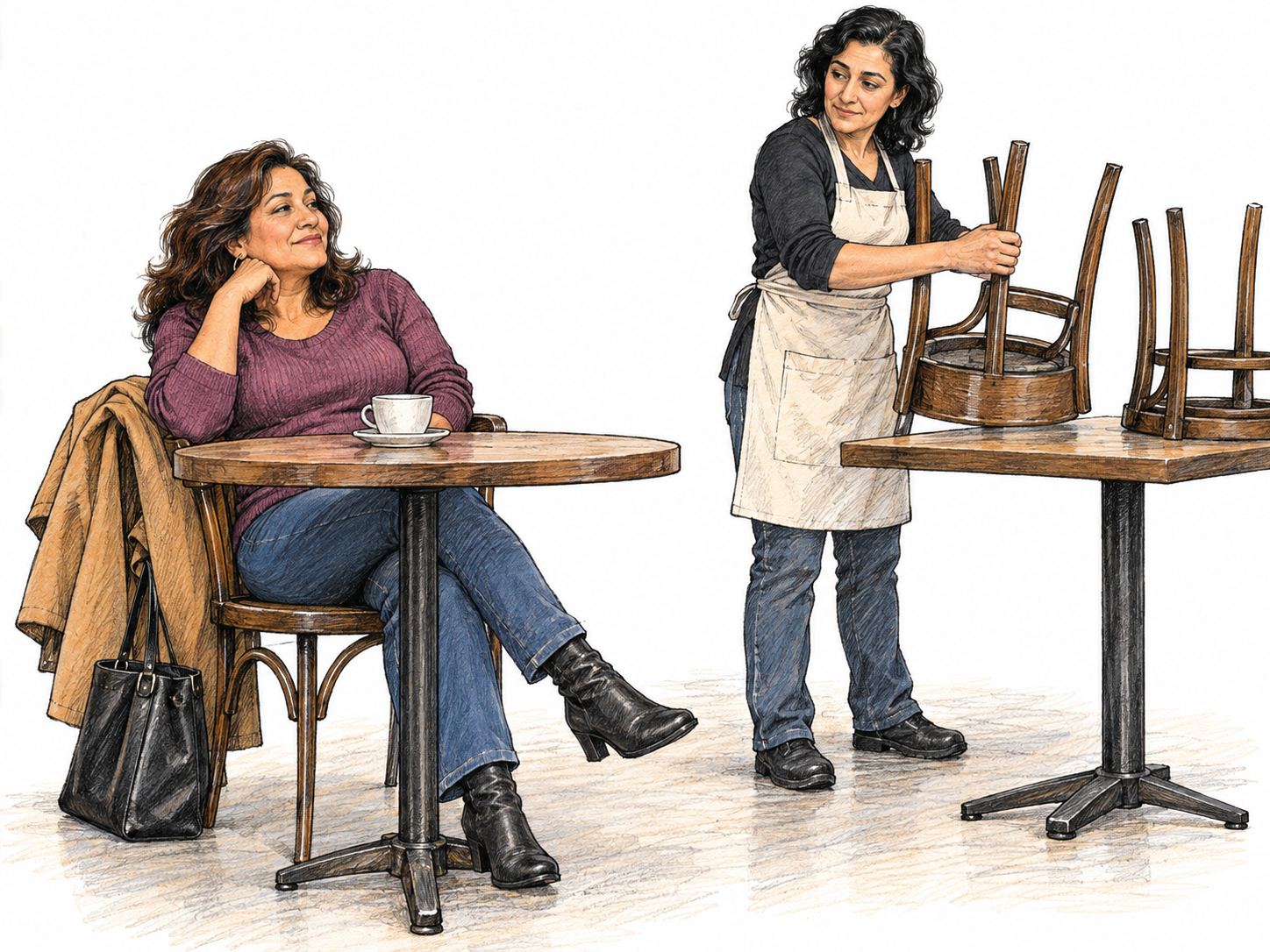
The last café customer remains comfortably seated over an empty cup while a worker stacks the surrounding chairs to close.
Etymology

The lengthening root, with a repeated-action suffix, came to describe tarrying or dwelling: effectively, lengthening one's stay. From this developed the sense of delaying departure or continuing longer than expected.

In context

Doctor O'Donovan0:18
however some food can Linger on longer than it should in your digestive tract
12 foods and drinks that can cause BLOATING | Doctor O'Donovan explains...

More examples

  • The smell of garlic lingers long after dinner.
  • We lingered by the door, reluctant to say goodbye.
  • Doubts linger even after she explains what happened.

Forms

linger · lingers · lingered · lingering

Similar words

remain
Remain means stay, without suggesting an unexpectedly long duration.
persist
Persist emphasizes continuing despite resistance or attempts to end something.