DictionaryRoot: -er
English

-er

a person or thing that does something

Forms

  • -er
  • -r — Used after some bases ending in e.

Origin

Old English -ere, generally traced through Germanic to Latin -arius.

Note

It can name a tool as readily as a person. The comparison ending in taller has a different history.

51 / 113
noun

necromancer

NEK-roh-man-ser/ˈnekrəʊmænsər/

A sorcerer who communicates with or raises the dead.

The necromancer calls a dead king's spirit from the tomb.
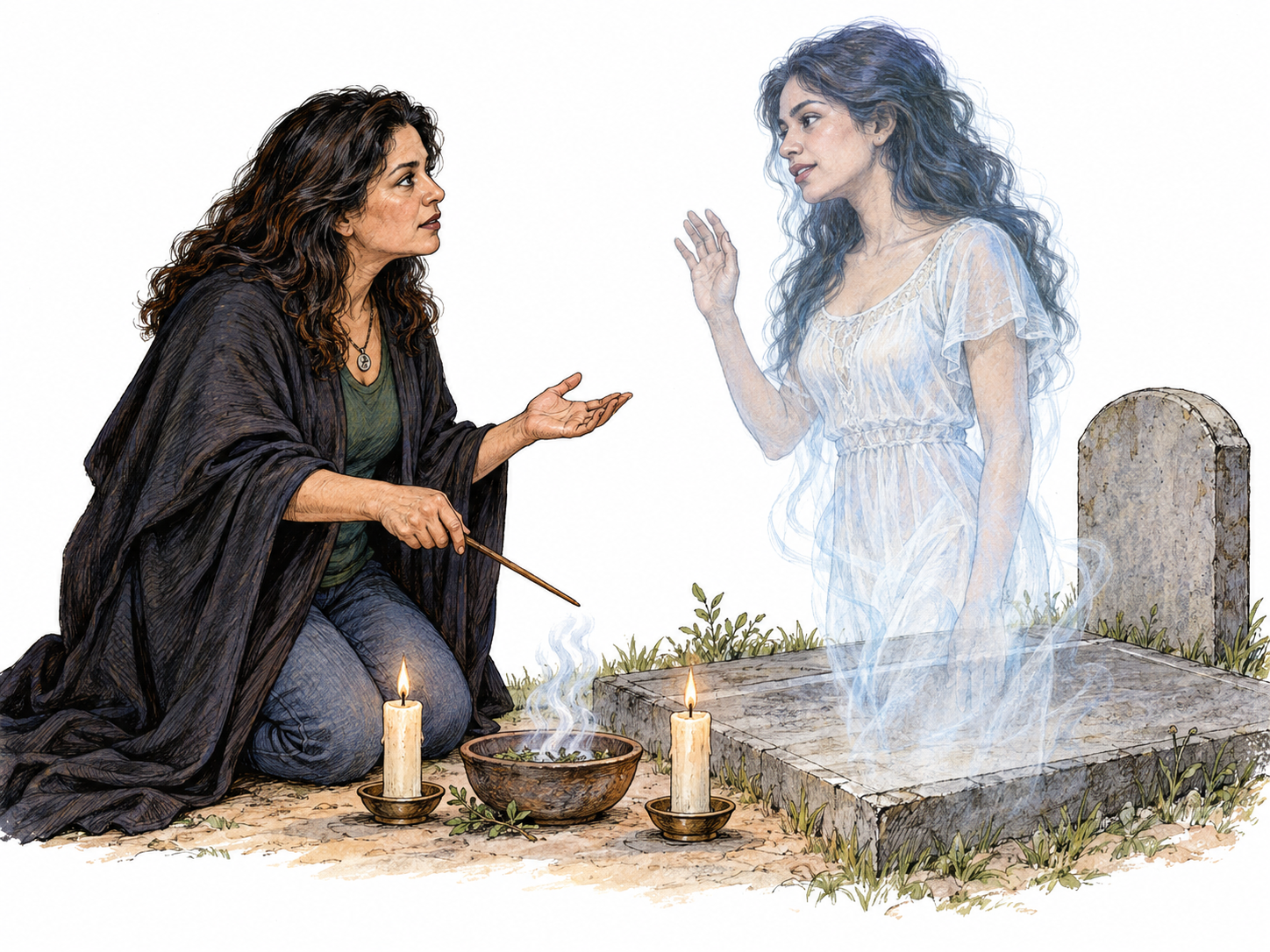
A magician conducts a ritual beside a grave and exchanges a short question and answer with the translucent spirit rising from it.
Etymology

“Dead body” and “divination” identify the purpose of this magician’s communication: seeking knowledge or prophecy from the dead. The selected meaning preserves that specific practice within the word’s broader use for a sorcerer.

In context

Enhanced Public Domain170:58
he was a necromancer and there is still shown in a certain town in Italy the mirror in which he made the dead appear
1900s Satire Audiobook: Anatole France - Penguin Island

More examples

  • In the novel, a necromancer raises an army of skeletons.
  • The villagers fear the necromancer's power over the dead.
  • The game lets players choose a necromancer as a character.

Forms

necromancer · necromancers

Similar words

sorcerer
A broader magical figure without a specific connection to the dead.
medium
A medium claims communication with spirits; a necromancer specifically practices magic involving the dead.