verb
inoculate
in-AH-kyoo-layt/ɪˈnɑːkjuleɪt/
To administer material that builds protection against disease.
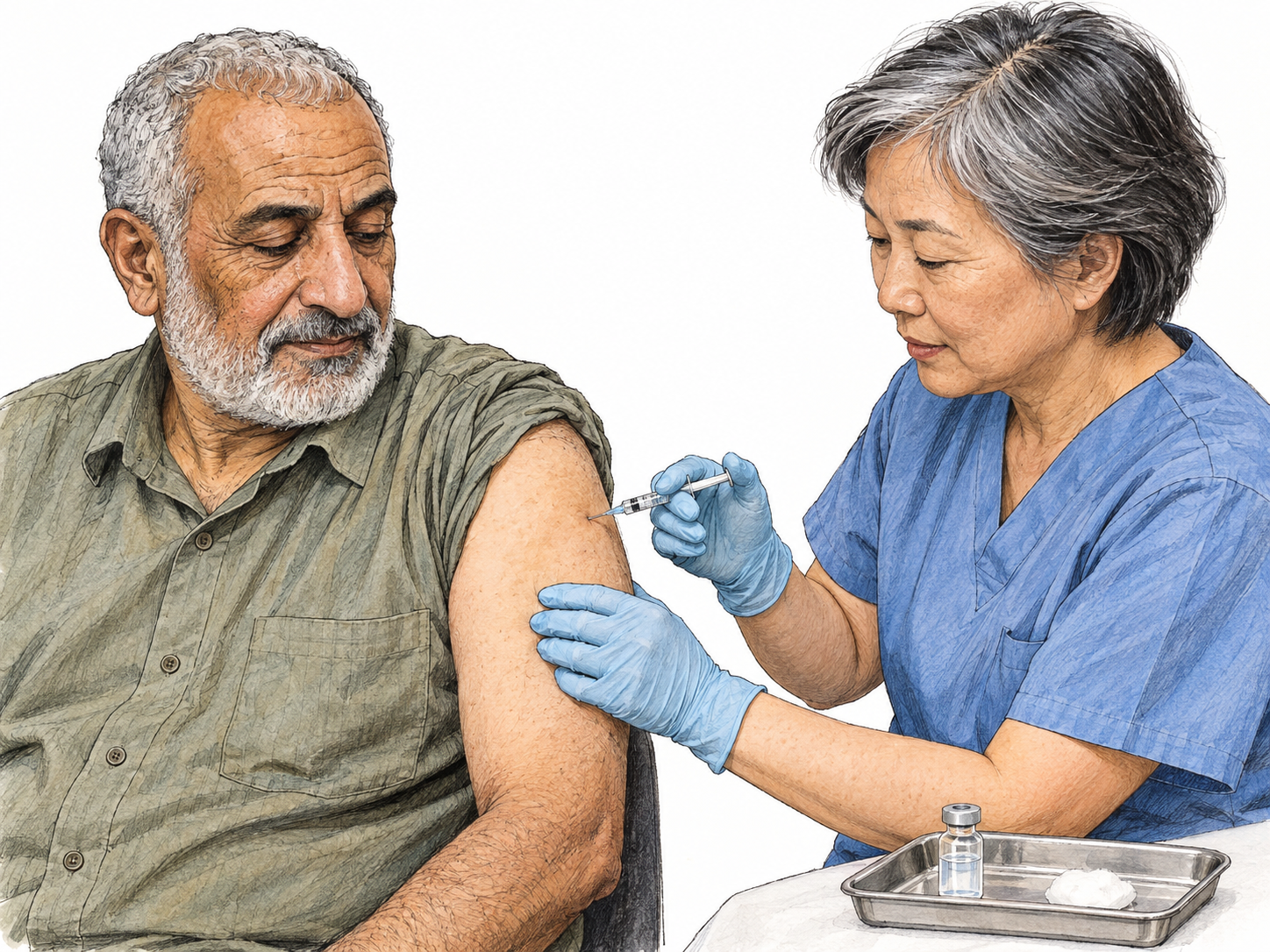
The clinician inoculates the man to protect him against disease.
Etymology
An “eye” here was a plant bud: inoculating originally meant grafting a bud into another plant. This image of implantation transferred to introducing disease material into the body to produce immunity.
In context
some protection is better than no protection at all and considering that you have chinese vaccines that have been used to inoculate frontliners in brazil 12 000 of them
More examples
- The nurse inoculates children against measles.
- Travelers should be inoculated against yellow fever before visiting certain regions.
- Learning to check sources helps inoculate readers against misinformation.
Forms
inoculate · inoculates · inoculated · inoculating
inoculation noun — Administration of material to protect against disease.
Similar words
- vaccinate
- Specifically means administering a vaccine rather than other protective material.
- immunize
- Emphasizes achieving immunity, not simply administering the protective material.