adjective / noun
pagan
PAY-gun/ˈpeɪɡən/
Following or relating to a polytheistic, pre-Christian, or nature-centered religion.
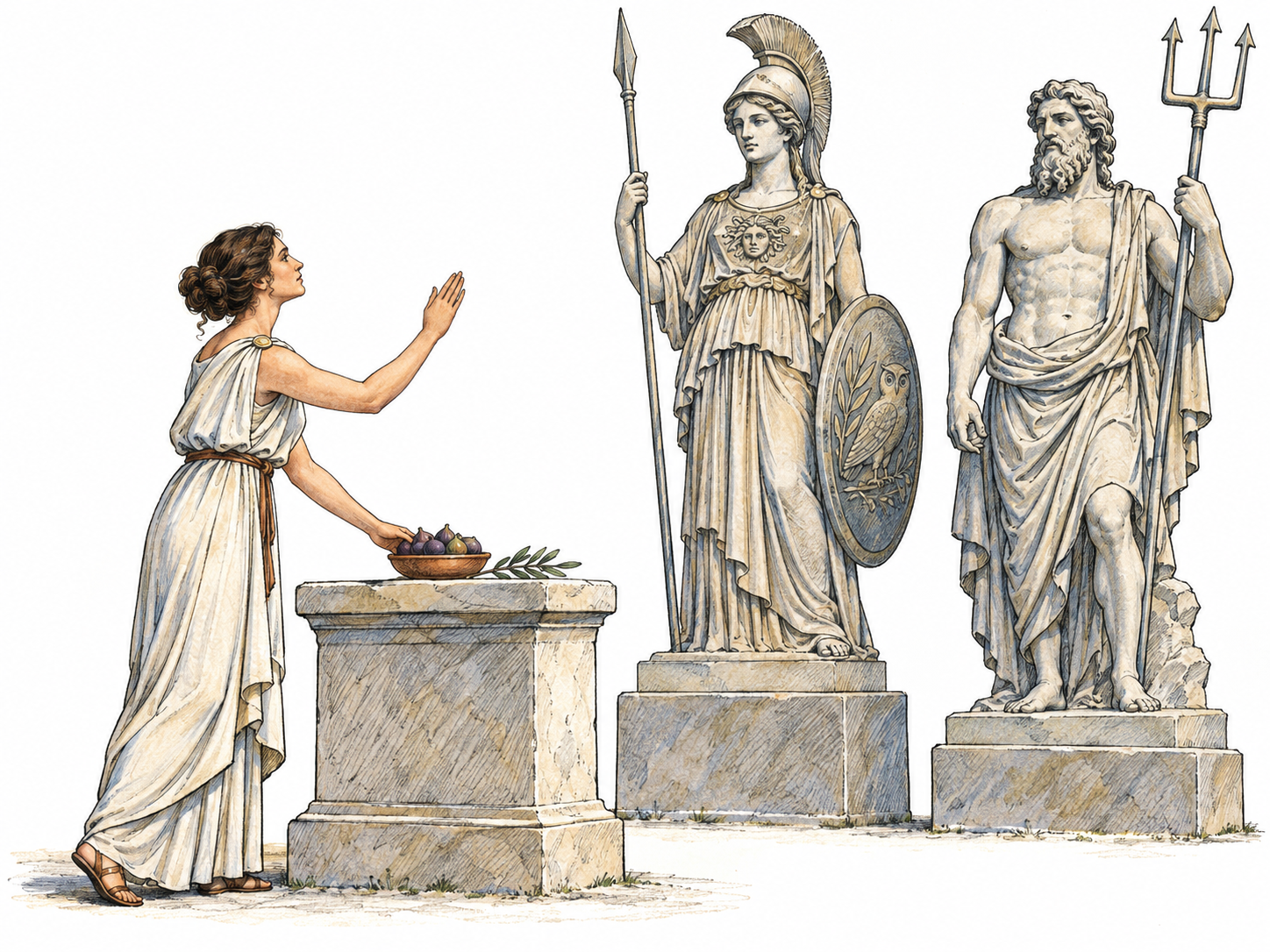
The worshipper makes a pagan offering before statues of Athena and Poseidon.
Etymology
Latin paganus meant both a villager and a civilian. Its religious use more likely arose from Christians picturing themselves as soldiers of Christ and calling those outside their faith civilians.
In context
although a gypsy, an idolater, and a pagan, she began to entreat with sobs, mercy from the good Christian God
More examples
- Some pagan traditions celebrate the changing seasons.
- As a pagan, she considers the forest sacred.
- Local pagans gather to celebrate the summer solstice.
Forms
pagan · pagans
paganism noun — Polytheistic, pre-Christian, or nature-centered religious belief.
Similar words
- polytheistic
- Specifically describes belief in multiple gods, not necessarily nature worship.
- animistic
- Emphasizes spirits in animals, plants, and other natural things.