DictionaryRoot: ab-
Latin

ab-

away, off, from

Forms

  • ab-
  • abs- — Expanded Latin form, especially before t.
  • a- — Shortened in some Latin compounds.

Origin

Reconstructed Proto-Indo-European *apo, ‘away; off.’

Note

The Greek prefix apo- is a relative from the same older source, not a borrowing from Latin.

20 / 49
verb

abrade

uh-BRAYD/əˈbreɪd/

To wear away or roughen a surface by rubbing.

The rough pad abrades the painted wood, leaving fine particles behind.
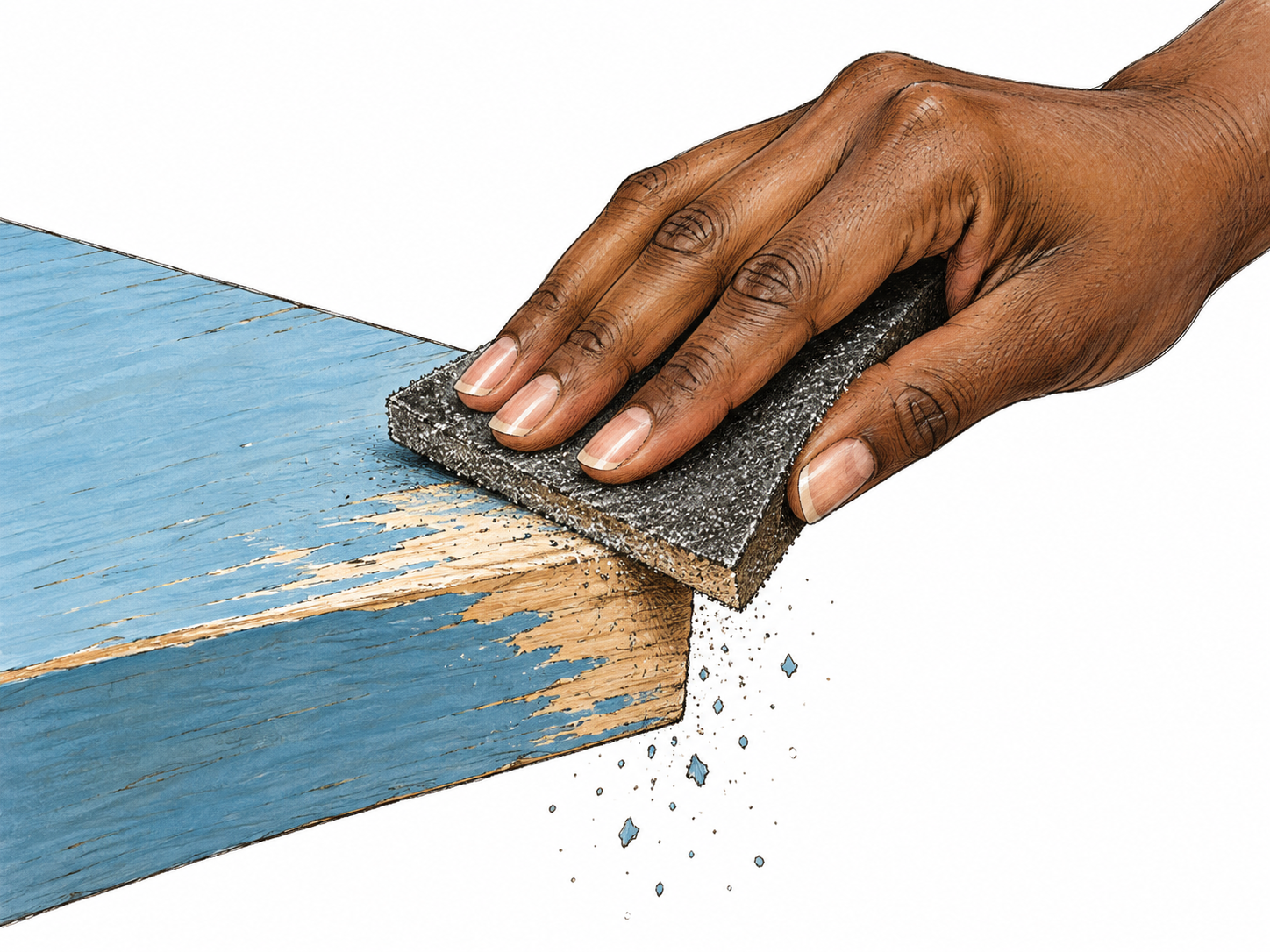
A rough pad rubs against a painted wooden edge, wearing away the surface and leaving fine particles; mechanical abrasion, no injury required.
Etymology

The pieces mean scraping something off, not merely rubbing against it. That removal of surface material remains central to abrading: friction wears the material away.

In context

Vocab Dictionary0:06
the rough texture of the Sandpaper will abrade the wood
Abrade Meaning

More examples

  • Sand abraded the exposed rock over many years.
  • Avoid abrading the delicate surface while cleaning it.
  • The rough fabric can abrade skin during repeated movement.

Forms

abrade · abrades · abraded · abrading

Similar words

scrape
May remove material through one stroke rather than repeated rubbing.
erode
Includes wearing away by processes other than friction.