verb
accelerate
uhk-SEL-uh-rayt/əkˈseləreɪt/
To become faster or make something faster.
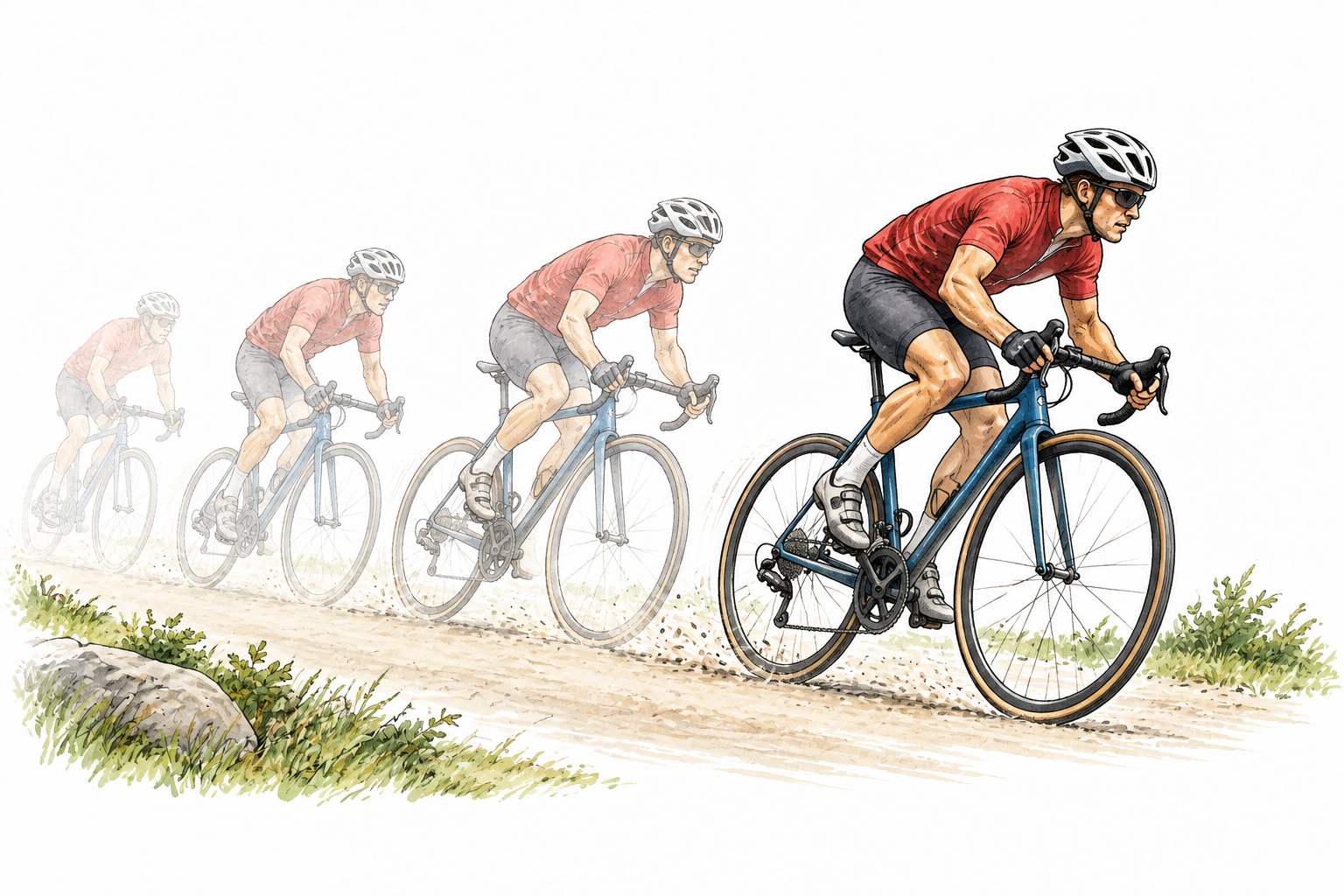
The cyclist accelerates along the clear path, pedaling harder to gain speed.
Etymology
The core meaning is “to hasten,” with a prefix that can add emphasis. This covers both making something quicker and moving or happening faster oneself.
In context
it can give you a little bit more heat in the fall to accelerate the growth and like a blanket it gives you about three four degrees of protection from frost
More examples
- Better equipment accelerated the repairs.
- The runners begin to accelerate near the finish.
- The town's growth is accelerating as new factories open.
Forms
accelerate · accelerates · accelerated · accelerating
Similar words
- hasten
- Makes an event happen sooner without necessarily increasing speed.
- quicken
- Often describes an increase in pace or bodily rhythm.