noun
acquiescence
ak-wee-ES-ens/ˌækwiˈesns/
Passive acceptance or agreement without protest.
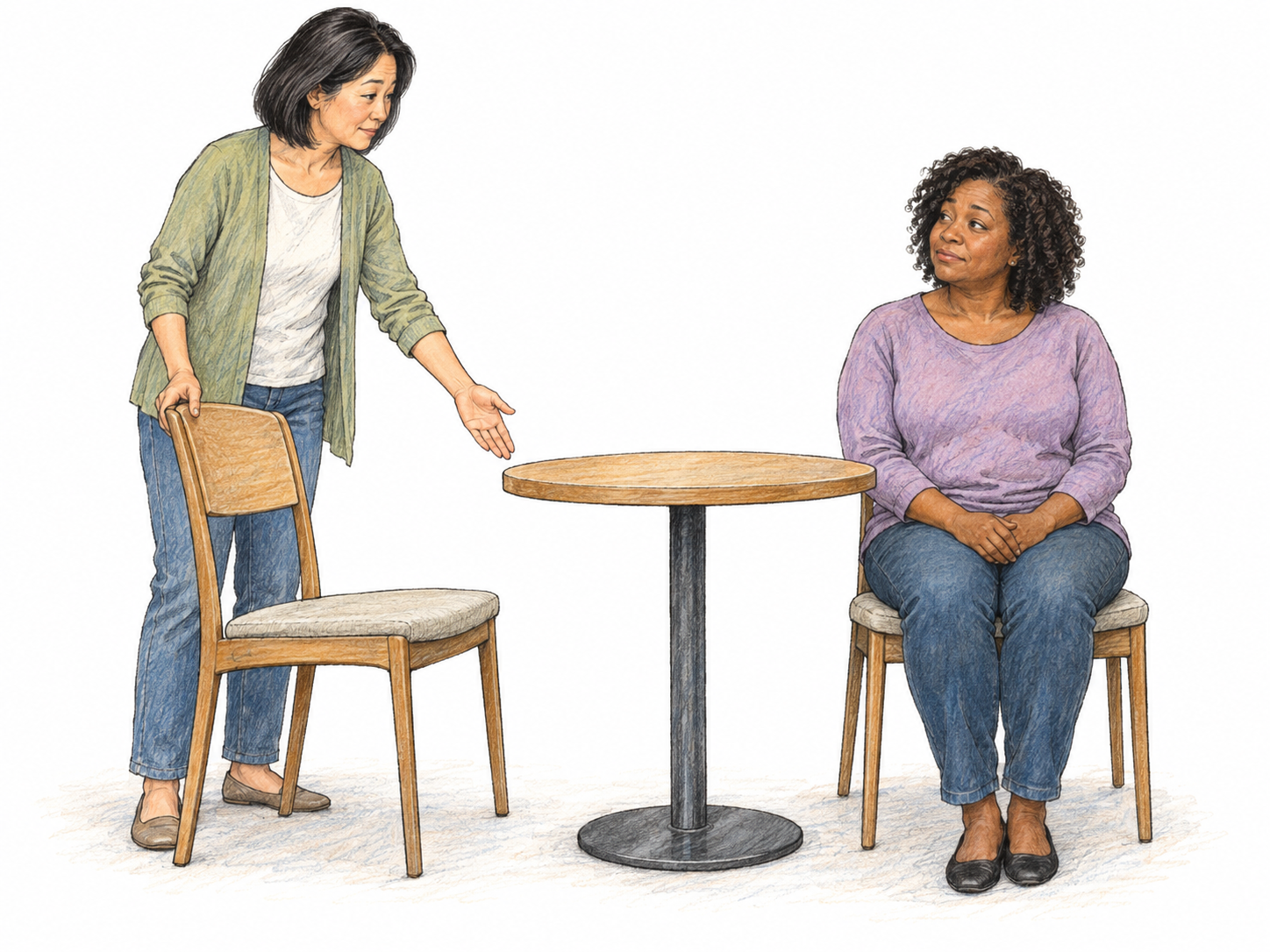
Her reluctant nod shows acquiescence as the other woman repositions the chair.
Etymology
The quiet or resting state first expressed rest and satisfaction, then silent consent. Passive acceptance retains this connection between being content to let something stand and not protesting.
In context
wasn't able to get acquiescence and the applicant is going to discuss further his justifications for why um he couldn't he couldn't make those negotiations work
More examples
- Her reluctant acquiescence allowed the project to proceed.
- They demanded a clear vote rather than passive acquiescence.
- His acquiescence surprised everyone who had heard his earlier objections.
Forms
acquiesce verb — To accept something without protesting.
Similar words
- consent
- Can involve an explicit declaration of permission or agreement.
- compliance
- Emphasizes acting as required rather than merely accepting.