adjective / verb
approximate
uh-PRAHK-sih-mut/əˈprɑːksɪmət/
Being or coming close to an actual value or quality without matching it exactly.
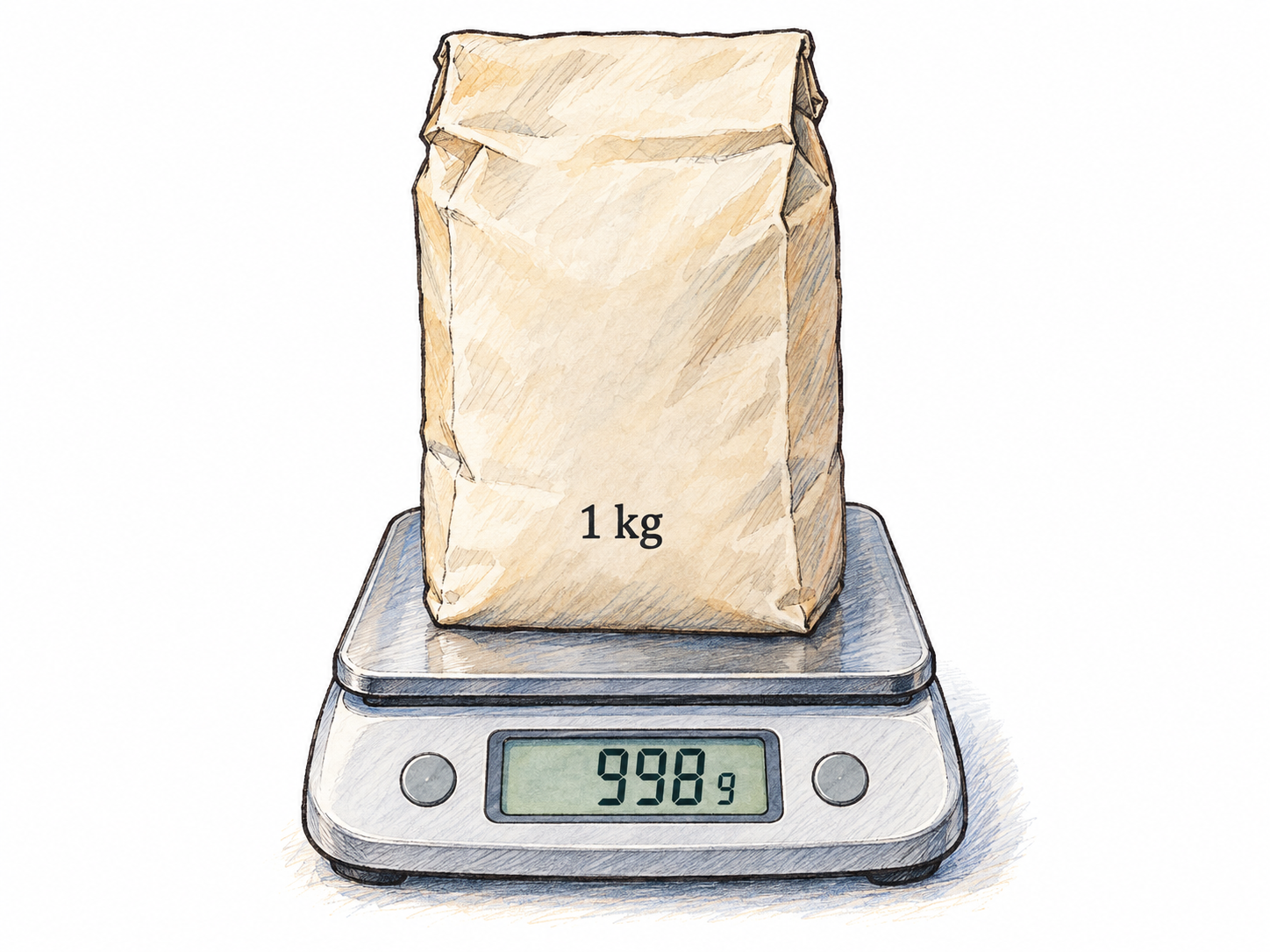
The flour bag's approximate weight is one kilogram; the scale reads 998 grams.
Etymology
Proximare means “come near,” and approximate originally described nearness in position. Physical closeness became closeness in accuracy: an approximate value is near the actual value rather than exactly equal to it.
In context
a 15 minute period multiplied by four to get an hourly figure and a day then a week and so forth only approximate of course but the figure comes out amazingly close
More examples
- Please give us an approximate arrival time.
- These rounded figures approximate the actual costs.
- The fabric approximates the softness of silk.
Forms
approximate · approximates · approximated · approximating
approximation noun — Something close to, but not exactly, another.
approximately adverb — Close to an amount, but not exactly.