verb
aggravate
AG-ruh-vayt/ˈæɡrəveɪt/
To make an unpleasant condition more troublesome.
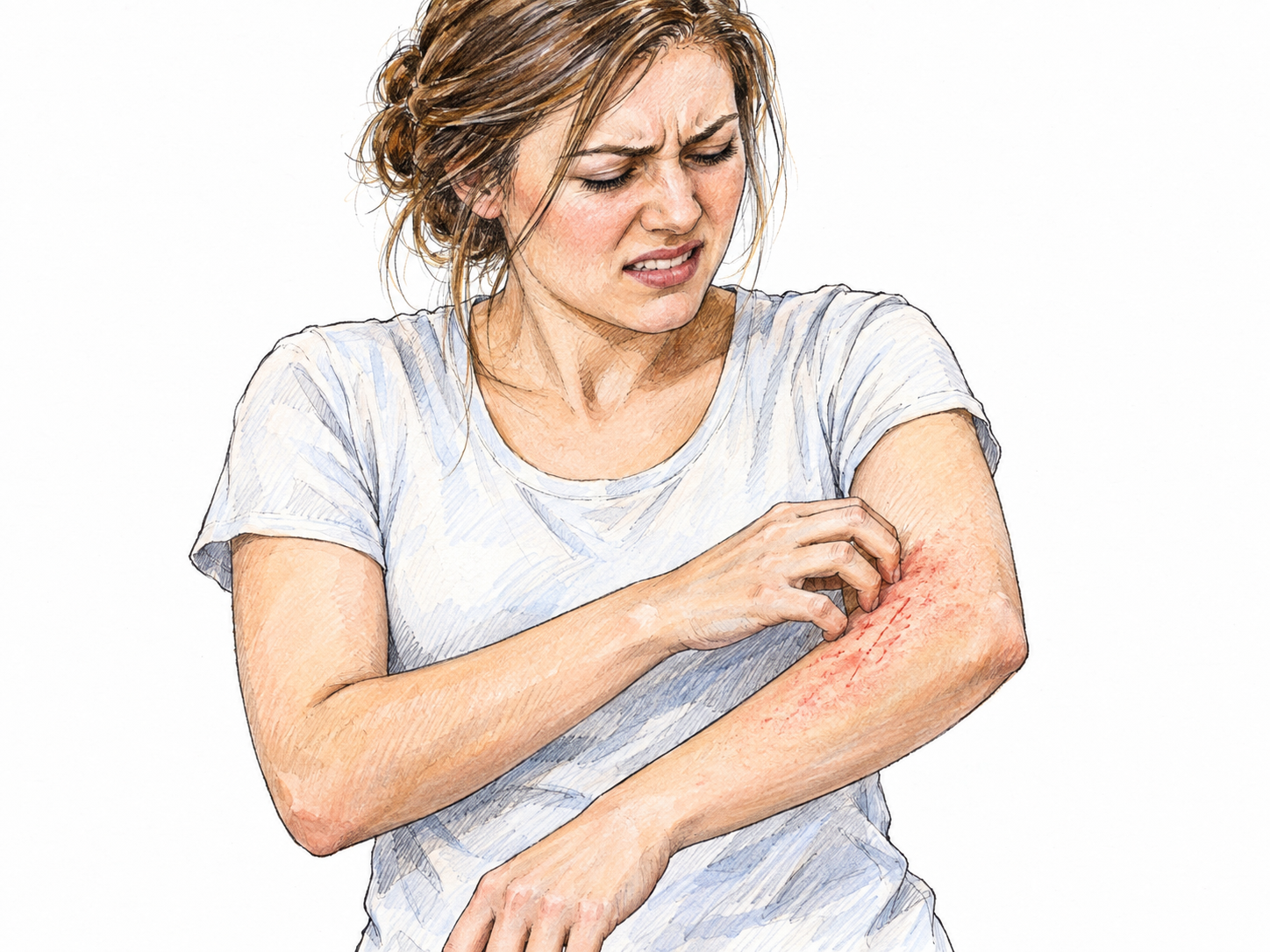
Scratching aggravates the woman's already irritated skin and makes it worse.
Etymology
The original image is adding weight to something already burdensome. Making a burden heavier became making a trouble more severe, which underlies the sense of worsening a problem, injury, or annoyance.
In context
we know that hydration causes dimensional changes in ivory and adding to it drastic temperature fluctuations will only serve to aggravate cracks or cause new fractures along vulnerable areas
More examples
- Running on the injured ankle may aggravate the pain.
- His constant interruptions aggravated everyone at the meeting.
- The loud music is aggravating our tired neighbors.
Forms
aggravate · aggravates · aggravated · aggravating
aggravation noun — An increase in trouble or irritation.
Similar words
- worsen
- Directly describes making a condition more severe or unfavorable.
- irritate
- Focuses on annoyance or physical irritation rather than worsening generally.