DictionaryRoot: ad-
Latin

ad-

to, toward; addition; sometimes emphasis

Forms

  • ad-
  • ac- — Used before c in Latin.
  • af- — Used before f in Latin.
  • ag- — Used before g in Latin.
  • al- — Used before l in Latin.
  • ap- — Used before p in Latin.
  • ar- — Used before r in Latin.
  • as- — Used before s in Latin.
  • at- — Used before t in Latin.

Origin

Reconstructed Proto-Indo-European *ad, ‘to; near.’

Note

Later Latin-based spellings sometimes restored consonants that had disappeared in French.

205 / 256
verb

assemble

uh-SEM-buhl/əˈsembl/

To bring separate members or parts together into a whole.

They assemble the wooden table by joining its parts carefully.
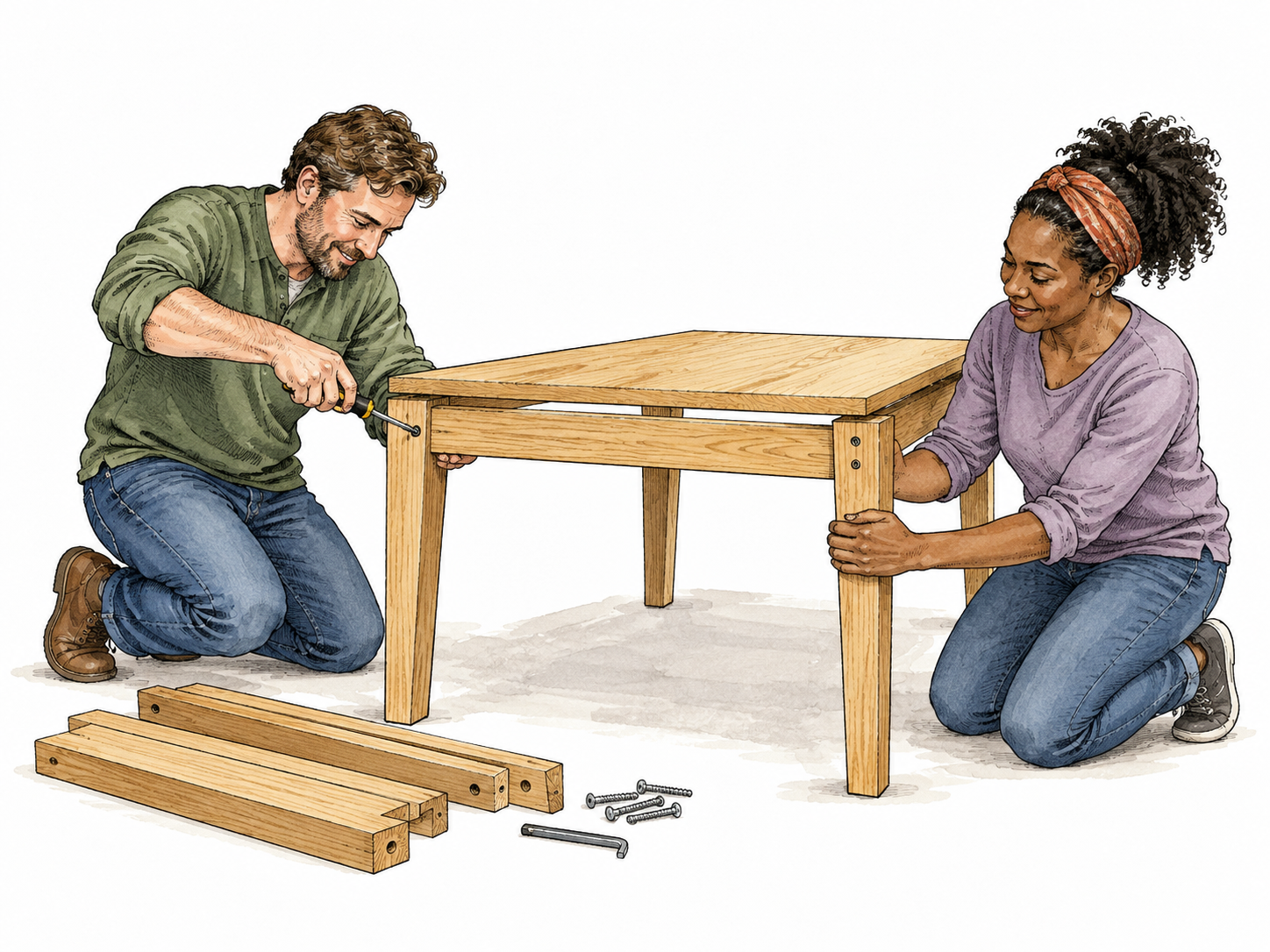
A white parent and Black adult friend assemble a wooden table, parts joined coherently.
Etymology

The Latin pieces formed a verb meaning “make like,” which later meant “gather together.” The modern verb retains that gathering sense and extends it to putting separate parts together.

In context

Product Design Online1:22
you’re just defining the relationships, using Constraints or 'Joints,’ to assemble individual parts, resulting in a multi-part model.
Stop Using Fusion the "Old" Way: NEW 2026 WORKFLOWS

More examples

  • A crowd assembled near the station.
  • We are assembling a team of experienced guides.
  • The bicycle arrived partly assembled.

Forms

assemble · assembles · assembled · assembling

Similar words

construct
May create from raw materials rather than fit ready-made parts.
build
Build is broader and need not involve fitting prepared components together.