DictionaryRoot: con-
Latin

con-

together, with; sometimes thoroughly

Forms

  • con-
  • com- — Used before certain consonants, especially b, p, and m.
  • col- — The final consonant changed before l.
  • cor- — The final consonant changed before r.
  • co- — The final consonant was lost in some combinations.

Origin

From Latin cum, “with,” and an older form com-.

Note

Togetherness could extend to completeness. Not every word containing this prefix retains an obvious “with” meaning.

48 / 108
verb

conjure

KAHN-jur/ˈkɑːndʒər/

To summon an apparent presence through magic.

The magician appears to conjure a ghost above the platform.
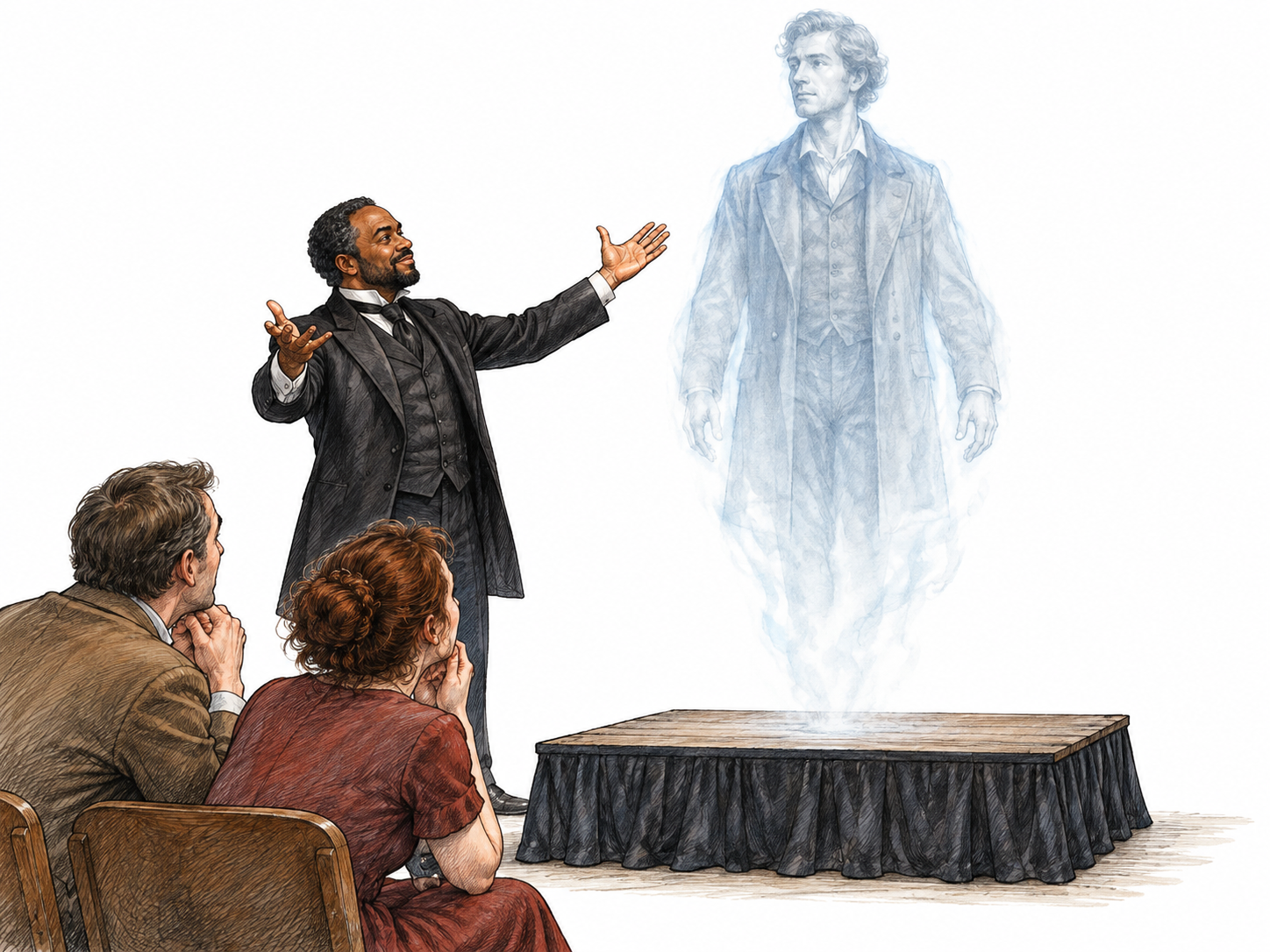
A stage magician raises open hands as an apparently translucent human-shaped presence materializes above a small empty platform, with onlookers focused on the apparition.
Etymology

From “swear together,” the verb came to mean commanding on oath and compelling a spirit by a spell. Bringing an image to mind extends this magical summoning: the image appears as though called forth.

In context

Street Photography with Brian Lloyd Duckett21:06
Whenever somebody mentions street photography, we conjure up names like Joel Meyerowitz or Cartier-Bresson or Garry Winogrand.
Episode #6 - Where's your comfort zone? Also - monochrome cameras, street competitions, a hot boo...

More examples

  • The magician appears to conjure a rabbit from an empty hat.
  • The witch conjured a ghost inside the candlelit circle.
  • The spellbook contains instructions for conjuring up spirits.

Forms

conjure · conjures · conjured · conjuring

conjurer noun — Someone who performs magic or summons spirits.

Similar words

summon
Means calling a being to appear, not necessarily through magic.
invoke
Emphasizes calling on supernatural power rather than making something appear.