adjective
consecutive
kun-SEK-yuh-tiv/kənˈsekjətɪv/
Following one after another without a gap.
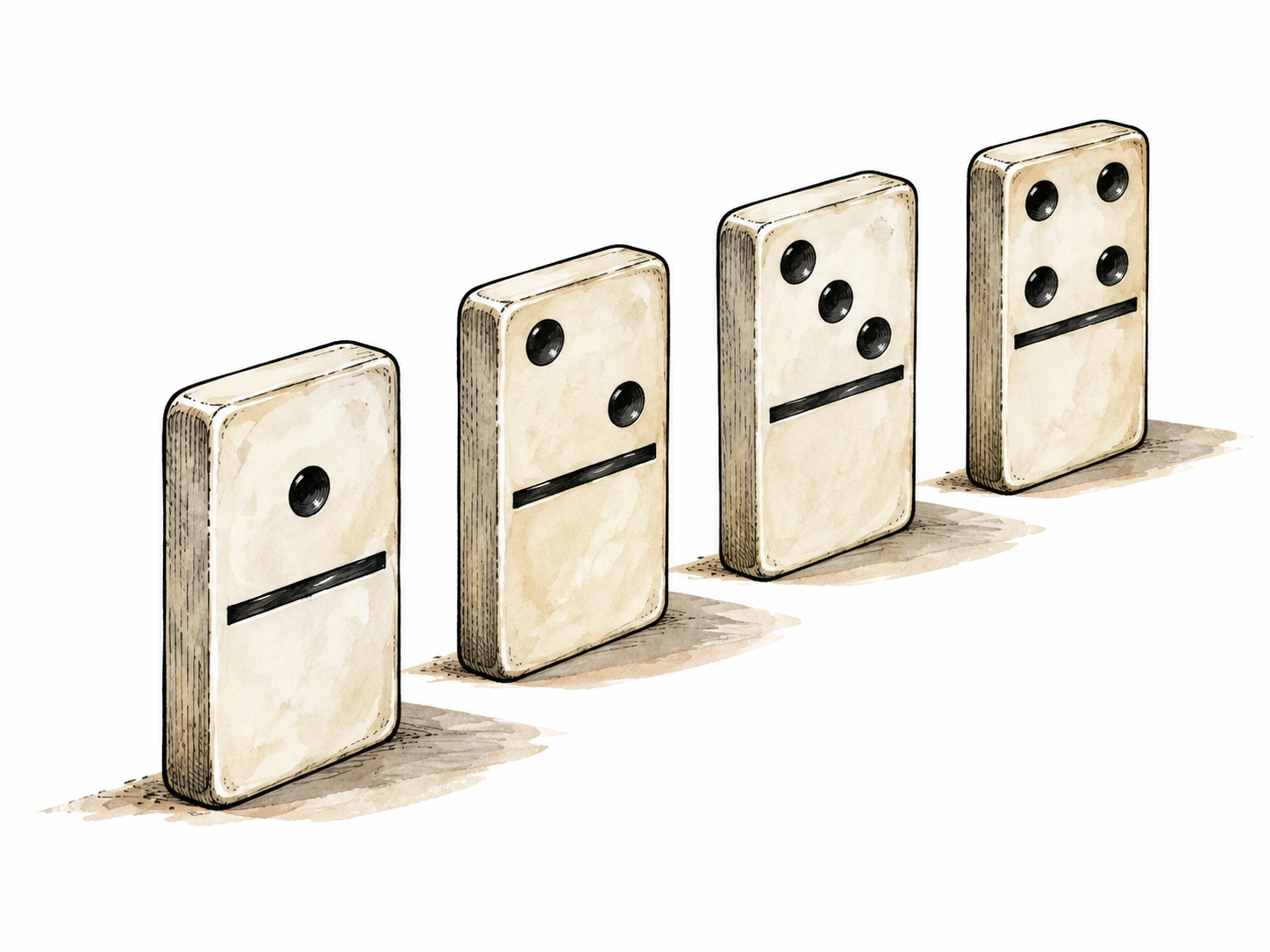
The four dominoes occupy consecutive positions in an uninterrupted row.
Etymology
The components formed a verb meaning “follow after.” Consecutive describes things following directly after one another, forming an uninterrupted sequence.
In context
write seven consecutive composite numbers less than 100s so that there is no prime number between them
More examples
- Rain is in the forecast for five consecutive days.
- Number the pages with consecutive numbers, starting at one.
- Our tickets are for consecutive seats in the same row.
Forms
consecutive
consecutively adverb — In sequence without any gaps.
Similar words
- successive
- Emphasizes following in order rather than explicitly ruling out gaps.
- sequential
- Emphasizes an ordered arrangement, not necessarily an unbroken run.