verb
convey
kun-VAY/kənˈveɪ/
To transfer something from one place or person to another.
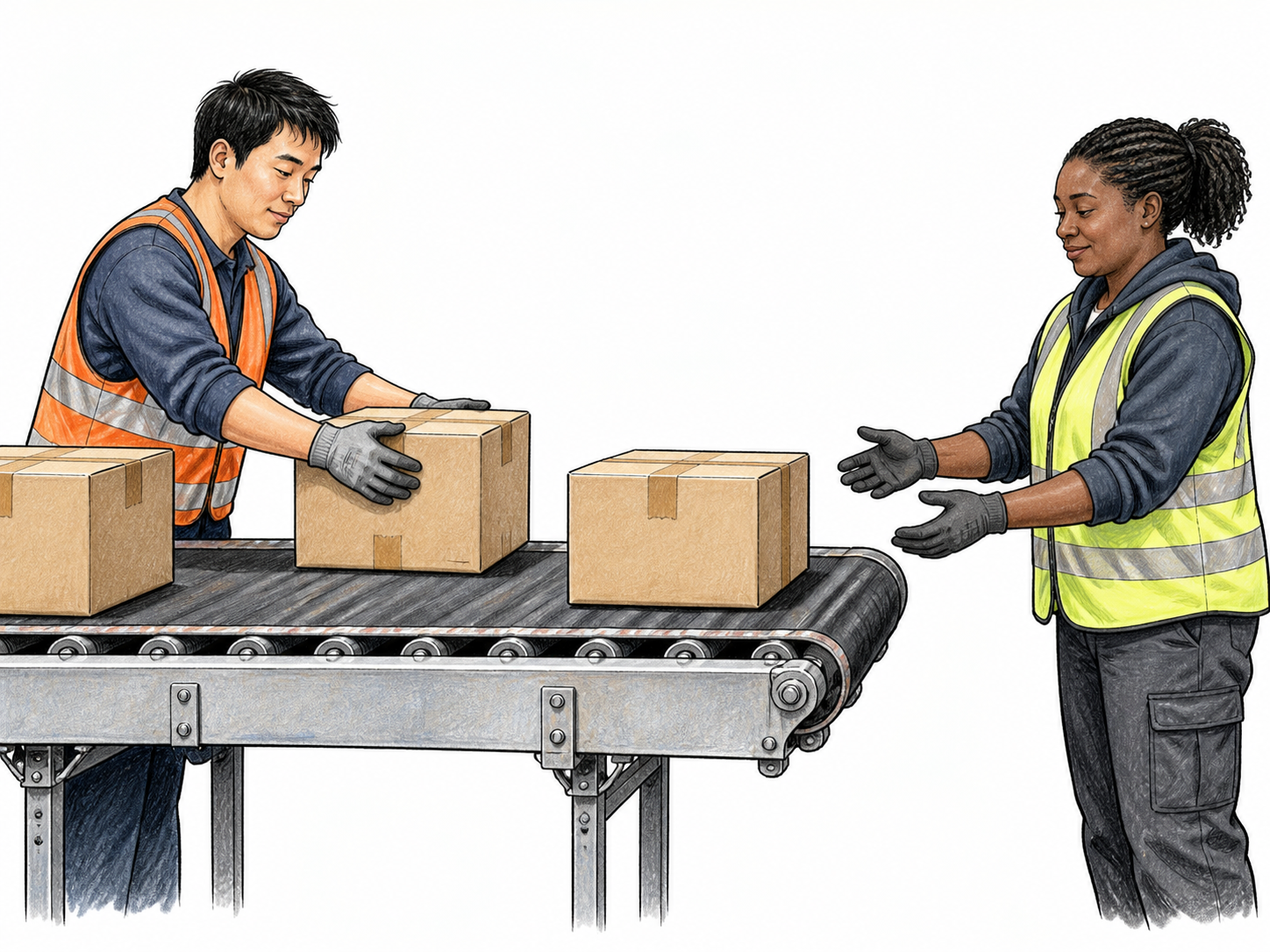
The conveyor belt conveys sealed parcels from one worker to another.
Etymology
“With” and “road” underlie the idea of accompanying someone on the way. Accompanying or escorting developed into carrying and transporting, then into transmitting a message or meaning to another person.
In context
when we indicate it like this we intend to convey the message that all five carbon atoms interacting with metal atom.
More examples
- These pipes convey water from the tank to the garden.
- Her warm smile conveys her gratitude.
- The deed conveys ownership of the house to his daughter.
Forms
convey · conveys · conveyed · conveying
conveyance noun — The act of transporting or transferring something.
conveyor noun — A device that moves materials between places.
Similar words
- transport
- Emphasizes physical movement of people or goods between places.
- transfer
- Emphasizes changing location, possession, or control rather than transportation.
- communicate
- Specifically means making information, thoughts, or feelings known to others.