noun
congestion
kun-JES-chun/kənˈdʒestʃən/
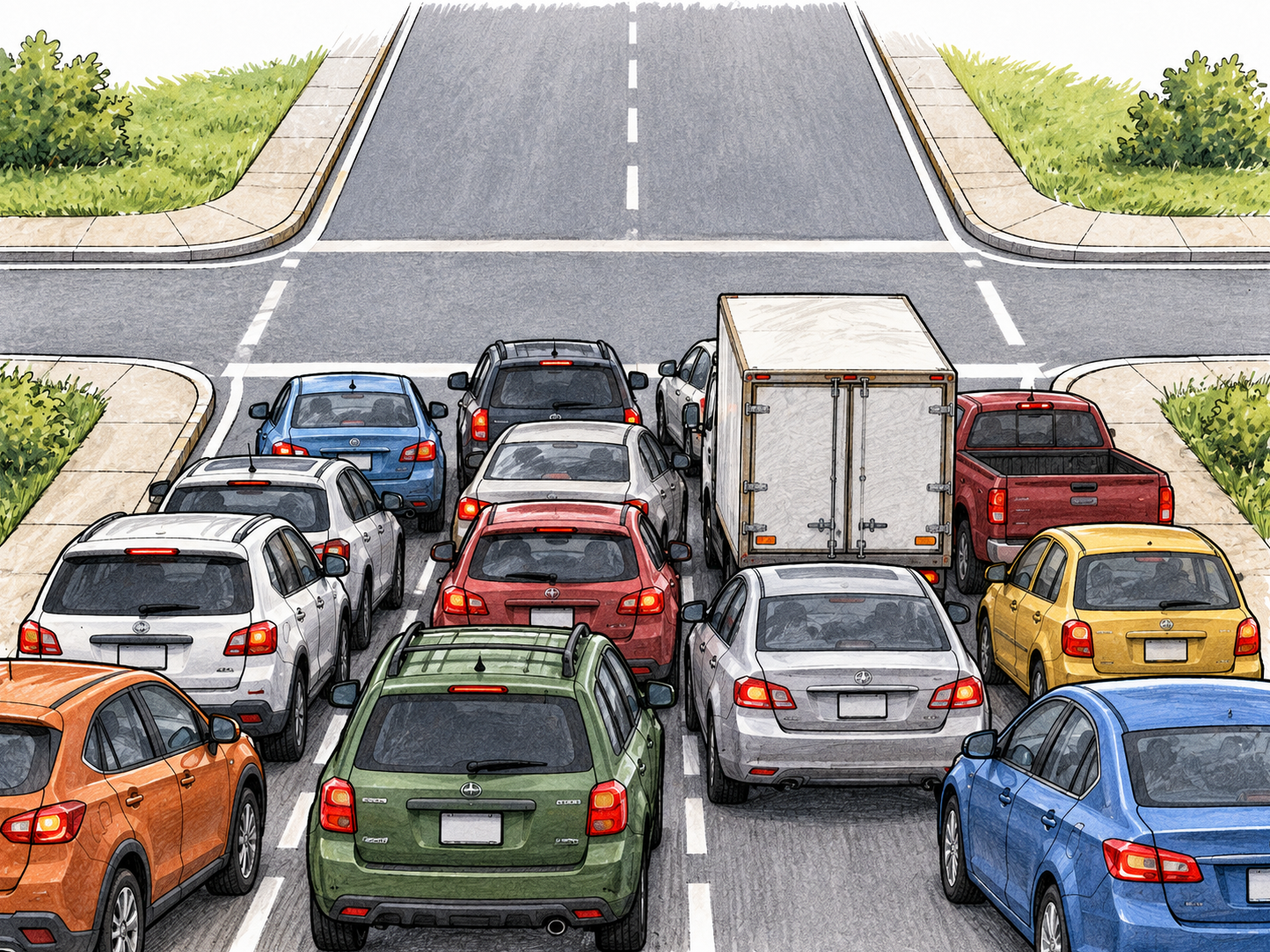
Excessive accumulation that impedes normal flow.
Heavy traffic congestion keeps the buses from arriving on time.
Etymology
The pieces describe a “carrying together,” hence a heaping up. Congestion first referred to accumulated matter in the body; the same buildup image later extended to crowds and traffic that impede movement.
In context
there was much less road rage, much less congestion, and the traffic flowed better
More examples
- A saline spray helps relieve her nasal congestion.
- Opening another entrance reduces congestion near the ticket booth.
- Network congestion slows downloads during peak hours.
Forms
Similar words
- overcrowding
- Emphasizes too many people or things in limited space.
- blockage
- Emphasizes an obstruction, not necessarily an excessive accumulation.
- bottleneck
- Identifies a narrow point that limits overall flow.