noun
infection
in-FEK-shuhn/ɪnˈfekʃn/
The establishment and spread of harmful microorganisms within a host.
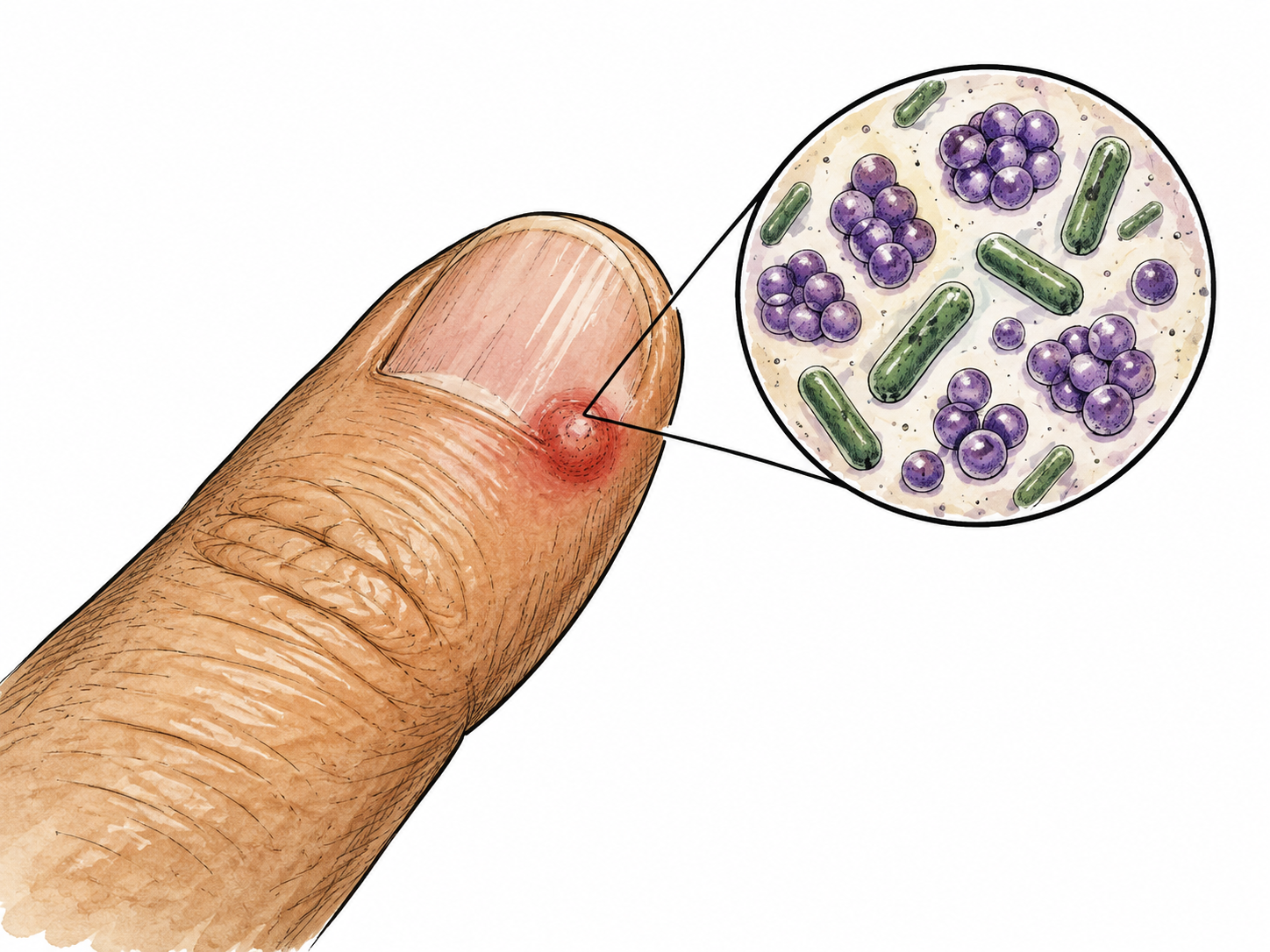
The multiplying microbes cause an infection that reddens and swells the fingertip.
Etymology
Together, the roots formed a verb meaning “put into” or “dip into,” then “stain” or “spoil.” Infection carries this image of contamination into the bodily process of disease.
In context
some of these infections like chickenpox small number of microbes persist in the body a long time after the symptoms have gone away and the Infectious part of the infection has gone away
More examples
- Washing your hands helps prevent infection.
- She takes antibiotics to treat a bacterial infection.
- Some fungal infections affect the skin and nails.
Forms
infection · infections
infect verb — To introduce disease-causing microorganisms into a host.
infectious adjective — Capable of causing or spreading an infection.