noun
modulation
mah-juh-LAY-shun/ˌmɑːdʒəˈleɪʃn/
A controlled variation in a signal's properties.
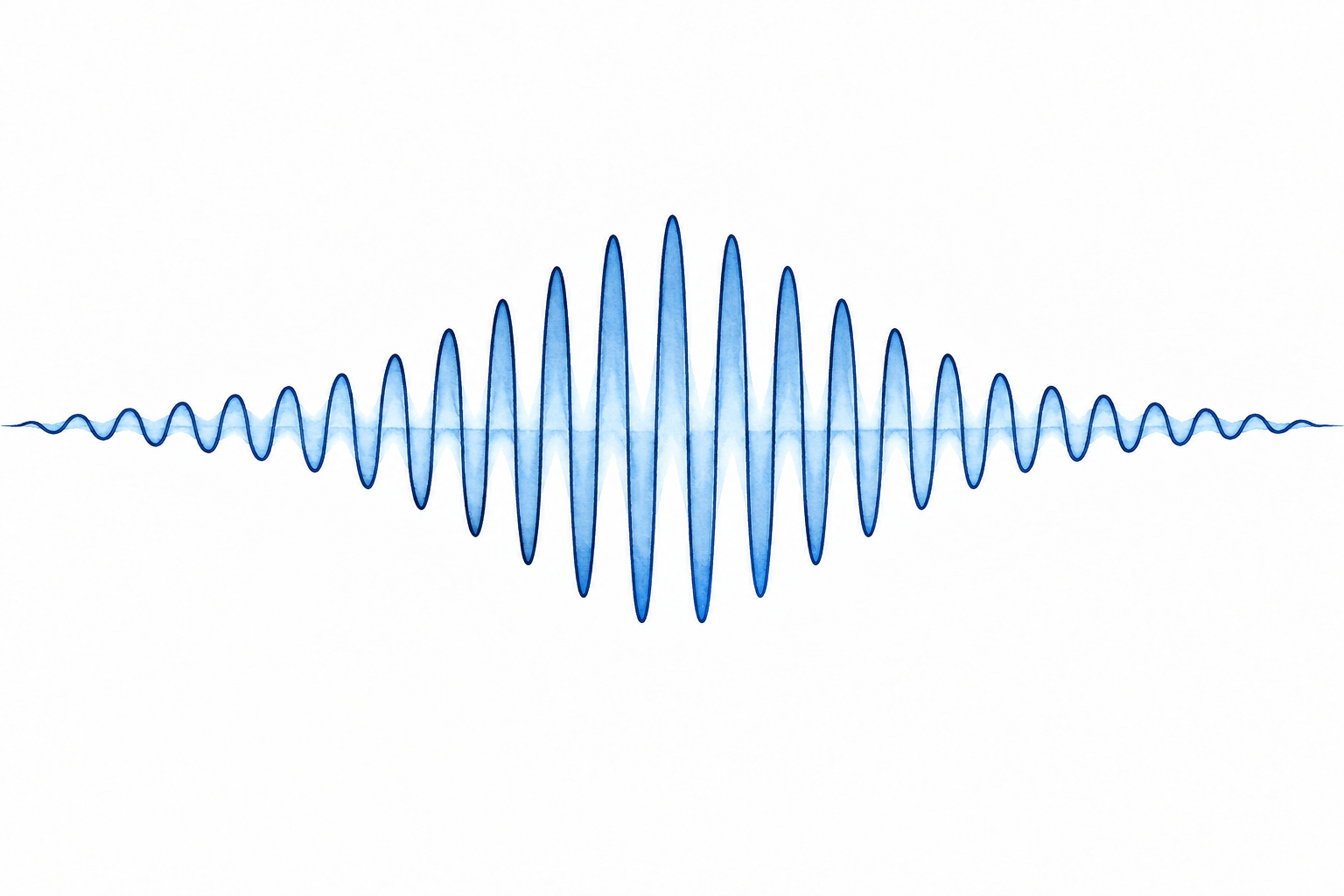
The waveform shows modulation of amplitude, growing stronger and then weaker.
Etymology
Measuring rhythmically connected regulation with music-making. The noun moved from singing and harmony to regulation by measure or proportion, providing the link to controlled changes in sound, signal, or intensity.
In context
we're using our indoor voice in our conversation and therefore you have to turn the gain much higher up in order to get the proper modulation
More examples
- Amplitude modulation changes the strength of a carrier signal.
- This modem uses phase modulation to transmit data.
- The engineer adjusts the modulation depth to improve the signal.
Forms
Similar words
- variation
- Variation need not be controlled or used to transmit information.
- adjustment
- Adjustment may be a single change rather than ongoing variation.