DictionaryRoot: -io
Latin

-io

an action, process, or result

Forms

  • -io
  • -ion- — The longer form used before Latin endings.
  • -ion — The form carried into many English nouns.

Origin

An old Latin noun ending, inherited from earlier Indo-European word formation.

Note

The ending can name both an activity and what that activity produces.

184 / 371
noun

fusion

FYOO-zhun/ˈfjuːʒn/

The joining of separate parts into a single whole.

The fusion of two glass rods creates one continuous glass joint.
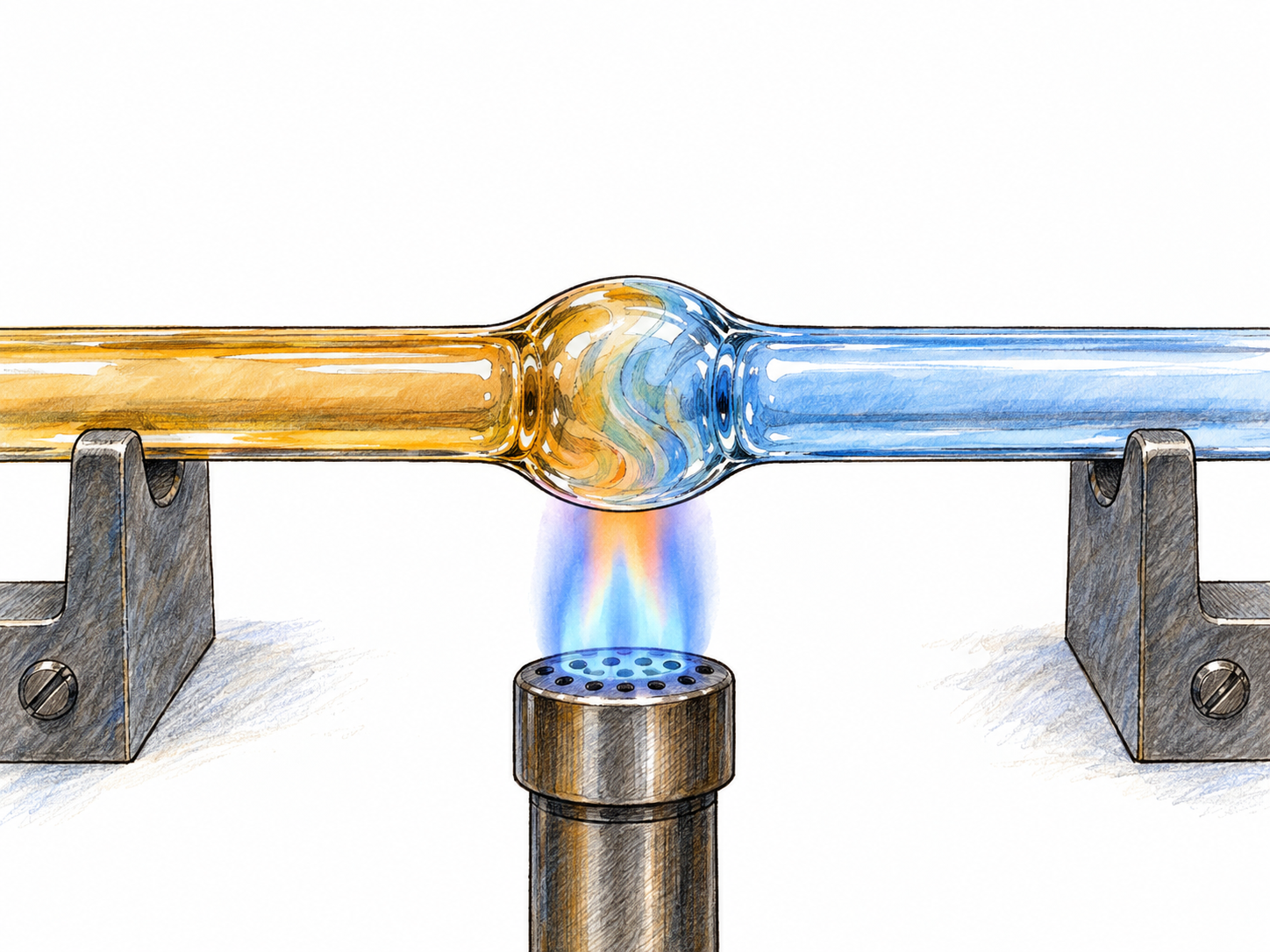
Two colored glass rods fuse end to end above a small bench burner, their softened tips visibly becoming one continuous glass joint.
Etymology

From a verb meaning to pour or melt, fusion first named melting by heat. It then broadened to separate things blending into one, as if melted together.

In context

TED-Ed0:37
This core is hot and dense enough to force atomic nuclei together, forming larger, heavier nuclei in a process known as fusion.
How close are we to powering the world with nuclear fusion? - George Zaidan

More examples

  • Their music is a fusion of jazz and rock.
  • Nuclear fusion joins atomic nuclei and releases energy.
  • Spinal fusion joins two or more vertebrae into one solid bone.

Forms

fusion · fusions

fuse verb — To join separate parts into one.

Similar words

merger
Usually joins organizations or businesses into a single entity.
blending
Emphasizes mixing elements smoothly rather than simply joining them.
union
Emphasizes the joined state, not necessarily a complete blending.